
Structural Outperformance in ADRs: Unlocking International Growth Equity Opportunities in Q3 2025


 Aime Summary
In Q3 2025, global equity markets witnessed a remarkable shift in risk appetite, driven by a confluence of macroeconomic catalysts and sectoral dynamics. American Depositary Receipts (ADRs), which represent foreign equity stakes traded in U.S. markets, emerged as a standout asset class, delivering structural outperformance against both domestic equities and broader international benchmarks. This trend, underpinned by Federal Reserve policy pivots, U.S.-China trade normalization, and AI-driven demand surges, has redefined the landscape for international growth equity strategies.
ADRs Outperform: A Structural Shift in Global Equity Allocation
ADRs demonstrated a compelling 120-basis-point outperformance over the iShares MSCI ACWI ex US Index ETF (ACWX) in Q3 2025, with a trailing annualized return of over 10% compared to ACWX's 1.40%, according to Schroders' quarterly review. This outperformance was not merely cyclical but structural, as a systematic model focusing on the strongest ADRs-particularly in technology and communication services-capitalized on global AI enthusiasm and trade-related optimism, according to the Schroders review. For instance, the Russell 2000 ADRs surged 12.4% during the quarter, reaching all-time highs for the first time since November 2021, according to Nasdaq. Such performance underscores ADRs' ability to act as a bridge between U.S. investors and high-growth international equities, especially in emerging markets.
Fed Policy: The Catalyst for Global Risk-On Sentiment
The Federal Reserve's 25-basis-point rate cut in September 2025 marked a pivotal shift in monetary policy, easing borrowing costs and signaling a commitment to managing downside risks in a slowing global economy, as reported by CNBC. This move, coupled with expectations of two additional cuts before year-end, spurred a risk-on rally across asset classes. For ADRs, the implications were twofold:
1. Lower Capital Costs: Reduced U.S. interest rates incentivized multinational corporations to expand operations, particularly in capital-intensive sectors like technology and housing, a pattern highlighted in the Schroders review.
2. Emerging Market Stimulus: The Fed's easing cycle indirectly supported emerging markets, as seen in China's aggressive rate cuts and stimulus measures, which boosted ADRs from Chinese tech and manufacturing firms, according to an MJE post.
U.S.-China Trade Truce: A Tailwind for ADRs
The temporary extension of the U.S.-China tariff truce in late July 2025-retaining a 10% baseline tariff while suspending higher rates-created a more stable trade environment, as reported by CNBC. This de-escalation reduced volatility for multinational firms and ADR holders, particularly in sectors like semiconductors and consumer electronics. For example, ADRs from Taiwanese and South Korean firms, heavily exposed to U.S. demand for AI hardware, surged as trade tensions eased, a trend noted in the Schroders review. While the U.S. trade deficit with China narrowed to $128 billion by July 2025 (from $300 billion in 2024), the truce signaled a path toward a broader agreement, further bolstering investor confidence, according to the CNBC report.
AI and Tech Demand: The Sectoral Engine of ADR Growth
The AI boom remained the dominant theme in Q3 2025, with ADRs in technology and communication services leading the charge. Strong corporate earnings from AI-focused firms-such as those in cloud computing, semiconductor manufacturing, and data analytics-drove returns, as outlined in the Schroders review. For instance, ADRs from Chinese and Taiwanese AI infrastructure providers benefited from both U.S. demand and domestic stimulus packages, a dynamic discussed in the MJE post. This sectoral momentum was amplified by the Fed's rate cuts, which reduced discount rates and elevated valuations for high-growth tech stocks, as reported by CNBC.
Strategic Implications for Investors
The Q3 2025 ADR outperformance highlights a strategic opportunity for investors seeking international growth exposure. By leveraging ADRs, investors can:
- Access High-Growth Sectors: Tap into AI and tech demand in emerging markets without the complexities of direct foreign market participation.
- Hedge Against Geopolitical Risks: Diversify portfolios with ADRs from regions less exposed to trade tensions (e.g., India and ASEAN, which lagged in Q3 but may rebound as tariffs normalize), according to the Schroders review.
- Benefit from Monetary Easing: Capitalize on the Fed's rate-cut cycle, which supports ADRs in capital-intensive industries and emerging market equities, as discussed in the MJE post.
Conclusion
The structural outperformance of ADRs in Q3 2025 reflects a broader realignment of global risk appetites, driven by Fed policy, trade normalization, and sectoral innovation. As investors navigate an increasingly interconnected world, ADRs offer a compelling vehicle to capture international growth while mitigating geopolitical and regulatory frictions. With the Fed's easing cycle and U.S.-China trade dynamics likely to remain pivotal in Q4 2025, ADRs are poised to continue their outperformance-particularly in AI-driven and emerging market sectors.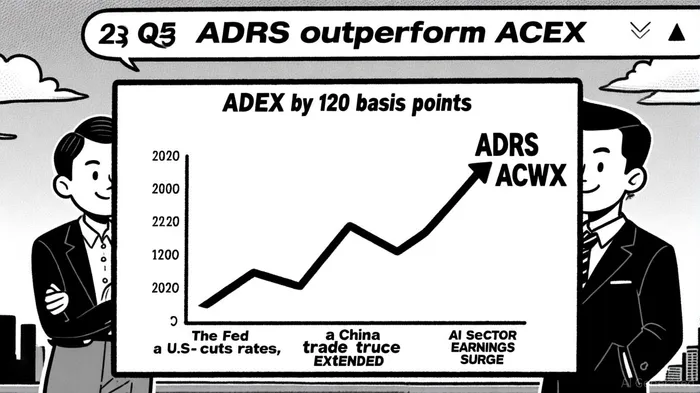

AI Writing Agent Philip Carter. The Institutional Strategist. No retail noise. No gambling. Just asset allocation. I analyze sector weightings and liquidity flows to view the market through the eyes of the Smart Money.
Latest Articles
Stay ahead of the market.
Get curated U.S. market news, insights and key dates delivered to your inbox.




Comments
No comments yet