
Structural Inflation: How Tariffs Are Raising Consumer Prices—and Where to Invest Now
The Federal Reserve's battle against inflation has dominated headlines for years, but beneath the noise lies a subtler truth: many price pressures are no longer temporary. Trump-era tariffs, still embedded in global supply chains, are acting as a structural accelerant to inflation, reshaping industry dynamics and consumer costs. For investors, this means more than cyclical volatility—it's a long-term reality requiring strategic repositioning. Let's dissect which sectors are buckling under tariff-driven margin compression and where to find refuge.
The Tariff Tax on Everyday Goods
The U.S. trade landscape remains a patchwork of punitive levies, with automotive, steel, and tech sectors bearing the brunt. A 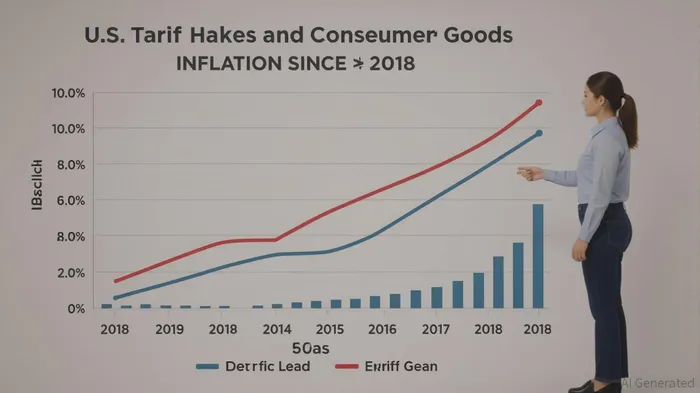 reveals a stark pattern: sectors facing tariffs have seen price increases outpace broader inflation metrics. Here's the breakdown:
1. Automotive: A $25 Billion Hidden Tax
The 25% tariff on non-USMCA-compliant automobiles and parts has transformed supply chains. Automakers sourcing parts from China or Vietnam now face a 25%–46% tariff penalty unless they restructure production within North America. This has driven a contraction of 3–5% for companies like Ford and GMGM--, which are now passing costs to consumers. TeslaTSLA--, despite its brand power, isn't immune: its performance has lagged peers during tariff escalations, as battery and semiconductor costs rise.
Investment Implication: Avoid automakers reliant on Asian supply chains. Instead, favor firms like RivianRIVN-- or Polestar, which are vertically integrated or have secured USMCA-compliant suppliers.
2. Steel and Aluminum: The Infrastructure Squeeze
The Section 232 tariffs—25% on steel and 10% on aluminum from non-USMCA countries—have inflated raw material costs by 15–20%. This hits construction and manufacturing, where steel is a linchpin. A shows prices hovering near decade highs, squeezing margins for companies like CaterpillarCAT-- and BoeingBA--. Even worse, exemptions for aerospace parts (e.g., UK suppliers) are narrow, leaving most manufacturers exposed.
Investment Implication: Short industrial equities tied to steel-heavy projects. Instead, consider ETFs like XMEXME-- (semiconductor stocks) or companies like NucorNUE--, which benefit from U.S. production dominance.
3. Critical Minerals: The Lithium Tariff Trap
Tariffs on lithium, cobalt, and rare earth derivatives—critical for EV batteries and renewable tech—are now as high as 25%. This creates a paradox: the clean energy transition is being taxed at the same time it's subsidized. Tesla's battery costs, already under pressure, could rise further if China's suspended tariffs resume. Meanwhile, miners like AlbemarleALB-- face a performance gap versus rivals with domestic reserves.
Investment Implication: Buy into U.S. mineral producers (e.g., Lithium Americas) or ETFs like GDXJ (junior miners) to hedge against supply chain bottlenecks.
The Inflation-Proof Equity Playbook
To navigate this landscape, focus on companies that can either insulate themselves from tariff impacts or monetize inflation itself:
1. USMCA Compliant Supply Chains
Firms like Ford's BlueOval City (a U.S.-based EV battery plant) or Canadian National RailwayCNI-- (which handles compliant cross-border shipments) are tariff-proofing their operations. These companies avoid “stacking” penalties (overlapping duties) and can pass costs to consumers without margin erosion.
2. Healthcare's Pricing Power
Pharmaceutical giants like PfizerPFE-- and AbbVieABBV-- have pricing flexibility, especially for patented drugs. Even with proposed 200% tariffs on Chinese-made generics, they can absorb costs by shifting production to U.S. facilities. A shows resilience during prior tariff cycles.
3. Infrastructure Plays with Public Funding
States and municipalities are accelerating infrastructure projects to meet Biden administration goals. Companies like Bechtel or FluorFLR--, which secure state-backed contracts, can pass tariff-driven costs to government budgets rather than private consumers.
The Legal Wildcard: Court Rulings and Policy Shifts
The July 31 court hearing on reciprocal tariffs could upend sectors overnight. A ruling against the administration might slash tariffs on China and the EU, creating a 6–8% price drop in affected goods (e.g., semiconductors, luxury goods). Conversely, a win for tariffs could deepen inflation. Investors should remain nimble, using options to hedge bets.
Conclusion: Inflation Isn't Going Quietly
Trump-era tariffs are the “ghosts in the machine” of U.S. inflation—persistent, complex, and structurally embedded. Sectors like automotive and steel are trapped in a margin-squeeze cycle, while critical minerals face a supply chain arms race. Investors must prioritize companies with tariff-proof supply chains or pricing power, while hedging against legal risks. The next six months will test both patience and adaptability—those who see tariffs as a permanent feature, not a temporary glitch, will have the edge.
Invest wisely, and stay vigilant.

Stay ahead of the market.
Get curated U.S. market news, insights and key dates delivered to your inbox.




Comments
No comments yet