
Strong jobs report increases expectations for the Fed to move 25 bps
The September jobs report showed the U.S. labor market continues to beat expectations, with 254,000 jobs added, surpassing economists’ forecast of 140,000 and higher than Bloomberg's consensus estimate of 150,000. This figure was also a notable increase from the revised 159,000 jobs added in August. The unemployment rate remained stable at 4.1%, in line with expectations, but higher than the 3.8% recorded a year earlier. Average hourly earnings rose by 0.4%, or 13 cents, to $35.36, slightly above the 0.3% growth forecast. Over the past 12 months, wages have increased by 4.0%, indicating steady wage inflation.
Sectors contributing most to the job gains in September included food services and drinking places, which saw a large increase of 69,000 jobs, significantly above its 12-month average of 14,000. Health care added 45,000 jobs, below its recent average but still a significant contributor, with gains across home health care services, hospitals, and nursing facilities. Government employment also continued its upward trend, adding 31,000 jobs, and social assistance added 27,000 jobs, primarily in individual and family services. Construction saw solid growth, adding 25,000 jobs, which was above its 12-month average of 19,000. Other sectors, including manufacturing, mining, retail, and financial activities, showed little change.
Compared to the average monthly job gain of 203,000 over the past 12 months, September's job growth of 254,000 was stronger than expected. This shows resilience in the labor market despite some headwinds and recent concerns about slowing economic growth. The revisions for July and August also added 72,000 more jobs than previously reported, further highlighting the strength of the labor market.
The positive surprises in the September report and prior upward revisions are influencing market expectations for Federal Reserve rate cuts. Following this report, Wall Street traders now see a 90% chance of a 0.25 percentage point cut at the Fed's November meeting, up from 68% just the day before. The solid labor market and rising wages suggest the Fed may not need to cut rates more aggressively, which explains why traders are now assigning just a 10% chance of a 0.50 point cut.
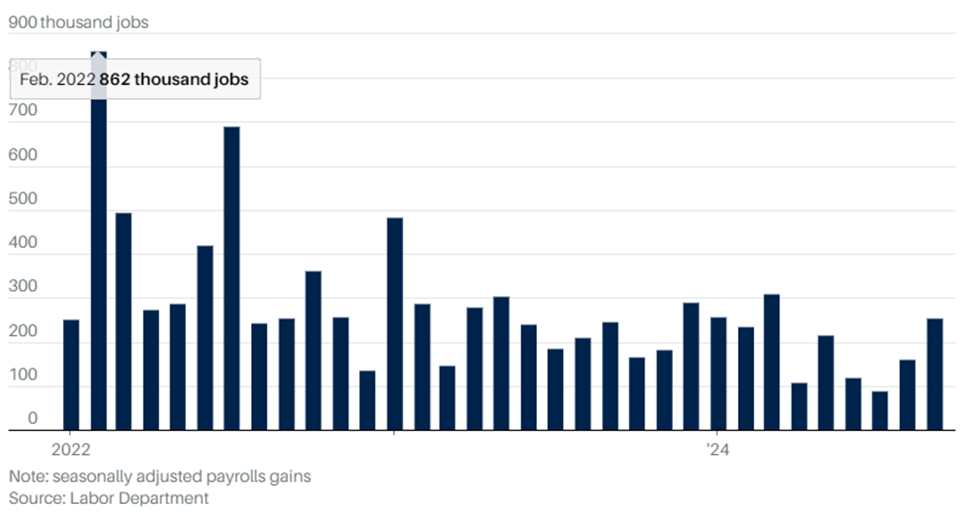
The report also shows that, although the labor market is solid, employment has cooled in 2024 compared to the rapid job gains of the previous year. Fed officials will closely monitor how these conditions evolve, particularly as the labor strikes and hurricane disruptions did not yet affect September’s data but may impact future reports. With another jobs report coming in October, any distortions from these events will be key in shaping market sentiment and Fed decisions.
Looking ahead, the October jobs report, due just before the Fed's November meeting, could be distorted by temporary factors, such as the Boeing machinists’ strike and the disruptions caused by Hurricane Helene. These could lead to artificially lower job numbers in October, potentially complicating the Fed's decision-making process and adding uncertainty to the overall labor market outlook.
This makes the September report particularly important for market participants as it provides a clean look at labor market conditions before any temporary disruptions occur. A strong showing in September has eased concerns about a significant economic slowdown, and while inflation and wage growth are still being monitored, the labor market appears resilient.
Overall, the September jobs report has reinforced the idea that the U.S. economy remains on solid footing, even as it experiences a moderate cooling. The Fed is expected to act cautiously in response, with markets now pricing in a smaller rate cut in the near term. This report will likely drive near-term market volatility, especially in equities and bonds, as traders adjust to the latest labor market data.

Senior Analyst and trader with 20+ years experience with in-depth market coverage, economic trends, industry research, stock analysis, and investment ideas.
Latest Articles
Stay ahead of the market.
Get curated U.S. market news, insights and key dates delivered to your inbox.
AInvest
PRO
AInvest
PRO



Comments
No comments yet