
Strong Jobs Data Pushes Rate Cuts Out — H1 Easing Hopes Fade
 Aime Summary
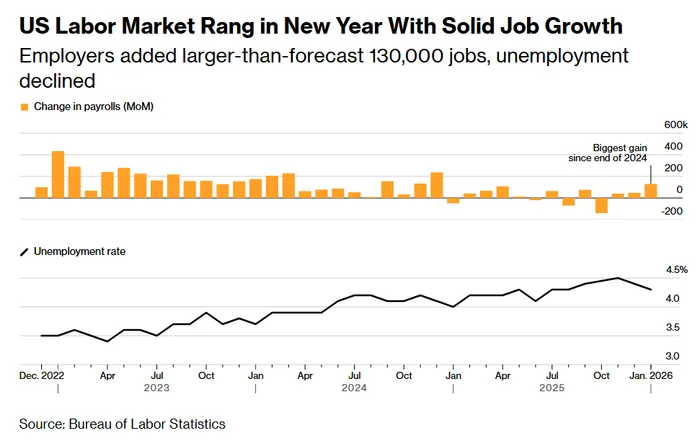
U.S. nonfarm payrolls increased by 130k in January, significantly above expectations of 65k.
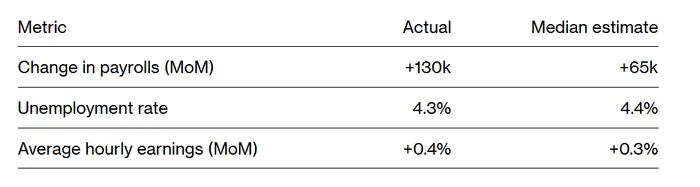
The unemployment rate fell to 4.3%, better than the expected 4.4%.
Following the release of the jobs report, U.S. equities opened higher. Traders pushed back expectations for the next Federal Reserve rate cut from June to July, suggesting that hopes for rate cuts in the first half of the year may not materialize.
Breaking down the data, the healthcare sector added 82,000 jobs in January, making the largest contribution. Manufacturing recorded its first job gains in more than a year, adding 5,000 positions. Meanwhile, transportation and warehousing, information technology, financial services, and government employment all saw job declines.
Other data showed that the labor force participation rate rose from 62.4% to 62.5%, while average hourly earnings increased 0.4% month-over-month, exceeding expectations.
The U.S. labor market started the year on a strong footing. However, total nonfarm payrolls for 2025 were revised down by 862,000, leaving just 181,000 jobs added for the year as a whole. This creates a contradictory employment picture: January was strong, but not strong enough to fully offset prior weakness. The Federal Reserve now faces a more complex calculus when determining the timing of rate cuts.
Rate Cuts in the First Half May Be Off the Table
Market analysts believe the January jobs report could reinforce the Fed’s wait-and-see stance. Hawkish officials may argue that current interest rates are not significantly restraining economic activity, citing the continued decline in unemployment and fewer workers forced into part-time roles due to an inability to find full-time jobs. Following three consecutive rate cuts last year, the labor market has stabilized.
Kay Haigh of Goldman Sachs Asset Management commented: “The labor market continues to outperform expectations, shifting the FOMC’s focus back to inflation. We still see room for two rate cuts this year. However, an upside surprise in CPI could tilt the FOMC in a more hawkish direction.”
Over the three months ending January 2026, average monthly job gains stood at 73,000. Considering tighter immigration enforcement and slower labor supply growth, this remains a relatively healthy figure. While downside risks to the labor market—highlighted by the Fed late last year—have not disappeared, they are clearly diminishing,” said Brian Coulton of Fitch Ratings.
Bloomberg’s Chief U.S. Rates Strategist Ira Jersey noted that rate cuts may come later this year, but only if labor market conditions weaken in the coming months. January’s data appears to reduce that likelihood. He emphasized that wage growth and hours worked may be even more important than headline payrolls, as they signal resilient consumer spending power and stronger corporate earnings.

Senior Research Analyst at Ainvest, formerly with Tiger Brokers for two years. Over 10 years of U.S. stock trading experience and 8 years in Futures and Forex. Graduate of University of South Wales.
Latest Articles
Stay ahead of the market.
Get curated U.S. market news, insights and key dates delivered to your inbox.


AInvest
PRO
AInvest
PRO



Comments
No comments yet