
STRK Halts Block Production in Fresh Outage, Freezing Transactions
 Aime Summary
Starknet's mainnet halted block production for over two hours on January 5, freezing all transactions according to reports. This marks the second major outage in four months, following a nine-hour halt in September 2025 as reported. The network's $840 million TVL and 264 million processed transactions were paused during the disruption according to data. Developers are investigating root causes and plan a post-mortem analysis as stated.
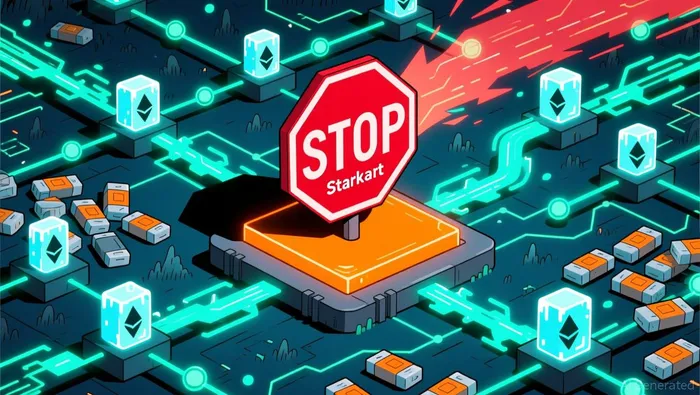
Starknet (STRK) faced renewed operational challenges this week when its mainnet froze for over two hours. The EthereumETH-- Layer-2 network halted block production on January 5, disrupting all on-chain activity according to reports. Transactions couldn't be submitted or finalized during the outage affecting decentralized applications and smart contracts as detailed. This incident adds to reliability concerns as StarknetSTRK-- transitions toward decentralized architecture according to analysis. Users experienced temporary inaccessibility to funds and services during the downtime as reported.
What Triggered Starknet's Latest Network Outage?
Block production stalled due to inconsistencies between sequencers and proofing layers according to reports. Developers identified processing errors during their investigation as detailed. The team implemented a network rollback to stabilize operations according to reports. No immediate root cause explanation was provided publicly . Transactions submitted between 9:24-9:42 UTC may contain inconsistencies according to analysis.
This disruption interrupted Starknet's Bitcoin-focused DeFi expansion efforts as reported. The network aims to bridge BTC functionality to Ethereum through its BTCFi initiative according to data. Outages create execution risks for these growth plans.
How Does This Incident Compare to Starknet's Previous Outages?
The January outage was shorter than September's nine-hour halt as documented. That disruption followed the Grinta upgrade introducing decentralized sequencers according to analysis. It required two chain reorganizations rolling back transactions as reported.
Prior incidents include April 2024's four-hour outage from a rounding error according to data. Starknet joins other L2s like Base and Polygon zkEVM facing sequencer issues as reported. These patterns highlight structural challenges in scaling solutions according to analysis.
Sequencer vulnerabilities remain a common failure point across Layer 2 ecosystems according to reports. Starknet had achieved Stage 1 decentralization status before these outages as noted. Operational maturity lags behind technical ambitions currently according to analysis.
What Are the Implications for Starkknet's Reliability and Adoption?
Repeated disruptions raise red flags about production readiness according to reports. STRK trades near $0.08, down 20% monthly from February 2024's $3 peak as reported. Network halts could impact institutional adoption timelines according to analysis.
The market shows decreasing tolerance for L2 downtime according to data. Starknet processed 264 million transactions with 56,000 active accounts before the halt as detailed. Its $840 million TVL positions it among significant Ethereum scalers according to reports.
Starknet introduced stateful blob compression and prover optimizations in 2025 according to analysis. These contrast with recurring operational failures as reported. Reliability becomes critical as L2s handle more value.

Blending traditional trading wisdom with cutting-edge cryptocurrency insights.
Latest Articles
Stay ahead of the market.
Get curated U.S. market news, insights and key dates delivered to your inbox.






Comments
No comments yet