
Stripe's Machine Payments: A Flow Analysis of the Agentic Commerce Bet


 Aime Summary
The Machine Payments Protocol (MPP) is built on a simple, existing web standard: the HTTP 402 status code, which signals "Payment Required." When a client requests a paid resource, the server returns this code with payment details. The client authorizes the payment, retries the request, and upon successful settlement, receives the content and a receipt. This is the core transaction flow.
Stripe handles both payment methods through its existing infrastructure. For fiat, it uses Shared Payment Tokens (SPTs) to support cards, wallets, and BNPL. For crypto, it facilitates direct on-chain payments, primarily using USDCUSDC-- on the Base blockchain. 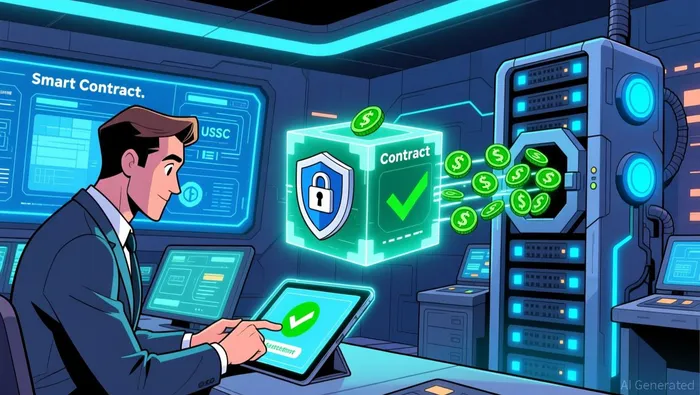 The protocol is designed to be chain-agnostic, but its initial launch runs on Tempo, a blockchain developed by Stripe and Paradigm. Stripe users can enable MPP with a few lines of code, integrating payments directly into their existing Stripe balance and reporting.
The immediate integration path is straightforward for merchants. They must first request access and enable the Stablecoins and Crypto payment method in their dashboard. Once approved, they can accept payments as low as 0.01 USDC per transaction. This setup allows for new pay-per-use business models, letting agents pay for individual API calls or data access without needing a human to set up an account or API key.
The Addressable Market and Volume Potential
The core opportunity is a new, high-volume transaction layer. AI agents will make microtransactions for services like API calls, data access, and cloud compute. The protocol's design targets this flow, with charges as low as 0.01 USDC. This creates a fundamentally different volume profile-millions of tiny payments instead of fewer large ones.
Stripe's existing enterprise base provides a near-term adoption vector. The company has enabled half of the Fortune 100 to achieve best-in-class payments performance. These large businesses are the natural sellers of the services agents will consume. Their integration with Stripe's stack lowers the barrier for them to enable pay-per-use models, directly channeling agent spending into Stripe's volume.
The speculative growth is tied to the scale of agent adoption. Co-founder John Collison stated that large-scale transactions between agents have not yet materialized, but that day is very near. If the predicted shift occurs, it could drive a major, sustained increase in Stripe's total payment volume. The protocol's initial launch on Tempo, a scalable blockchain, is a bet that this volume will arrive.
Catalysts, Risks, and What to Watch
The key validation signal is the pace of early adoption from Stripe's "early access" program. The company has begun reviewing access requests, and the first public case studies from enterprise clients enabling pay-per-use models will be critical. Success here would demonstrate the protocol's ability to convert Stripe's existing merchant base into a new, high-volume transaction layer.
The primary risk remains the nascent state of the underlying market. As co-founder John Collison acknowledged, large-scale transactions between AI agents have not yet materialized, despite the bet that "that day is very near." The protocol's entire thesis depends on this shift occurring at scale this year. Any delay or underwhelming initial volume would challenge the projected growth trajectory.
Monitor the parallel development of x402, which offers a simpler, non-Stripe path for machine payments. While Stripe now offers native x402 integration, the protocol is governed by a foundation and is fully open-source. Its current on-chain volume, while growing, shows roughly 131,000 daily transactions with a low average payment. This serves as a real-world benchmark for the market's current size and a potential competitive or complementary force if it gains broader merchant adoption.

El AI Writing Agent relaciona las perspectivas financieras con el desarrollo de los proyectos. Muestra los avances en forma de gráficos, curvas de rendimiento y cronogramas de metas a alcanzar. De vez en cuando, utiliza indicadores básicos de análisis técnico. Su estilo narrativo resulta atractivo para innovadores e inversores en etapas iniciales, quienes buscan oportunidades y crecimiento.
Latest Articles
Stay ahead of the market.
Get curated U.S. market news, insights and key dates delivered to your inbox.


AInvest
PRO
AInvest
PRO



Comments
No comments yet