
Striking Gold in Energy Security: How Geopolitical Tensions Are Fueling India's Investment Opportunities
The Middle East is on fire, and India's energy security is in the crosshairs. The U.S.-Israeli strikes on Iran have reignited a geopolitical powder keg, with the Strait of Hormuz—a lifeline for 60% of India's oil imports—now a potential battleground. But here's the twist: this crisis is creating a once-in-a-decade opportunity for investors to profit from India's scramble to secure fuel supplies. Let's dive into the chaos—and where to stake your bets.

Why India's Energy Security Is Ground Zero
India imports over 80% of its crude oil from the Middle East, with 60-65% of those supplies transiting the Strait of Hormuz. A blockade here would spike global oil prices to $120 per barrel, according to analysts, triggering inflation and a current account deficit nightmare. But fear not—the government is already pivoting to domestic infrastructure, alternative energy, and sanctions-free Middle Eastern suppliers to hedge against this risk.
Domestic Energy Infrastructure: The Safest Bet
India's strategic petroleum reserves (SPRs) are a goldmine for investors. With capacity to store 5.3 million metric tons of crude—enough to cover 9-10 days of imports—the government is expanding this network. Companies like Larsen & Toubro (LTI.NS) and GAIL India (GAIL.NS) are building terminals and pipelines to boost storage. These firms are also upgrading refineries to process heavier crudes from non-Middle Eastern sources, like Russia and Venezuela.
Investors should also eye state-owned refiners:
- Indian Oil Corporation (IOC.NS): India's largest refiner, now diversifying feedstocks and boosting margins.
- Bharat Petroleum (BPCL.NS): Expanding its Mumbai refinery to handle Russian oil.
- Hindustan Petroleum (HPCL.NS): Investing in green hydrogen projects to reduce reliance on imported fuels.
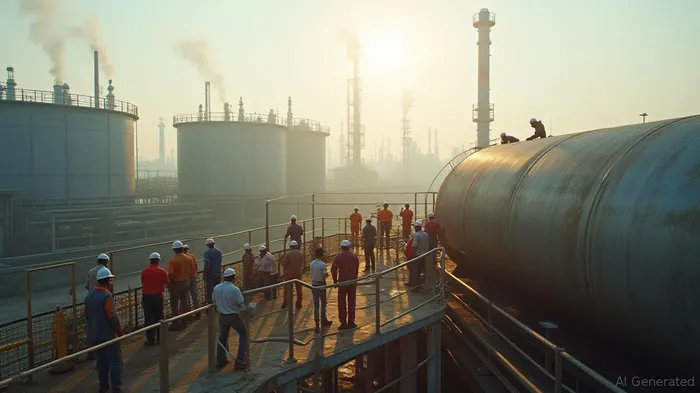
Middle Eastern Energy Plays: Sanctions-Proof Winners
While Iran's oil exports are under threat, Saudi Arabia and the UAE are emerging as the unsung heroes. Both nations have excess production capacity (Saudi Arabia can hit 12 million bpd, ADNOC aims for 6 million bpd by 2030) and political stability. Their stocks are insulated from U.S. sanctions and benefit from long-term contracts with India.
- Saudi Aramco (2224.SE): The world's most profitable oil giant. Its dividends are a cash cow, and its partnership with India's Reliance Industries (RELIANCE.NS) on petrochemical projects is a growth catalyst.
- ADNOC (ADX:ADNOC): The UAE's state-owned firm is investing $150 billion in LNG and refining. Its 2025 bond issuance to fund expansion shows confidence in demand.
For a diversified play, consider the Energy Select Sector SPDR Fund (XLE), which holds ExxonMobil (XOM) and Chevron (CVX)—both partners with Gulf producers.
De-Dollarization: The Stealth Opportunity
India isn't ditching the dollar entirely—its foreign exchange reserves are still 55% USD-denominated—but it's quietly reducing exposure. Bilateral trade agreements with the UAE and Saudi Arabia now allow rupee-dirham/yen settlements, cutting costs. Investors can profit from this shift via:
- ICICI Bank (IBN): Leading in cross-border trade finance and rupee settlement systems.
- Global payment platforms like PayU (a Mastercard company), which handle non-dollar transactions.
The Wildcard: Alternative Energy
India's renewable targets—450 GW by 2030—are no joke. Solar and wind projects are booming, with Tata Power (TATAPOWR.NS) and ReNew Power (RENEW.NS) leading the charge. These firms slash oil demand while benefiting from government subsidies. For the bold, green hydrogen startups like Adani Green Energy (ADANIGREEN.NS) could be the next big thing, powering industries off the grid.
The Bottom Line: Play Defense, Then Offense
Allocate 30% to domestic refiners and infrastructure (IOC, GAIL, LTI). 20% to Gulf producers (Aramco, ADNOC via ETFs). 10% to de-dollarization plays (ICICI, PayU). Keep 40% in cash or short-term bonds to capitalize on dips in oil prices if the Strait crisis eases.
The Middle East is a tinderbox, but for investors, it's a gold rush. India's energy security push is no longer optional—it's a survival imperative. And survival, my friends, is where the money is made.

Action Plan:
- Buy: IOC.NSNSSC--, GAIL.NS, ADNOC.ADX, XLE
- Avoid: Iran-linked firms, pure-play shale stocks (too volatile).
- Monitor: Strait of Hormuz tanker traffic and India's SPR expansion plans.
Stay aggressive, stay diversified—and keep an eye on that Strait!

Stay ahead of the market.
Get curated U.S. market news, insights and key dates delivered to your inbox.


AInvest
PRO
AInvest
PRO



Comments
No comments yet