
Strikes in U.S. Healthcare: A Warning for Investors in an Overstretched System
 Aime Summary
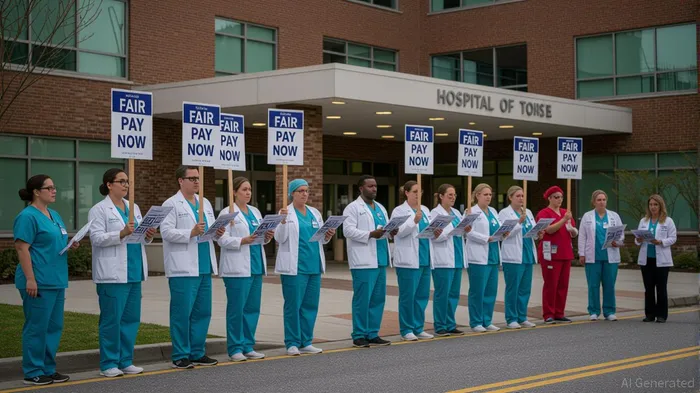
The U.S. healthcare system is at a breaking point. From Rhode Island to Minnesota, nurses and support staff are walking picket lines, demanding better pay, safer conditions, and fairer treatment. These strikes, echoing the recent Northumbria Healthcare NHS dispute in the UK, reveal systemic cracks in a workforce stretched to its limits. For investors, the risks are clear: labor market volatility could disrupt operations, inflate costs, and destabilize stocks in the sector. Here's how to navigate the turbulence.
The Northumbria Analogy: Underpaid Staff and Back Pay Battles
The Northumbria Healthcare NHS dispute, where healthcare assistants were underpaid for years despite performing advanced tasks, mirrors U.S. struggles. U.S. home health aides, nursing assistants, and paramedics often face similar pay gaps. For instance, the Bureau of Labor Statistics (BLS) shows median pay for nursing aides at just $30,010 annually—far below the skill levels required to handle complex patient care.
The Northumbria workers' demand for full back pay highlights a broader issue: delayed wage adjustments for roles that have evolved beyond their original scope. In the U.S., this dynamic is amplified by aging populations and rising demand for care, yet staffing ratios remain dangerously low. The 2023 State of Nursing Report confirms that 79% of nurses believe understaffing worsens the nursing shortage—a vicious cycle that threatens both patient safety and hospital profitability.
Systemic Labor Market Pressures
- Wage Stagnation vs. Rising Costs
Healthcare workers are fighting to close gaps between stagnant wages and soaring operational costs. For example, nurses at Butler Hospital (Providence, RI) cite rising health insurance deductibles and low pay as key grievances. Meanwhile, hospitals face pressure to cut costs to offset Medicare/Medicaid reimbursement shortfalls.
The XLV's underperformance relative to the broader market since late 2023 reflects investor skepticism about the sector's ability to manage labor costs.
Staffing Shortages and Burnout
The U.S. is projected to face a deficit of 1.2 million nurses by 2030 (HHS/ACF data), with burnout rates at record highs. Overworked staff are leaving for industries like tech or retail, which offer better pay and flexibility.Unionization Surge
Unions like the National Nurses United (NNU) are gaining traction, with 2025 strikes at Geisinger Health System and University of California facilities signaling a shift toward collective bargaining. This could lead to higher labor costs for hospitals but also improve long-term stability.
Policy Risks and Regulatory Interventions
Policymakers are under pressure to act. The HHS/ACF guidelines on information quality underscore the reliability of workforce data, which could drive state-level mandates. For example:
- Staffing Ratios Legislation: California's AB 458 (2022), which requires minimum nurse-to-patient ratios, could inspire similar laws in other states, raising labor costs but improving care quality.
- Pay Transparency Laws: Growing mandates to disclose wage ranges may reduce disparities but could squeeze margins for hospitals already struggling with thin profit margins.
Investors should watch for federal action, such as expanded Medicare reimbursement for facilities meeting staffing benchmarks, which could favor large, well-capitalized hospitals over smaller competitors.
Investment Implications and Defensive Strategies
The strikes and systemic risks pose both threats and opportunities:
At-Risk Sectors:
- Acute Care Hospitals: Companies like Community Health Systems (CYH) or Tenet HealthcareTHC-- (THC) face immediate risks from strikes and staffing shortages. Their stock prices have already dipped as labor costs rise.
- Rural Facilities: Struggling with both recruitment and reimbursement, these hospitals may see further declines.
Stable Plays:
- Healthcare Tech: Companies enabling automation (e.g., telehealth platforms like Teladoc HealthTDOC-- (TDOC) or robotic surgery firms like Intuitive SurgicalISRG-- (ISRG)) could reduce reliance on labor.
- Well-Managed Systems: Large, diversified networks like UnitedHealth GroupUNH-- (UNH) or Kaiser Permanente (KHC) often have stronger labor-management relations and balance sheets to weather strikes.
Defensive Strategy:
1. Diversify into Healthcare ETFs with Tech Exposure: The iShares U.S. Healthcare ETF (IYH) includes tech and biotech firms, offering insulation from labor volatility.
2. Focus on Companies with Strong Labor Agreements: Hospitals like Providence Health & Services, which recently settled a strike with better pay, demonstrate how proactive negotiations can stabilize operations.
3. Monitor Policy Developments: Use tools like the HHS Nursing Workforce Data to track staffing trends and anticipate regulatory shifts.
Conclusion
The U.S. healthcare labor crisis is not just a short-term disruption—it's a structural challenge demanding systemic fixes. Investors ignoring these strikes risk exposure to rising operational costs and regulatory penalties. By prioritizing tech-driven solutions, diversified portfolios, and companies with resilient labor policies, investors can mitigate risks while positioning for a more sustainable healthcare future.
Stay vigilant, and keep an eye on those picket lines—they're not just about wages, but about the future of healthcare itself.

Stay ahead of the market.
Get curated U.S. market news, insights and key dates delivered to your inbox.
AInvest
PRO
AInvest
PRO



Comments
No comments yet