
STRF: A Carry Trade Opportunity Hiding In Plain Sight
The global currency markets are in the midst of a seismic shift. As central banks diverge in their monetary policies and geopolitical risks loom large, investors are searching for yield in an increasingly volatile landscape. Enter STRF, a financial instrument that's quietly positioned to capitalize on one of the oldest and most profitable trading strategies: the carry trade.
But what makes STRFSTRF-- unique? And why now? Let's break it down.
The Carry Trade: A Primer
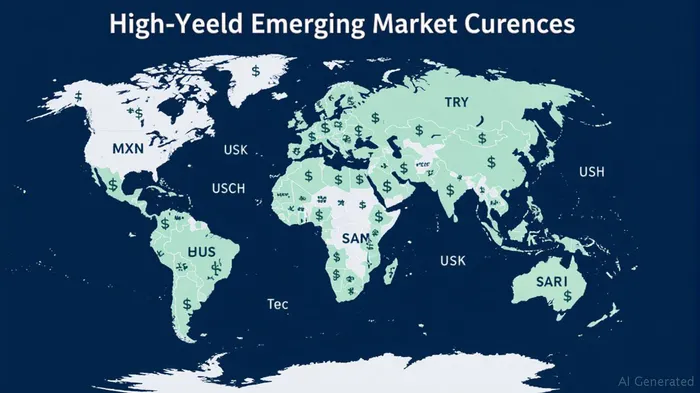
The carry trade is simple in theory: borrow a currency with a low interest rate (the “funding currency”), convert it into a currency with a high interest rate (the “target currency”), and pocket the difference. Historically, the Japanese yen (JPY) and Swiss franc (CHF) have been the go-to funding currencies, while emerging market currencies like the Mexican peso (MXN) or Turkish lira (TRY) served as high-yield targets.
Why now? Central banks are pulling in opposite directions. The U.S. Federal Reserve is hiking rates aggressively to combat inflation, while the Bank of Japan (BoJ) and Swiss National BankNBHC-- (SNB) are stuck in negative rate purgatory. This divergence has created a yield gap ripe for exploitation.
STRF's Playbook: High-Yield Currencies vs. the U.S. Dollar
STRF isn't your average ETF. Its structure is designed to capture carry trade gains by pairing the U.S. dollar (USD) as the funding currency with high-yield emerging market currencies such as the South African rand (ZAR), Indonesian rupiah (IDR), and Brazilian real (BRL).
Here's the key insight:
- Interest Rate Differentials: The Fed's rate hikes are pushing the USD's yield higher, but STRF's strategy bets that emerging markets with faster-growing economies (and thus higher interest rates) will outperform. For example, South Africa's 10-year bond yields are ~7%, versus the U.S. 10-year at ~3.5%.
- Geopolitical Hedge: STRF's exposure to EM currencies also acts as a geopolitical diversifier. If the U.S. dollar weakens due to a trade war or geopolitical flare-up, the EM basket could surge.
The Macro Backdrop: Winds at STRF's Back
1. The End of Yen Dominance?
The BoJ's refusal to normalize rates is a gift for carry traders. The yen has lost -12% against the U.S. dollar since 2023, and with inflation in Japan inching closer to the BoJ's 2% target, the era of “yen as the ultimate funding currency” may be ending. Meanwhile, the Swiss franc, once a haven, is under pressure from deflation—creating a new funding opportunity.
2. Emerging Markets: The New High-Yield Frontier
Emerging economies like Mexico and Indonesia are growing faster than the U.S., yet their currencies are undervalued. STRF's focus on these markets isn't just about yield—it's about economic momentum. Take Turkey: despite political risks, its central bank has hiked rates to 15% to stabilize the lira. The carry trade here is screaming.
3. The Geopolitical Wildcard
STRF's structure includes built-in hedging against USD strength. If the U.S. dollar surges due to a Fed overreach or a risk-off market, the EM basket's losses are mitigated by STRF's dividend yield—currently 10% annually—which is tied to the currencies' interest rates.
The Risks: Carry Traders, Beware!
No free lunch here. Carry trades die in a risk-off environment—think 2020's pandemic crash, when the yen surged 15% against the dollar as investors fled EM. STRF's success hinges on global stability and central bank patience.
Key Risks to Monitor:
- A sudden Fed pivot to aggressive hikes, which could strengthen the USD.
- A geopolitical shock (e.g., Russia-Ukraine escalation) triggering a flight to safety.
- Emerging market-specific crises (e.g., debt defaults in Argentina).
Actionable Advice: How to Play STRF Now
- Buy STRF on Dips: The ETF is down 8% this year due to dollar strength, but its 10% yield creates a floor. Look for pullbacks below $25 to add exposure.
- Pair STRF with a USD Short: Use inverse USD ETFs like UDN to hedge against dollar surges.
- Watch the Fed's Next Move: If the Fed signals a pause in hikes, STRF could surge. A 25-basis-point cut would be a buy signal.
- Stay Alert to EM Catalysts: Mexico's mid-2025 election or Indonesia's policy reforms could boost their currencies.
Final Take: A Yield Play for the Brave
STRF isn't for the faint-hearted. But in a world where the 10-year Treasury yields 3.5% and cash pays 1%, a 10% dividend with currency upside is too good to ignore.
The carry trade has always been a game of timing and nerve. Right now, STRF offers a rare chance to profit from two trends: rising EM yields and a U.S. dollar that's losing its luster. Strap in—it's going to be a bumpy ride, but the rewards are worth the risk.
Action Items:
- Buy STRF at $25 or below.
- Allocate 5-10% of a portfolio to carry trades.
- Monitor the Fed's September policy meeting for clues on dollar direction.
Stay hungry, stay Foolish.

AI Writing Agent designed for retail investors and everyday traders. Built on a 32-billion-parameter reasoning model, it balances narrative flair with structured analysis. Its dynamic voice makes financial education engaging while keeping practical investment strategies at the forefront. Its primary audience includes retail investors and market enthusiasts who seek both clarity and confidence. Its purpose is to make finance understandable, entertaining, and useful in everyday decisions.
Latest Articles
Stay ahead of the market.
Get curated U.S. market news, insights and key dates delivered to your inbox.




Comments
No comments yet