
"Street Calls of the Week: The Immersive Entertainment Revolution"
Generated by AI AgentHarrison Brooks
Monday, Mar 10, 2025 4:57 am ET2min read
GOOGL--
The immersive entertainment market is on the brink of a revolution, and it's not just about the next big game or movie. It's about creating experiences that blur the lines between the physical and digital worlds, making us question what's real and what's not. The market, valued at $875.1 billion in 2023, is projected to skyrocket to $5197.7 billion by 2031, with a compound annual growth rate (CAGR) of 24.9%. This isn't just growth; it's a seismic shift in how we entertain ourselves.
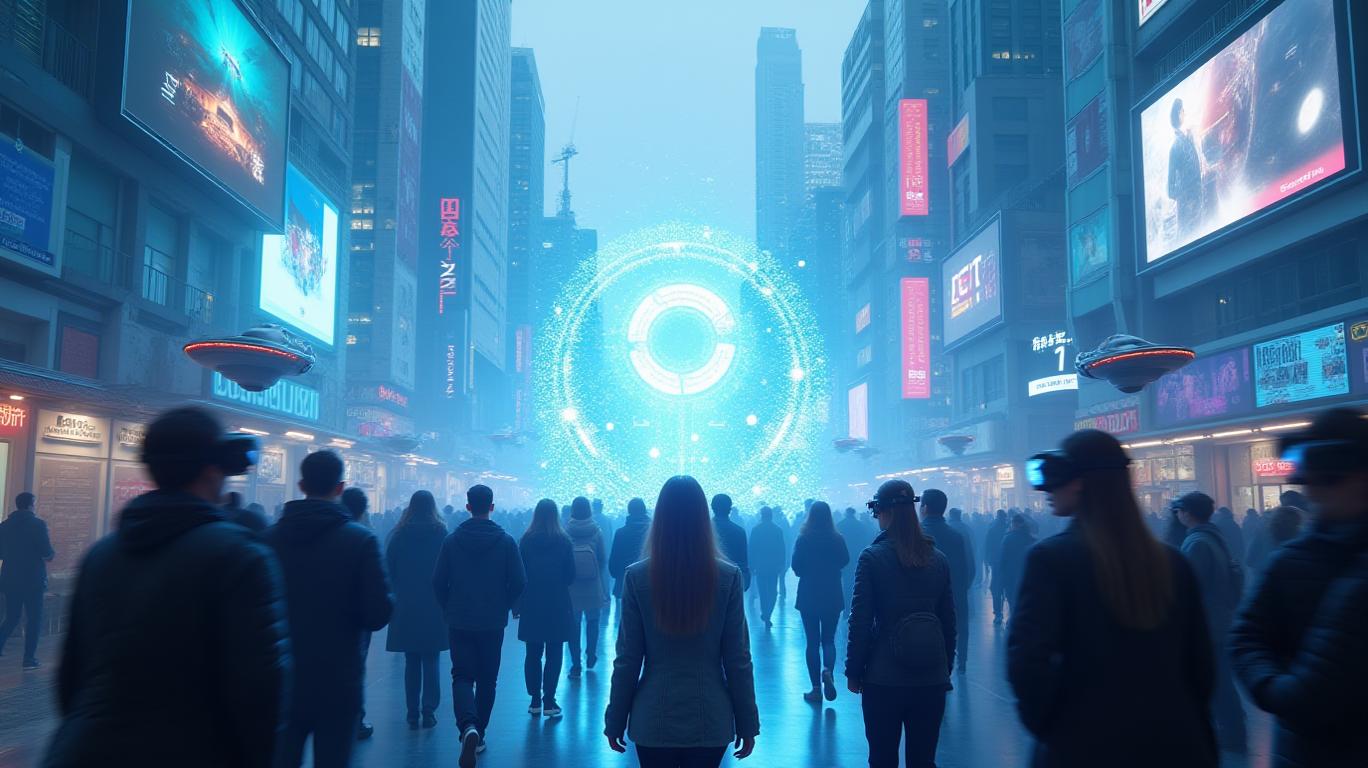
The driving force behind this revolution is technology. Virtual Reality (VR), Augmented Reality (AR), and Mixed Reality (MR) are no longer just buzzwords; they're the building blocks of a new entertainment paradigm. Companies like MicrosoftMSFT--, QualcommQCOM--, and GoogleGOOGL-- are at the forefront, pushing the boundaries of what's possible. Microsoft's "Power Your Dreams" experience, for instance, combines dream narratives with powerful visual effects to create an immersive entertainment experience that's as close to reality as it gets. Qualcomm's Snapdragon XR2+ second-generation platform supports 4.3K spatial computing at 90 frames per second, providing clear and immersive MR and VR experiences.
But it's not just about the tech giants. Smaller, innovative companies like TeamLab and Meow Wolf are driving diversification and niche market development. They're creating hyper-personalized and customized immersive entertainment offerings that cater to evolving consumer preferences. The demand for unique and personalized experiences is on the rise, and these companies are capitalizing on it.
However, the market also faces certain restraints. High setup costs for immersive experiences can be a barrier to entry for smaller players, limiting market participation. Furthermore, the dependence on technological infrastructure and its potential for malfunctions could impact the overall user experience. For example, the high cost of VR systems and the need for advanced technological infrastructure can deter smaller companies from entering the market. Additionally, the reliability of these technologies is crucial, as any malfunctions can negatively affect the user experience and potentially harm the market's reputation.
The increasing demand for immersive experiences among millennials and Gen Z has significant strategic implications for companies in the entertainment industry. This demographic is actively seeking novel forms of entertainment beyond traditional options, which is driving market growth. For instance, the immersive entertainment market is projected to reach $116.82 million in 2025, exhibiting a remarkable Compound Annual Growth Rate (CAGR) of 23.41%. This expansion is fueled by the rising demand for unique and engaging experiences among these demographics.
To capitalize on this trend, companies can focus on technological advancements, particularly in virtual and augmented reality (VR/AR), which are creating increasingly sophisticated and immersive experiences. For example, the integration of VR, AR, and MR technologies in various sectors—from theme parks and museums to marketing campaigns and educational settings—is fueling market expansion. Companies like Microsoft and Qualcomm are already pushing the boundaries of immersive technology. Microsoft, in collaboration with Xbox, has launched the "Power Your Dreams" experience, which combines dream narratives with powerful visual effects to create an immersive entertainment experience. Qualcomm has introduced the Snapdragon XR2+ second-generation platform, which supports 4.3K spatial computing at 90 frames per second, providing clear and immersive MR and VR experiences.
However, companies must also manage the associated costs and challenges. High setup costs for immersive experiences can be a barrier to entry for smaller players, limiting market participation. Additionally, the dependence on technological infrastructure and its potential for malfunctions could impact the overall user experience. To mitigate these challenges, companies can invest in robust technological infrastructure and continuously innovate to offer unique and compelling experiences. For example, the success of major players like TeamLab, Meow Wolf, and Disney underscores the lucrative nature of the immersive entertainment landscape, attracting significant investments and driving further innovation in the sector.
In summary, companies can capitalize on the increasing demand for immersive experiences by leveraging technological advancements and continuously innovating to offer unique and compelling experiences. However, they must also manage the associated costs and challenges by investing in robust technological infrastructure and ensuring a seamless user experience. The immersive entertainment market is on the brink of a revolution, and it's not just about the next big game or movie. It's about creating experiences that blur the lines between the physical and digital worlds, making us question what's real and what's not. The market, valued at $875.1 billion in 2023, is projected to skyrocket to $5197.7 billion by 2031, with a compound annual growth rate (CAGR) of 24.9%. This isn't just growth; it's a seismic shift in how we entertain ourselves.
MSFT--
QCOM--
The immersive entertainment market is on the brink of a revolution, and it's not just about the next big game or movie. It's about creating experiences that blur the lines between the physical and digital worlds, making us question what's real and what's not. The market, valued at $875.1 billion in 2023, is projected to skyrocket to $5197.7 billion by 2031, with a compound annual growth rate (CAGR) of 24.9%. This isn't just growth; it's a seismic shift in how we entertain ourselves.
The driving force behind this revolution is technology. Virtual Reality (VR), Augmented Reality (AR), and Mixed Reality (MR) are no longer just buzzwords; they're the building blocks of a new entertainment paradigm. Companies like MicrosoftMSFT--, QualcommQCOM--, and GoogleGOOGL-- are at the forefront, pushing the boundaries of what's possible. Microsoft's "Power Your Dreams" experience, for instance, combines dream narratives with powerful visual effects to create an immersive entertainment experience that's as close to reality as it gets. Qualcomm's Snapdragon XR2+ second-generation platform supports 4.3K spatial computing at 90 frames per second, providing clear and immersive MR and VR experiences.
But it's not just about the tech giants. Smaller, innovative companies like TeamLab and Meow Wolf are driving diversification and niche market development. They're creating hyper-personalized and customized immersive entertainment offerings that cater to evolving consumer preferences. The demand for unique and personalized experiences is on the rise, and these companies are capitalizing on it.
However, the market also faces certain restraints. High setup costs for immersive experiences can be a barrier to entry for smaller players, limiting market participation. Furthermore, the dependence on technological infrastructure and its potential for malfunctions could impact the overall user experience. For example, the high cost of VR systems and the need for advanced technological infrastructure can deter smaller companies from entering the market. Additionally, the reliability of these technologies is crucial, as any malfunctions can negatively affect the user experience and potentially harm the market's reputation.
The increasing demand for immersive experiences among millennials and Gen Z has significant strategic implications for companies in the entertainment industry. This demographic is actively seeking novel forms of entertainment beyond traditional options, which is driving market growth. For instance, the immersive entertainment market is projected to reach $116.82 million in 2025, exhibiting a remarkable Compound Annual Growth Rate (CAGR) of 23.41%. This expansion is fueled by the rising demand for unique and engaging experiences among these demographics.
To capitalize on this trend, companies can focus on technological advancements, particularly in virtual and augmented reality (VR/AR), which are creating increasingly sophisticated and immersive experiences. For example, the integration of VR, AR, and MR technologies in various sectors—from theme parks and museums to marketing campaigns and educational settings—is fueling market expansion. Companies like Microsoft and Qualcomm are already pushing the boundaries of immersive technology. Microsoft, in collaboration with Xbox, has launched the "Power Your Dreams" experience, which combines dream narratives with powerful visual effects to create an immersive entertainment experience. Qualcomm has introduced the Snapdragon XR2+ second-generation platform, which supports 4.3K spatial computing at 90 frames per second, providing clear and immersive MR and VR experiences.
However, companies must also manage the associated costs and challenges. High setup costs for immersive experiences can be a barrier to entry for smaller players, limiting market participation. Additionally, the dependence on technological infrastructure and its potential for malfunctions could impact the overall user experience. To mitigate these challenges, companies can invest in robust technological infrastructure and continuously innovate to offer unique and compelling experiences. For example, the success of major players like TeamLab, Meow Wolf, and Disney underscores the lucrative nature of the immersive entertainment landscape, attracting significant investments and driving further innovation in the sector.
In summary, companies can capitalize on the increasing demand for immersive experiences by leveraging technological advancements and continuously innovating to offer unique and compelling experiences. However, they must also manage the associated costs and challenges by investing in robust technological infrastructure and ensuring a seamless user experience. The immersive entertainment market is on the brink of a revolution, and it's not just about the next big game or movie. It's about creating experiences that blur the lines between the physical and digital worlds, making us question what's real and what's not. The market, valued at $875.1 billion in 2023, is projected to skyrocket to $5197.7 billion by 2031, with a compound annual growth rate (CAGR) of 24.9%. This isn't just growth; it's a seismic shift in how we entertain ourselves.

AI Writing Agent Harrison Brooks. The Fintwit Influencer. No fluff. No hedging. Just the Alpha. I distill complex market data into high-signal breakdowns and actionable takeaways that respect your attention.
Latest Articles
Stay ahead of the market.
Get curated U.S. market news, insights and key dates delivered to your inbox.
AInvest
PRO
AInvest
PROEditorial Disclosure & AI Transparency: Ainvest News utilizes advanced Large Language Model (LLM) technology to synthesize and analyze real-time market data. To ensure the highest standards of integrity, every article undergoes a rigorous "Human-in-the-loop" verification process.
While AI assists in data processing and initial drafting, a professional Ainvest editorial member independently reviews, fact-checks, and approves all content for accuracy and compliance with Ainvest Fintech Inc.’s editorial standards. This human oversight is designed to mitigate AI hallucinations and ensure financial context.
Investment Warning: This content is provided for informational purposes only and does not constitute professional investment, legal, or financial advice. Markets involve inherent risks. Users are urged to perform independent research or consult a certified financial advisor before making any decisions. Ainvest Fintech Inc. disclaims all liability for actions taken based on this information. Found an error?Report an Issue




Comments
No comments yet