
Streaming TV's New Pricing Revolution: How Sling TV's Flexible Tiers Are Reshaping the Market


 Aime Summary
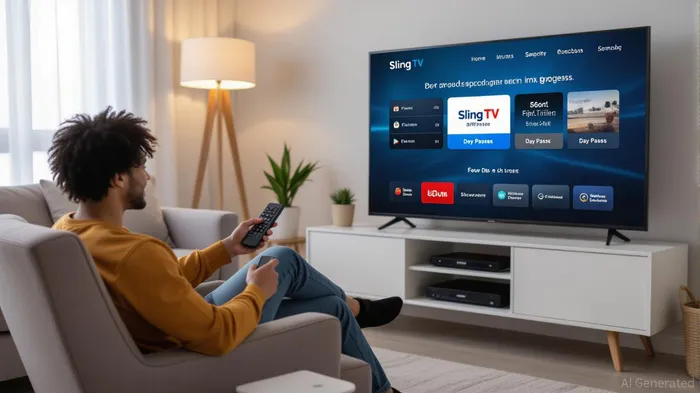
The key to Sling TV's success lies in its ability to cater to the dual demands of affordability and customization. By introducing the Day Pass feature-offering access to the ESPN-inclusive Sling Orange tier for as little as $5 per day-the platform has created a low-commitment entry point for sports enthusiasts, particularly during high-profile seasons like the NFL and NBA playoffs, according to the Cordcutters News report. This approach not only attracts price-sensitive consumers but also mitigates the risk of churn, a persistent challenge in the streaming sector. Meanwhile, the launch of Sling Select, a $20-per-month package featuring Fox News and NFL Network, has further solidified its appeal to niche demographics, including politically engaged viewers and sports fans, according to the Cordcutters News report.
The broader market context underscores the urgency of such innovations. According to a Evoca.tv report, over 80.7 million U.S. households are projected to rely on non-pay TV services by 2026, driven largely by dissatisfaction with traditional cable's high prices. Sling TV's growth trajectory aligns with this shift, as 86.7% of cord-cutters cite cost as their primary motivator for switching to streaming, according to the Evoca.tv report. This trend has left legacy providers like Dish reeling: EchoStar's satellite TV service lost 152,000 subscribers in Q3 2025, while Sling TV's 11% sequential subscriber increase highlights the stark divergence between old and new models, according to the Cordcutters News report.
What sets Sling TV apart is its ability to balance innovation with profitability. EchoStar's pay-TV revenue reached $2.34 billion in Q3 2025, with average revenue per user rising due to targeted pricing adjustments and bundled offerings, according to the Cordcutters News report. This suggests that Sling TV's approach-offering tiered flexibility without sacrificing revenue-could serve as a blueprint for other streaming services grappling with the paradox of low prices and high retention.
For investors, the implications are clear: Sling TV's pricing revolution is not merely a short-term tactic but a structural response to the cord-cutting era's defining challenges. As YouTube TV and Hulu + Live TV maintain their dominance with 7.9 million and 4.6 million subscribers respectively, according to the Evoca.tv report, Sling TV's focus on affordability and niche content positions it as a critical player in the vMVPD (virtual multichannel video programming distributor) space. The company's ability to grow its subscriber base while EchoStar's traditional satellite service declines illustrates a broader truth: in the streaming age, survival hinges on the willingness to reimagine what a "cable" experience can cost.

Delivering real-time insights and analysis on emerging financial trends and market movements.
Latest Articles
Stay ahead of the market.
Get curated U.S. market news, insights and key dates delivered to your inbox.
AInvest
PRO
AInvest
PRO



Comments
No comments yet