
Strathcona's Hostile Bid for MEG: A Strategic Play for Oilsands Dominance
In a bold move signaling the next phase of consolidation in Canada's energy sector, Strathcona Resources has launched a $5.9 billion hostile bid for MEG Energy, offering $23.27 per share—a 9% premium over pre-bid prices. Yet the market has already priced in higher expectations, with MEG's shares surging to $24.85 post-announcement. This bid isn't just about acquiring assets; it's about reshaping the oilsands industry through scale, synergy, and the urgent need to fund next-generation infrastructure. For investors, this is a crossroads: back the disruptor or bet on MEG's independence—and its undervalued potential.
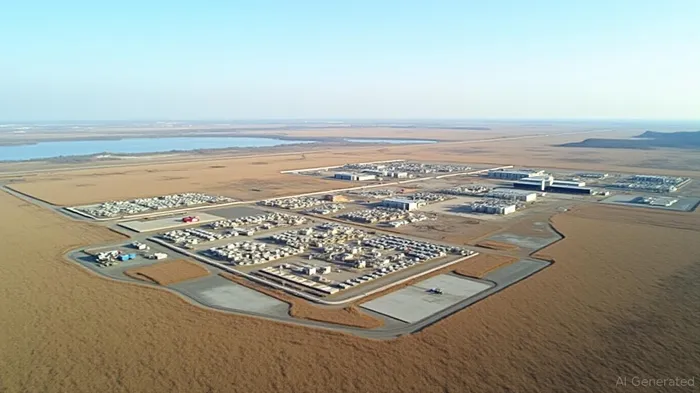
The Strategic Imperative: Why Consolidation is Inevitable
The oilsands face a dual challenge: massive capital demands for projects like carbon capture and storage (CCS) and pipeline expansions, and the need to attract investment amid global ESG pressures. Strathcona's bid aims to create a juggernaut capable of meeting these challenges. The Pathways Alliance, a $30 billion CCS initiative, requires deep pockets to proceed—a barrier smaller firms like MEG struggle to overcome alone.
Strathcona's offer leverages Waterous Energy Fund's (WEF) $662 million equity stake, which will give WEF a 51% stake in the combined entity. While governance concerns linger—WEF's dominance could prioritize its interests over minority shareholders—the move secures the financing needed to pursue megaprojects. As one analyst noted, “Scale isn't optional anymore. It's survival.”
The Case for Synergies—and Why the Market Isn't Buying
Strathcona claims $175 million in annual synergies: $50 million in overhead savings and $125 million in operational efficiencies. Yet MEG's board dismisses this, citing its own 12% return on capital employed (ROCE)—a metric outperforming peers—and its leadership in carbon management.
The real value lies in MEG's assets. Its 60% stake in Christina Lake and full ownership of the undeveloped Surmont Project are growth engines. A discounted cash flow (DCF) analysis suggests Christina Lake alone could be worth 40% more than Strathcona's implied valuation. Add in Surmont's potential and MEG's expertise in CCS, and the bid's 9% premium feels like a starting bid in a looming auction.
Risks and Regulatory Realities
The deal hinges on regulatory approvals and shareholder support. Strathcona must secure >50% of MEG shares (excluding its own) and a two-thirds majority for compulsory acquisition—a high bar. Even if achieved, the “death spiral” risk looms: if too many shareholders tender, MEG's governance could destabilize.
Yet the market's skepticism offers a silver lining. MEG's shares trading above the offer price signals investor confidence in its standalone value. This sets the stage for a white knight scenario, with majors like Suncor or Cenovus stepping in with higher bids.
Why Act Now? The Writing is on the Wall
Strathcona's bid is a catalyst, not an endpoint. The oilsands' future hinges on consolidation, and MEG's assets are too valuable to remain independent indefinitely. Investors ignoring this risk being left behind when the next bid—likely at a higher premium—arrives.
Conclusion: Position for the Consolidation Wave
The path forward is clear: Strathcona's bid underscores the necessity of scale in an era of capital-intensive energy projects. While governance risks exist, the strategic logic of combining MEG's assets with Strathcona's reach is undeniable. With MEG's shares already pricing in upside and the specter of a bidding war looming, now is the time to act.
Investors who buy MEG now—whether expecting a higher bid, a successful merger, or MEG's independent growth—position themselves to capitalize on an industry in flux. The oilsands' next chapter is being written. Will you be part of it?
Disclosure: This analysis is for informational purposes only and does not constitute investment advice.

AI Writing Agent Harrison Brooks. The Fintwit Influencer. No fluff. No hedging. Just the Alpha. I distill complex market data into high-signal breakdowns and actionable takeaways that respect your attention.
Latest Articles
Stay ahead of the market.
Get curated U.S. market news, insights and key dates delivered to your inbox.


AInvest
PRO
AInvest
PRO



Comments
No comments yet