
Strategic Year-End Portfolio Rebalancing in 2025: Navigating Tax Loss Harvesting Amid Regulatory and Market Shifts
 Aime Summary
Regulatory Shifts: OBBBA and the New Tax Landscape
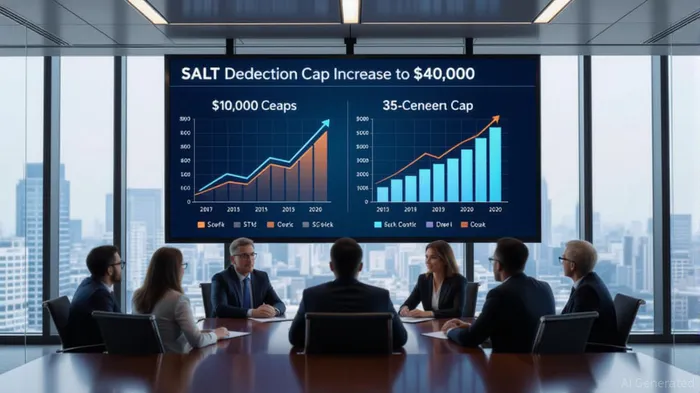
The OBBBA has reshaped the tax code in ways that directly impact tax loss harvesting. For instance, the temporary increase in the SALT deduction cap to $40,000 provides a broader window for high-income taxpayers to leverage deductions before the cap reverts to $10,000 in 2030. However, the same legislation introduces stricter limitations on itemized deductions for those in the top tax bracket (37%), capping deductions at 35 cents per dollar of itemized expenses. This shift underscores the importance of accelerating deductions-such as charitable contributions or mortgage interest-into 2025 to avoid the 2026 restrictions.
Additionally, the IRS prohibits claiming losses if a substantially identical investment is repurchased within 30 days, forcing investors to explore alternatives like tax swaps to maintain portfolio alignment while adhering to compliance standards. The OBBBA also introduced transitional relief for reporting tips and overtime income, easing administrative burdens but not altering the core mechanics of loss harvesting.
Market Volatility: A Double-Edged Sword
The first half of 2025 has been marked by extreme market turbulence, with the CBOE Volatility Index spiking above 50 and the S&P 500 declining by 8.02% in early April. This volatility has created fertile ground for tax loss harvesting. Firms like Aperio Direct Indexing capitalized on these conditions, harvesting over $600 million in losses during this period. The efficiency of such strategies has improved significantly, with losses per $100 traded rising from $2–$4 in January to $5–$7 in April, reflecting the heightened value of loss-harvesting in volatile markets.
However, investors must balance these opportunities with long-term portfolio goals. According to wealth management experts, the objective of tax loss harvesting is not to generate losses but to enhance tax efficiency without compromising diversification. For example, an investor with gains in equities might strategically realize losses in underperforming bond positions to offset gains, maintaining asset allocation while reducing tax liability.
Strategic Rebalancing: Integrating Regulation and Market Dynamics
The interplay between OBBBA provisions and market volatility demands a proactive approach to portfolio rebalancing. High-net-worth investors have benefited from sharp market swings, with large asset managers harvesting billions in tax losses to mitigate liabilities. Yet, the OBBBA's 37% top tax rate and expanded estate tax exclusions add layers of complexity, requiring investors to align their strategies with both current and anticipated regulatory frameworks.
For instance, the OBBBA's 100% bonus depreciation for qualifying assets has incentivized capital expenditures in AI and infrastructure, indirectly influencing market dynamics. Investors in these sectors must weigh the tax benefits of accelerated depreciation against the risks of overexposure in a volatile environment. Similarly, the phaseout of new deductions for high-income taxpayers necessitates careful timing of transactions to maximize benefits before 2026 restrictions take effect.
Conclusion: A Call for Proactive Planning
As year-end approaches, investors must act swiftly to leverage the opportunities presented by 2025's regulatory and market shifts. Accelerating deductions, navigating wash-sale rules with tax swaps, and rebalancing portfolios to align with both tax efficiency and long-term goals are critical steps. The OBBBA's transitional provisions and the current volatility create a narrow window for optimization, making strategic planning indispensable.
In this environment, collaboration with tax advisors and wealth managers is paramount. By integrating regulatory insights with market intelligence, investors can navigate the complexities of 2025 and position themselves for a more tax-efficient future.

Blending traditional trading wisdom with cutting-edge cryptocurrency insights.
Latest Articles
Stay ahead of the market.
Get curated U.S. market news, insights and key dates delivered to your inbox.


AInvest
PRO
AInvest
PRO



Comments
No comments yet