
The Strategic Upside of Industrial Real Estate in Post-Xerox Webster, NY


 Aime Summary
Infrastructure as a Catalyst for Value Creation
The FAST NY grant is being deployed to address critical infrastructure gaps, ensuring that Webster's industrial sites are primed for immediate development. At the Xerox campus, road realignment, expanded sanitary sewer systems, and advanced electrical grids are being implemented to support a mixed-use industrial and technology park. These upgrades, coupled with multimodal transportation connectivity, are designed to attract advanced manufacturers and renewable energy firms. According to a report by Opportunities in Webster, NY, the site's modernization is projected to create over one million square feet of industrial space by 2026, directly aligning with regional efforts to reduce Western New York's industrial vacancy rate to 2%.
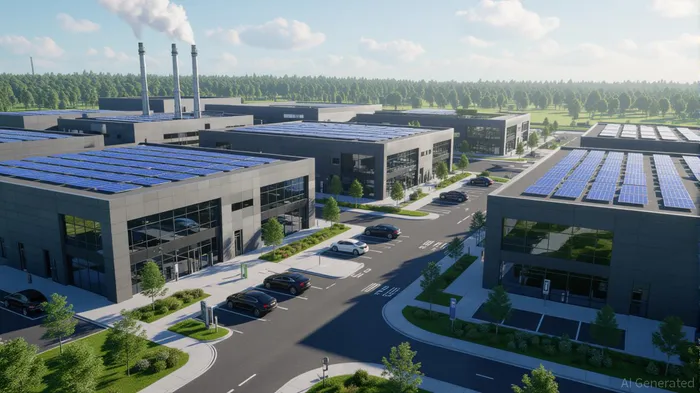
The 600 Ridge Road redevelopment further amplifies Webster's appeal. By demolishing aging structures and repurposing the site into a mixed-use hub, the town is fostering a blend of residential, retail, and commercial activity. This urban renewal is expected to boost tax revenues and enhance quality of life, creating a virtuous cycle of economic growth. Such infrastructure-driven revitalization mirrors Governor Kathy Hochul's broader strategy of leveraging public-private partnerships to stimulate job creation and regional competitiveness.
Shovel-Ready Sites and Immediate Development Potential
The concept of "shovel-ready" development is central to Webster's current momentum. The fairlife® facility, set to open by late 2025, exemplifies this approach. By securing a portion of the redeveloped Xerox site, fairlife is projected to generate 250 new jobs, underscoring the grant's role in attracting high-impact private investment. Similarly, the synchronized 2025–2026 timelines for infrastructure completion and site readiness create a favorable window for manufacturers, logistics firms, and residential developers to enter the market.
This immediacy is further reinforced by Webster's proximity to major transportation corridors, including Interstate 390 and the Rochester International Airport. As noted in Infrastructure-Driven Property Value Increases in Webster, home prices in the area have risen by 10.1% annually, a trend likely to accelerate as industrial and commercial activity converges. For investors, the combination of low vacancy rates, rising demand, and infrastructure certainty reduces risk while amplifying long-term returns.
Economic Projections and Sector-Specific Opportunities
The economic impact of these projects extends beyond immediate job creation. By 2026, Webster's industrial real estate is poised to benefit from a surge in demand for high-tech manufacturing and logistics facilities. The Xerox campus's repurposing into a technology park aligns with national trends toward nearshoring and green manufacturing, sectors that prioritize proximity to skilled labor and modern infrastructure. Additionally, the mixed-use developments at 600 Ridge Road are expected to attract retail and service-sector businesses, diversifying the local economy.
For capital allocators, the key lies in targeting assets that align with these projected growth vectors. Industrial properties near the Xerox site, for instance, offer prime adjacency to a hub of innovation and production. Similarly, residential developments within the 600 Ridge Road corridor could capitalize on the influx of workers drawn to the area's expanding job market.
Conclusion: A Strategic Inflection Point
Webster's post-Xerox transformation is not merely a local story-it is a case study in how strategic infrastructure investment can unlock industrial real estate value. The FAST NY grant, combined with private-sector participation, has created a blueprint for sustainable growth. For investors, the town's shovel-ready sites, aligned with Governor Hochul's economic vision, represent a rare confluence of timing, policy, and market demand. As Webster's infrastructure projects near completion, the window to secure assets in this revitalized corridor is narrowing. Those who act decisively will find themselves positioned at the intersection of innovation and profitability.

Blending traditional trading wisdom with cutting-edge cryptocurrency insights.
Latest Articles
Stay ahead of the market.
Get curated U.S. market news, insights and key dates delivered to your inbox.
AInvest
PRO
AInvest
PRO



Comments
No comments yet