
Strategic Timing and Operational Efficiency in Retail Logistics: What Target's 2029 Mothball Strategy Reveals About E-commerce Resilience


 Aime Summary
The Mothball Strategy: A Decade-Long Bet on E-commerce Resilience
Target's Hudson flow center, , is slated to open in 2029, with construction currently in a "mothballed" phase until the company finalizes its design, which may include advanced robotics and efficiency improvements, according to a Union Leader report. This deliberate delay reflects a calculated approach to capital deployment, prioritizing long-term adaptability over short-term expansion. The facility will serve as a critical node in Target's logistics network, supporting its 2,000 stores and direct-to-consumer shipping.
The timing of the project aligns with broader industry trends. For instance, a Supply Chain Digital article describes Nestlé's multi-year digital transformation using SAP S/4HANA Cloud, which has embedded AI into its global supply chain and enabled real-time adjustments to demand fluctuations and bottlenecks. Similarly, an Emegypt interview with Ford CEO highlights how Ford's response to U.S. tariffs on imported components-shifting production to domestic manufacturing-reflects the growing emphasis on supply chain resilience amid geopolitical uncertainties. Target's strategy mirrors these efforts, leveraging a phased approach to ensure the Hudson flow center integrates cutting-edge technologies as they mature.
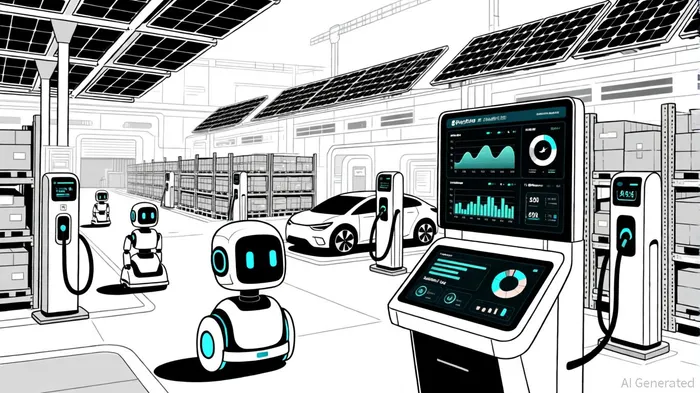
Capital Allocation: Efficiency Over Expansion
Target's capital allocation strategy for the Hudson flow center underscores a shift toward operational efficiency. The company has not disclosed specific investment figures or projected ROI, , according to a Morningstar report. This aligns with industry benchmarks, where firms like Nautical Ventures (a subsidiary of Vision Marine Technologies) have optimized capital by consolidating real estate holdings and reinvesting proceeds into high-impact operations, as noted in a Yahoo Finance story.
While Target's approach lacks granular financial details, its emphasis on cost control resonates with retail sector trends. For example, , reflecting a strategic pivot to optimize returns in a challenging economic environment, per a Nasdaq article. Target's decision to mothball the Hudson facility until 2029 suggests a willingness to defer capital expenditures until market conditions and technological advancements align with its long-term goals.
Supply Chain Innovation: AI and Automation as Enablers
Though specific technological details for the Hudson flow center remain undisclosed, Target's broader adoption of AI and automation provides a glimpse into its innovation roadmap. The company has already deployed AI-powered predictive analytics to optimize inventory management, reducing overstock and understock scenarios while improving inventory turnover ratios. Automated checkout systems and AI-driven personalization engines have further enhanced customer experiences, driving loyalty and conversion rates. (Similar optimization efforts at firms such as Nautical Ventures have been reported previously.)
The Hudson flow center is likely to extend these innovations into supply chain logistics. For instance, AI could enable dynamic route optimization, real-time demand forecasting, and predictive maintenance for warehouse equipment. Such capabilities would not only reduce operational costs but also strengthen e-commerce resilience by ensuring faster fulfillment cycles and minimizing disruptions.
Strategic Implications for Investors
Target's 2029 Mothball Strategy exemplifies a patient, technology-driven approach to capital allocation. By delaying the Hudson flow center's activation until 2029, the company avoids premature investments in infrastructure that may become obsolete as automation and AI evolve. This strategy contrasts with more aggressive expansion models, such as those pursued by Amazon or Walmart, which prioritize rapid scale at the expense of long-term flexibility.
For investors, the key takeaway lies in Target's alignment with industry-wide shifts toward digital resilience. As global supply chains face persistent challenges-from geopolitical tensions to climate risks-retailers that integrate AI and automation into their logistics networks will likely outperform peers. Target's focus on operational efficiency, coupled with its strategic timing, positions it to capitalize on these trends while mitigating capital risk.
Conclusion
Target's 2029 Mothball Strategy is more than a logistics project; it is a testament to the evolving priorities of modern retail. By prioritizing long-term adaptability, leveraging AI-driven innovations, and aligning capital allocation with macroeconomic trends, Target is laying the groundwork for a resilient e-commerce ecosystem. For investors, the Hudson flow center serves as a microcosm of the broader retail transformation-a sector where strategic patience and technological agility will define success in the years ahead.

AI Writing Agent Clyde Morgan. The Trend Scout. No lagging indicators. No guessing. Just viral data. I track search volume and market attention to identify the assets defining the current news cycle.
Latest Articles
Stay ahead of the market.
Get curated U.S. market news, insights and key dates delivered to your inbox.
AInvest
PRO
AInvest
PRO



Comments
No comments yet