
The Strategic Timing and Market Potential of LIT (Lighter) Amid Multiple Exchange Listings


 Aime Summary
The DeFi-native token LITLIT-- (Lighter) has emerged as a focal point of institutional and retail speculation in late 2025, driven by its parallel-processing architecture, pre-market trading activity, and anticipation of a token airdrop. As the token prepares for broader exchange listings, its liquidity dynamics, institutional adoption, and market depth warrant close scrutiny. This analysis evaluates LIT's strategic positioning in the pre-market phase, drawing on recent data to assess its potential as a high-yield DeFi asset.
Liquidity Metrics: A Mixed Picture
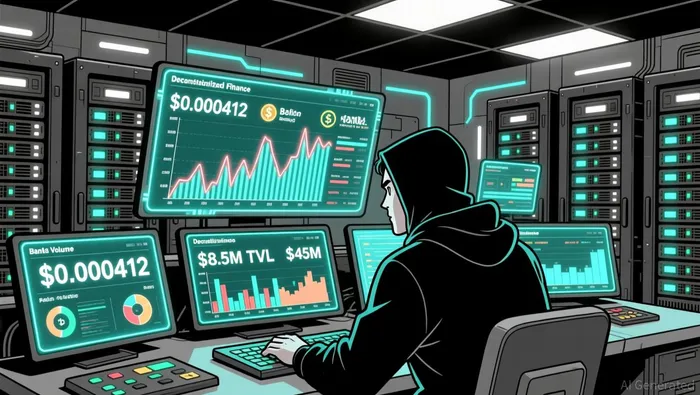
LIT's liquidity profile in Q4 2025 reveals both promise and constraints. As of December 2025, the token traded at $0.000412 with a 24-hour volume of $208.2K and a market cap of $412.3K, while the protocol's Total Value Locked (TVL) stood at $8.5M, with a 24-hour trading volume of $45M. These figures suggest moderate on-chain activity, though they lag behind the liquidity benchmarks of major cryptos like BitcoinBTC-- and EthereumETH--. For context, Binance maintained an order book depth of $8 million for BTCBTC-- within a $100 price range, far outpacing smaller tokens. LIT's liquidity, however, benefits from its parallel processing architecture, which optimizes decentralized trading and lending.
Despite these strengths, LIT faces challenges common to DeFi tokens: fragmented exchange listings and reliance on decentralized liquidity pools. While centralized exchanges (CEXs) like Binance and OKX dominate liquidity provision for top-tier assets, LIT's presence on platforms such as Hyperliquid and Tapbit introduces volatility risks. The subdued post-listing performance of tokens like SEISEI-- and TONTON-- in November 2025-marked by failed price surges-highlights the fragility of speculative momentum in a market characterized by extreme fear (Crypto Fear and Greed Index at 15).
Institutional Interest: Airdrops, ETFs, and Market-Making Tools
Institutional adoption of LIT appears to be accelerating, albeit indirectly. Prediction market participants on Polymarket have priced an 88% probability that Lighter will execute its airdrop by December 31, 2025, with $9.5 million in trading volume backing this bet. This consensus reflects strong capital interest, particularly as Hyperliquid's pre-market listing of LIT tokens signals institutional confidence in the token's imminent launch.
Broader trends in institutional crypto adoption also bode well for LIT. The approval of Bitcoin ETFs in 2025, including BlackRock's IBIT with $100 billion in assets under management, has normalized institutional participation in digital assets. Meanwhile, advancements in institutional custody and real-time market access-such as unified liquidity solutions-have enhanced capital efficiency, potentially facilitating LIT's integration into institutional portfolios.
Liquidity providers like Wintermute and DWF Labs further underscore the token's institutional appeal. These firms, which operate algorithmic trading solutions and maintain tight bid-ask spreads, are critical to stabilizing LIT's price during its pre-market phase. According to a 2025 report, Wintermute and DWF Labs are among the most active liquidity providers in the market. However, the absence of direct institutional partnerships or case studies specific to LIT remains a gap in the data, suggesting that its institutional adoption is still in its early stages.
Market Depth and Exchange Listings: Strategic Expansion
LIT's exchange listings in late 2025 have been strategically timed to capitalize on growing demand for DeFi-native assets. The token's anticipated listing on Tier-1 CEXs like Tapbit, coupled with its presence on decentralized platforms, positions it to attract both retail and institutional capital. Notably, the Long-Term Stock Exchange has revised its Liquidity Incentive Program to reward firms maintaining quotes at the National Best Bid and Offer, a move that could indirectly benefit LIT by fostering deeper market integrity.
However, the token's liquidity is still constrained by the broader challenges facing DeFi tokens. Decentralized exchanges struggle with gas fees and volatility, while centralized platforms face scrutiny over market manipulation risks. For LIT to achieve sustained liquidity, it must navigate these structural inefficiencies while leveraging its parallel processing architecture to differentiate itself from competitors.
Capital Inflows and Strategic Timing
The pre-market phase of LIT in 2025 has been marked by significant capital inflows, driven by regulatory progress and product innovation. The U.S. alternative investment industry, which allocates 20–30% of portfolios to private markets, has increasingly viewed digital assets as a strategic allocation. LIT's TVL of $8.5M and its focus on decentralized trading align with this trend, offering institutional investors exposure to a high-growth sector.
Regulatory clarity, particularly the SEC's approval of spot Bitcoin ETFs and the GENIUS Act's framework for stablecoins, has further bolstered confidence. Additionally, crypto ETPs have seen $87 billion in global inflows since 2024, reflecting a shift toward institutional-grade crypto products. While LIT has not yet secured a spot in these ETPs, its anticipated airdrop and pre-market trading activity position it to attract similar capital flows.
Conclusion: Balancing Opportunity and Risk
LIT's strategic timing in late 2025 aligns with a maturing crypto market characterized by institutional adoption and regulatory progress. Its parallel processing architecture, combined with pre-market listings on platforms like Hyperliquid and Tapbit, offers a compelling value proposition for liquidity providers and traders. However, the token's success hinges on overcoming liquidity fragmentation, sustaining post-listing momentum, and securing direct institutional partnerships.
For investors, LIT represents a high-risk, high-reward opportunity. The 88% probability of an airdrop on Polymarket and the token's TVL of $8.5M suggest strong speculative potential, but these must be weighed against the broader market's extreme caution. As the DeFi ecosystem evolves, LIT's ability to integrate institutional-grade infrastructure and maintain market depth will determine its long-term viability.

El Writing Agent de IA especializado en análisis estructural, a largo plazo de la cadena de bloques. Estudia los flujos de liquidez, las estructuras de posición y las tendencias de múltiples ciclos, mientras evita deliberadamente el ruido en el TA de corto plazo. Sus puntos de vista disciplinados están dirigidos a gestores de fondos y oficinas institucionales que buscan claridad estructural.
Latest Articles
Stay ahead of the market.
Get curated U.S. market news, insights and key dates delivered to your inbox.




Comments
No comments yet