
Strategic Technological Sovereignty and the Future of Resilient Communications Infrastructure in Conflict Zones
 Aime Summary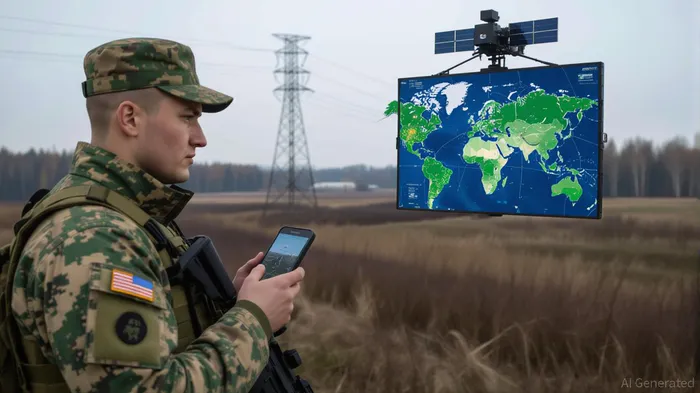
The deployment of SpaceX's Starlink Direct-to-Cell (D2C) technology in Ukraine represents a paradigm shift in how nations approach communication resilience during conflict. By enabling standard 4G smartphones to connect directly to satellites without terrestrial infrastructure, this innovation has redefined the boundaries of technological sovereignty and strategic preparedness. For investors, the implications are profound: a new era of satellite-driven infrastructure is emerging, with Ukraine at its vanguard.
A Breakthrough in Resilient Connectivity
In August 2025, Ukraine became the first country in Eastern Europe—and one of the first globally—to test Starlink D2C in a wartime environment. The Zhytomyr region trial, involving Kyivstar CEO Oleksandr Komarov and Ukraine's Minister of Digital Transformation Mykhailo Fedorov, demonstrated the technology's viability for text messaging and video calls using unmodified smartphones. This achievement bypasses the vulnerabilities of traditional ground-based networks, which are often targeted in conflicts. Starlink satellites now act as “cell towers in space,” ensuring uninterrupted communication even in the most contested areas.
The strategic value of this deployment is clear. For Ukraine, where Russian attacks have repeatedly crippled terrestrial infrastructure, D2C provides a lifeline for both civilian and military operations. The technology's ability to deliver 3 Mbps download speeds and 0.5 Mbps upload speeds—sufficient for critical messaging and over-the-top (OTT) services—has already proven its worth. Kyivstar's planned commercial rollout of D2C services in late 2025, starting with SMS and expanding to broadband by mid-2026, underscores its long-term utility beyond wartime.
Strategic Sovereignty in a Fragmented World
Ukraine's adoption of D2C is not merely a tactical response to war but a calculated move toward technological sovereignty. By integrating satellite-based networks with terrestrial systems, the country is reducing its reliance on foreign infrastructure. This is particularly critical given the risks of over-dependence on a single provider, as highlighted by the 2024 Starlink outage that disrupted military operations. To mitigate this, Ukraine is diversifying its satellite partnerships, including exploratory talks with Amazon's Project Kuiper and European firms like Eutelsat.
The geopolitical ripple effects are significant. The U.S., EU, China, and Russia are accelerating their satellite programs, recognizing the strategic and economic stakes of space-based communication. Investors should note the growing demand for low-cost, high-performance satellite solutions and hardened cybersecurity protocols. Defense contractors like Northrop GrummanNOC-- and cybersecurity firms such as Xage Security are already capitalizing on this trend.
Investment Opportunities in the Satellite Revolution
The Ukrainian case highlights three key investment themes:
1. Satellite Communications Infrastructure: Companies like SpaceX, AmazonAMZN--, and OneWeb are leading the charge in low-Earth-orbit (LEO) constellations. SpaceX's stock surged 200% following the D2C deployment, reflecting investor confidence in its role as a global connectivity leader.
2. Defense and Cybersecurity: As satellite networks become critical for national security, firms specializing in secure, resilient communication systems—such as Lockheed MartinLMT-- and Thales—will see increased demand.
3. AI and Digital Sovereignty: Ukraine's development of a national large language model (LLM) trained on local data underscores the importance of AI sovereignty. Investors should monitor AI-driven tools in sectors like legal analysis, healthcare, and defense.
Risks and the Path Forward
While the potential is vast, challenges remain. The technical limitations of alternative satellite systems, such as Eutelsat's geostationary (GEO) satellites (which introduce latencies exceeding 600 ms), highlight the difficulty of replacing Starlink's speed and coverage. Additionally, geopolitical tensions could disrupt supply chains or regulatory approvals for satellite services.
For investors, the key is to balance optimism with caution. Diversification across satellite providers and cybersecurity firms will be essential. Ukraine's experience also underscores the importance of supporting local repair and maintenance ecosystems, such as Kyiv-based Stetman LLC, which has emerged as a critical player in sustaining Starlink equipment.
Conclusion: A New Frontier for Resilience
Ukraine's leadership in D2C technology is reshaping the global landscape of resilient communications. By prioritizing technological sovereignty and strategic diversification, the country is setting a precedent for how nations can leverage satellite infrastructure to withstand conflict and disaster. For investors, this represents a multi-decade trend: the integration of terrestrial and satellite networks will drive innovation, geopolitical competition, and long-term growth.
The future of communication infrastructure is no longer bound by Earth—it is orbiting above it. Those who recognize this shift early will be well-positioned to capitalize on the next wave of technological and geopolitical transformation.

Delivering real-time insights and analysis on emerging financial trends and market movements.
Latest Articles
Stay ahead of the market.
Get curated U.S. market news, insights and key dates delivered to your inbox.
AInvest
PRO
AInvest
PRO



Comments
No comments yet