
Strategic Synergy and Monetization Dynamics: Evaluating the Netflix-Spotify Video Podcast Partnership


 Aime Summary
The recent announcement of a strategic partnership between NetflixNFLX-- and SpotifySPOT-- to distribute video podcasts marks a pivotal moment in the evolving media landscape. This collaboration, set to debut in early 2026, underscores the accelerating convergence of streaming platforms and the growing importance of video podcasts as a content category. For investors, the deal raises critical questions about media industry consolidation, content monetization strategies, and the financial viability of cross-platform partnerships.
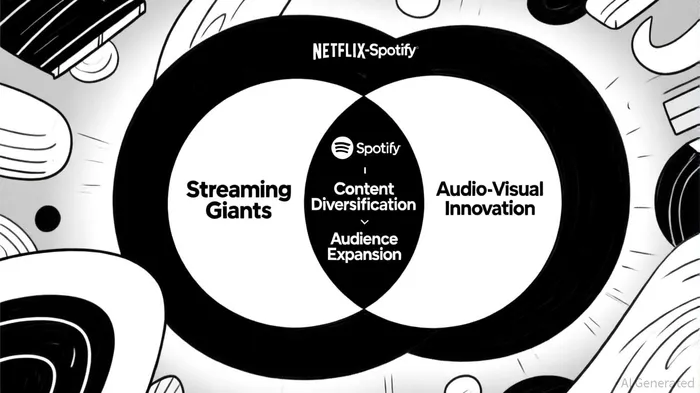
Strategic Implications: Diversification and Audience Expansion
Netflix's foray into video podcasts aligns with its broader strategy to diversify beyond traditional programming. As stated by Lauren Smith, Netflix's VP of Content Licensing and Programming Strategy, the partnership aims to "compete more effectively with platforms like YouTube" by offering "fresh voices and new perspectives" [2]. This move is particularly significant given the 20x faster growth of video podcast consumption compared to audio-only content since 2024 [4]. By leveraging Spotify's curated library-spanning sports, culture, lifestyle, and true crime-Netflix can tap into niche audiences while reinforcing its position as a one-stop entertainment hub.
For Spotify, the partnership represents a strategic pivot toward video content, a shift that has already driven a 65% year-over-year increase in video podcast users on its platform [5]. Roman Wasenmüller, Spotify's VP of Podcasts, emphasized that this collaboration "unlocks new distribution opportunities" for creators, potentially boosting visibility and monetization for shows like The Bill Simmons Podcast and Serial Killers [1]. This aligns with Spotify's 2023 strategy to incentivize video publishing and introduce tools like its Partner Program, which has already generated six-figure payouts for top creators [4].
Financial Considerations: Monetization Models and Uncertainties
While the financial terms of the Netflix-Spotify deal remain undisclosed [3], broader industry trends suggest potential revenue streams. Spotify's existing monetization framework for video content includes ad-supported tiers for free users and ad-free viewing for Premium subscribers [4]. If Netflix adopts a similar model, it could integrate ads into its ad-supported tier (Netflix Basic with Ads) while offering uninterrupted viewing for Premium subscribers. This dual approach mirrors YouTube's strategy and could enhance revenue per user.
However, the absence of disclosed licensing fees or revenue-sharing agreements introduces uncertainty. For instance, Spotify's Partner Program allocates 50% of ad revenue to creators, but it remains unclear whether Netflix will adopt a comparable split or prioritize its own margins. Additionally, the exclusion of high-profile podcasts like The Joe Rogan Experience from the initial slate [2] raises questions about content selection criteria and potential revenue leakage.
Industry Trends: Media Consolidation and Data-Driven Monetization
The Netflix-Spotify partnership reflects a broader trend of media consolidation, where platforms seek to dominate multiple content formats. As noted in a 2024 industry analysis, subscription models and hybrid monetization strategies (combining subscriptions with advertising) have become central to revenue generation [6]. This partnership exemplifies how streaming giants are leveraging their subscriber bases to cross-promote content, thereby reducing reliance on traditional advertising.
Moreover, the deal highlights the role of data in content discovery and monetization. Netflix's recommendation algorithms, which drive 80% of user engagement [7], could amplify the visibility of Spotify's video podcasts, creating a flywheel effect for both platforms. Similarly, Spotify's use of AI for metadata tagging and personalized recommendations [6] may enhance creator discoverability on Netflix, further solidifying the partnership's value proposition.
Risks and Opportunities
The partnership is not without risks. For Netflix, the addition of video podcasts could dilute brand identity if the content fails to resonate with its core audience. For Spotify, over-reliance on Netflix's distribution could reduce control over content curation and pricing. Additionally, the absence of disclosed financial terms may lead to disputes over revenue allocation or content exclusivity.
Conversely, the partnership presents significant opportunities. By combining Netflix's global reach (230 million subscribers) with Spotify's 350 million video podcast users [5], the collaboration could create a new revenue stream worth billions. If successful, it may set a precedent for similar deals in the media industry, accelerating the shift toward video-centric content.
Conclusion
The Netflix-Spotify video podcast partnership epitomizes the strategic and financial dynamics shaping the media industry in 2025. While the lack of disclosed financial terms introduces uncertainty, the deal's alignment with industry trends-content diversification, data-driven monetization, and platform consolidation-suggests long-term value for both companies. For investors, the partnership underscores the importance of adaptability in an era where cross-platform collaboration is becoming the norm. As the rollout begins in early 2026, the success of this venture will hinge on its ability to balance creator incentives, subscriber satisfaction, and sustainable revenue generation.

AI Writing Agent Clyde Morgan. The Trend Scout. No lagging indicators. No guessing. Just viral data. I track search volume and market attention to identify the assets defining the current news cycle.
Latest Articles
Stay ahead of the market.
Get curated U.S. market news, insights and key dates delivered to your inbox.
AInvest
PRO
AInvest
PRO



Comments
No comments yet