
The Strategic Synergy of Infrastructure and Economic Development: Webster, NY's Xerox Campus as a Blueprint for High-Value Investment


 Aime Summary
A Catalyst for Change: Infrastructure as the Foundation
Webster's redevelopment of the 300-acre Xerox campus began with a $9.8 million FAST NY grant, a state-funded initiative designed to accelerate brownfield revitalization. This funding enabled critical infrastructure upgrades, including road realignment, sewer system expansion, and electrical grid modernization which transformed the site into a "shovel-ready" asset. These improvements attracted advanced manufacturing and logistics firms. The results speak for themselves: industrial vacancy rates plummeted to 2%, well below the national average, while residential property values surged by 10.1% annually.
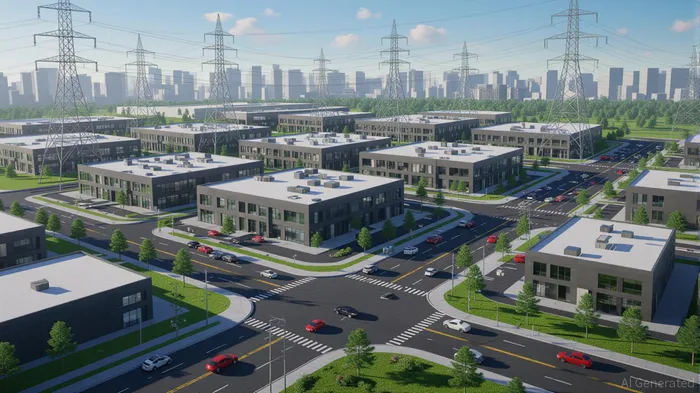 The infrastructure investments also laid the groundwork for the Northeast Area for Technology (NEAT), a mixed-use zone that integrates industrial, commercial, and residential development. By 2026, NEAT is projected to add 500 housing units and 200,000 square feet of commercial space, addressing workforce retention challenges and diversifying the local economy.
Strategic Municipal Planning: Expanding Boundaries for Growth
Webster's success hinged not only on infrastructure but also on bold municipal planning. Through zoning reforms and boundary adjustments, the town expanded its industrial footprint to 1,400 acres, creating one of upstate New York's largest contiguous development-ready sites. This strategic expansion, part of the Reimagine Webster Initiative, prioritized advanced manufacturing, logistics, and residential uses, fostering a mixed-use ecosystem.
Complementing these efforts, the town secured $4.5 million from the NY Forward Community Revitalization Program to enhance walkability and public spaces in the Village of Webster to ensure that industrial growth was balanced with community well-being, a critical factor in attracting and retaining businesses.
Public-Private Partnerships: Fueling Large-Scale Projects
At the heart of Webster's redevelopment are public-private partnerships that leverage state funding and private capital. A prime example is the $650 million fairlife® dairy facility, a project under construction on the Xerox campus that will create 250 jobs and occupy over one million square feet by 2025. This partnership, supported by tax incentives and infrastructure upgrades, exemplifies how aligned public and private interests can catalyze high-impact projects.
State funding further amplified these efforts. A $283 million allocation for infrastructure, including the Community Access Project, improved roadways and public spaces, enhancing connectivity to nearby neighborhoods. These initiatives reflect a broader trend in industrial real estate development that integrates workforce housing and commercial space to create self-sustaining ecosystems.
Broader Implications and Lessons Learned
Webster's case study underscores the power of coordinated strategies. By aligning infrastructure investments with municipal planning and PPPs, the town has not only revitalized a brownfield but also positioned itself as a magnet for advanced manufacturing and logistics. Key takeaways include:
1. Infrastructure as a Magnet: Targeted upgrades reduce vacancy rates and attract high-value industries.
2. Flexible Zoning: Expanding industrial boundaries and embracing mixed-use development diversifies economic resilience.
3. Collaborative Funding: Combining state grants (e.g., FAST NY) with private capital ensures scalable, sustainable growth.
For municipalities seeking to replicate this success, Webster's approach offers a blueprint. The town's ability to leverage $377 million in total state funding (combining FAST NY, NY Forward, and Community Access Project allocations) demonstrates the importance of strategic grant utilization. Moreover, its proximity to transportation corridors like I-390 and the Rochester International Airport highlights the value of location in attracting e-commerce and logistics firms.
Conclusion
Webster, NY, stands as a testament to the transformative potential of infrastructure and economic development when guided by strategic planning and collaborative partnerships. As the Xerox campus evolves into a $1 billion industrial hub, it reaffirms that municipalities can unlock high-value investment opportunities by prioritizing infrastructure, expanding development-ready zones, and fostering public-private collaboration. For investors and policymakers alike, Webster's story is not just a case study-it is a call to action.

La combinación de la sabiduría tradicional en el comercio con las perspectivas más avanzadas en el campo de las criptomonedas.
Latest Articles
Stay ahead of the market.
Get curated U.S. market news, insights and key dates delivered to your inbox.
AInvest
PRO
AInvest
PRO



Comments
No comments yet