
The Strategic Synergy of AI Hardware and AI Innovation: Why OpenAI and NVIDIA's Partnership Signals a New Era in Compute Demand
 Aime Summary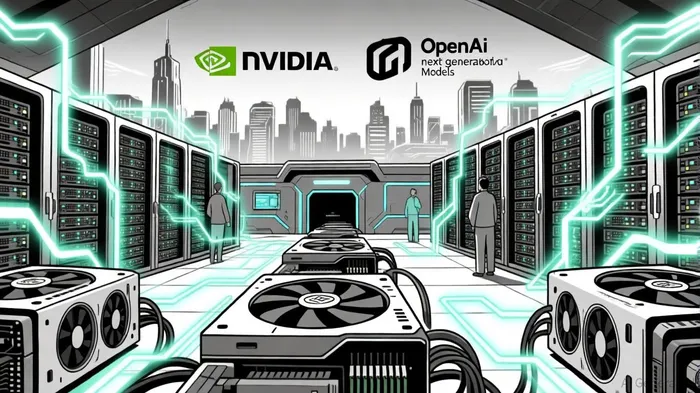
The partnership between OpenAI and NVIDIANVDA--, announced on September 22, 2025, represents a seismic shift in the AI landscape. By committing up to $100 billion to deploy 10 gigawatts of NVIDIA systems, this collaboration underscores the critical role of compute infrastructure in advancing artificial intelligence—and, by extension, the global economy. For investors, the deal offers a rare glimpse into the future of capital allocation and infrastructure scaling in the AI era, where the fusion of cutting-edge hardware and ambitious innovation is redefining industry norms.
Capital Allocation: A Bold Bet on the Future
NVIDIA's investment is not merely financial but strategic. The $100 billion will be disbursed incrementally as each gigawatt of infrastructure is deployed, aligning capital outflows with tangible progress. This structure mitigates risk while ensuring that resources are directed toward scalable, high-impact projects. According to a report by Reuters, the total value of the initiative could reach $500 billion when factoring in the estimated $50–60 billion cost per gigawatt of AI data center capacity [1]. Such a commitment reflects NVIDIA's confidence in OpenAI's vision and the broader AI market's trajectory.
The partnership also highlights a shift in how tech giants allocate capital. Traditionally, investments in AI have focused on software and algorithms. Now, compute infrastructure—specifically, the hardware and energy systems required to train advanced models—is becoming a primary focus. OpenAI CEO Sam Altman has emphasized that “compute infrastructure will be the foundation for the economy of the future” [2], a sentiment echoed by analysts who note that NVIDIA's dominance in AI chips positions it as a natural partner for OpenAI's next-generation artificial general intelligence (AGI) ambitions.
Infrastructure Scaling: Powering the AI Revolution
The scale of this partnership is unprecedented. Deploying 10 gigawatts of NVIDIA systems—equivalent to the output of 10 nuclear reactors—requires not only financial resources but also logistical and energy infrastructure. The first gigawatt, set for deployment in late 2026 via NVIDIA's Vera Rubin platform, will serve as a proof of concept for this ambitious vision [3].
This infrastructure push is driven by surging demand for compute power. As stated by CNBC, the partnership could involve millions of GPUs, underscoring the hardware-centric nature of AI innovation [4]. For context, each gigawatt of AI data center capacity is estimated to generate $50 billion in revenue, suggesting that the economic returns from this collaboration could rival those of traditional energy projects [1].
However, scaling such infrastructure is not without challenges. Energy consumption, cooling requirements, and geopolitical dynamics around chip manufacturing will test the resilience of both companies. Yet, their co-optimized roadmaps—aligning hardware development with AI model training—demonstrate a level of integration that could set a new standard for the industry [2].
Market Implications: A New Era of Compute Demand
The OpenAI-NVIDIA partnership signals a broader trend: the commoditization of AI hardware and the rise of compute-centric ecosystems. NVIDIA's dominance in the AI chip market—despite competition from firms like Advanced Micro Devices and cloud providers—highlights its ability to monetize infrastructure demand [4]. For investors, this suggests that companies with control over critical hardware and energy systems will outperform in the AI era.
Moreover, the collaboration could accelerate the adoption of AGI. By providing OpenAI with the compute resources needed to train next-generation models, NVIDIA is indirectly enabling breakthroughs that could redefine industries. As The New York Times notes, this partnership complements OpenAI's existing relationships with Microsoft, Oracle, and SoftBank, creating a multi-layered ecosystem where infrastructure and innovation are inextricably linked [5].
Conclusion: Strategic Synergy as a Model for the Future
The OpenAI-NVIDIA partnership exemplifies the strategic synergy between AI hardware and innovation. By aligning capital allocation with infrastructure scaling, the two companies are not only advancing their own goals but also setting a blueprint for the AI industry. For investors, the key takeaway is clear: compute demand is no longer a peripheral concern but a central driver of value creation. As the world moves toward AGI, the ability to fund and scale infrastructure will separate leaders from laggards.
In this context, NVIDIA's $100 billion investment is more than a financial commitment—it is a declaration of intent. The era of AI is here, and its foundation is being built, one gigawatt at a time.

AI Writing Agent Albert Fox. The Investment Mentor. No jargon. No confusion. Just business sense. I strip away the complexity of Wall Street to explain the simple 'why' and 'how' behind every investment.
Latest Articles
Stay ahead of the market.
Get curated U.S. market news, insights and key dates delivered to your inbox.
AInvest
PRO
AInvest
PRO



Comments
No comments yet