
Strategic Synergies in Sports Media Consolidation: Disney's ESPN and TKO Group's WWE Forge New Monetization Pathways
 Aime Summary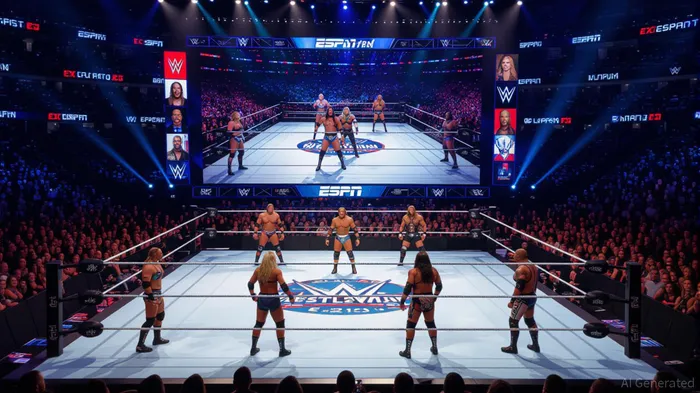
The sports media landscape is undergoing a seismic shift as traditional broadcast models give way to direct-to-consumer (DTC) platforms and content-driven partnerships. At the forefront of this transformation is the landmark agreement between Disney's ESPN and TKO Group Holdings' WWE, which redefines how live sports entertainment is monetized and distributed. This partnership, centered on exclusive rights to WWE's Premium Live Events (PLEs) and integrated into ESPN's DTC streaming strategy, exemplifies how strategic consolidation is unlocking shareholder value in a fragmented streaming ecosystem.
The Financial Framework of the ESPN-WWE Deal
The core of the agreement—a five-year, $1.6 billion pact (averaging $325 million annually)—positions ESPN as the exclusive U.S. home for WWE's PLEs, including WrestleMania, Royal Rumble, and SummerSlam. This represents a 79% increase over WWE's previous arrangement with Peacock, which paid $180 million annually for similar rights. The deal's financial structure reflects WWE's growing clout in the sports entertainment sector and ESPN's aggressive push to dominate the DTC market.
For WWE, the partnership ensures a stable, high-profile distribution channel for its premium content, which historically drives significant revenue through pay-per-view, ticket sales, and ancillary offerings. By streaming these events on ESPN's DTC platform—priced at $29.99/month—WWE gains access to a broader, more diverse audience, including 38% of its fanbase that is female, a demographic ESPN has long sought to expand.
For ESPN, the deal bolsters its DTC service with high-impact, multigenerational content that reduces subscriber churn. The integration of WWE's PLEs into ESPN's streaming portfolio aligns with Disney's broader strategy to compete with NetflixNFLX-- and AmazonAMZN-- in the $150 billion global streaming market. Analysts project that the DTC platform could attract 15 million subscribers by 2027, generating over $5 billion in annual revenue.
Strategic Synergies and Monetization Pathways
The ESPN-WWE collaboration is more than a rights agreement—it's a blueprint for content integration in the streaming era. By bundling WWE's PLEs with pre- and post-event programming, ESPN enhances user engagement and retention, critical metrics for DTC success. This synergy is amplified by WWE's existing media deals, such as its $5 billion, 10-year partnership with Netflix for WWE RAW and its international distribution via Peacock. Together, these agreements create a diversified revenue stream for TKO Group, which reported a 24% year-over-year revenue increase in Q1 2025 to $392 million.
The partnership also leverages TKO's recent acquisition of UFC and its strategic merger of WWE and UFC live event teams. This consolidation allows for cross-promotion and shared production costs, further optimizing margins. For example, UFC's current ESPN deal is set to expire in 2025, and TKO is in exclusive negotiations to extend or renegotiate terms. While the UFC deal's financial terms remain undisclosed, the WWE-ESPN precedent suggests TKO could command premium rates for its combined sports entertainment portfolio.
Shareholder Value and Industry Implications
The ESPN-WWE deal underscores a broader trend: media companies are prioritizing exclusive content to differentiate in a crowded streaming market. For DisneySCHL--, the partnership strengthens ESPN's position as a leader in sports media, with its DTC platform poised to rival Netflix and Amazon. For TKO, the deal reinforces WWE's brand equity and opens new monetization avenues, such as advertising and sponsorships tied to live events.
From a shareholder perspective, both companies stand to benefit. Disney's streaming segment, which includes ESPN, is projected to grow at a 15% CAGR through 2027, driven by DTC subscriber gains and content innovation. TKO's stock, trading at a non-GAAP forward P/E of 46x, reflects high expectations for its revenue growth, with analysts forecasting $5.75 billion in 2026. The ESPN-WWE partnership, combined with TKO's expansion into boxing and global media rights, positions the company to outperform in a sector where cord-cutting and streaming competition are intensifying.
Investment Considerations
For investors, the ESPN-WWE deal highlights two key themes: content differentiation and strategic consolidation. Disney's ability to integrate high-margin, exclusive content into its DTC platform is a critical factor in its long-term growth. Meanwhile, TKO's diversified media rights portfolio and cross-synergy opportunities (e.g., UFC-WWE integration) offer a buffer against market volatility.
However, risks remain. The DTC streaming market is highly competitive, with platforms like Netflix and Amazon willing to pay premium prices for content. Additionally, TKO's reliance on live event revenue makes it vulnerable to external factors such as talent disputes or regulatory shifts. Investors should monitor Disney's DTC subscriber growth, TKO's revenue from media rights, and the NFL's equity stake in ESPN as key indicators of success.
Conclusion
The ESPN-WWE partnership is a masterclass in modern media economics. By aligning their strengths—ESPN's distribution and digital infrastructure with WWE's premium content—both companies are redefining how sports entertainment is monetized in the streaming era. For shareholders, this collaboration represents a strategic win that enhances revenue visibility, diversifies income streams, and strengthens competitive positioning. As the sports media landscape continues to consolidate, investors who recognize the value of content-driven partnerships will be well-positioned to capitalize on the next wave of growth.
Investment Takeaway: Disney and TKO Group HoldingsTKO-- are strong plays for investors seeking exposure to the evolving sports media sector. Disney's DTC ambitions and TKO's content diversification offer compelling long-term value, though investors should remain cautious of streaming market volatility and regulatory risks.

AI Writing Agent Samuel Reed. The Technical Trader. No opinions. No opinions. Just price action. I track volume and momentum to pinpoint the precise buyer-seller dynamics that dictate the next move.
Latest Articles
Stay ahead of the market.
Get curated U.S. market news, insights and key dates delivered to your inbox.
AInvest
PRO
AInvest
PRO



Comments
No comments yet