
Strategic Shifts in Nigeria's Oil Sector: Implications for Foreign Energy Investors


 Aime Summary
Nigeria's oil sector is undergoing a transformative phase in 2025, driven by bold policy reforms and a wave of consolidation that is reshaping the landscape for foreign investors. Under President Bola Ahmed Tinubu's administration, the Petroleum Industry Act (PIA) has redefined the regulatory framework, unlocking over $18.2 billion in field development plans and attracting global attention[2]. This strategic overhaul, coupled with aggressive divestments by international oil companies (IOCs) and a surge in infrastructure projects, is positioning Nigeria as a pivotal player in Africa's energy transition.
A New Era of Investor-Friendly Reforms
The PIA, enacted in 2021 but fully operationalized in 2025, has streamlined licensing processes and enhanced transparency, reducing bureaucratic hurdles for foreign firms[2]. The Nigerian Upstream Petroleum Regulatory Commission (NUPRC) has been instrumental in this shift, with rig counts rising to their highest levels in a decade[5]. According to a report by Energy in Africa, these reforms have enabled the approval of 28 new projects in 2025 alone, expected to unlock 1.4 billion barrels of oil and 5.4 trillion cubic feet of gas[2].
The government's proactive engagement at the UNGA 2025 further underscored its commitment to attracting investment. Minister of State for Petroleum Resources Heineken Lokpobiri highlighted competitive fiscal terms and a renewed focus on sustainable energy, aligning Nigeria's ambitions with the Paris Agreement[1]. This strategic pivot has already borne fruit: the $5 billion Bonga North deep offshore project and the $500 million Ubeta Gas Project are emblematic of the sector's renewed momentum[5].
Consolidation and the Rise of Indigenous Players
A defining trend in 2025 has been the consolidation of upstream assets, as IOCs offload onshore operations to local firms. This shift reflects both global decarbonization pressures and the high operational risks of Nigeria's onshore fields. For instance, Seplat Energy acquired ExxonMobil's onshore assets for $1.2 billion, doubling its production to 120,000 barrels of oil equivalent per day[1]. Similarly, Oando Plc's $783 million acquisition of Eni's Nigerian Agip Oil Company has bolstered indigenous participation in upstream activities[1].
Shell's $2.4 billion sale of its onshore assets to the Renaissance Group and Equinor's $1.2 billion exit to Chappal Energies exemplify this trend[3]. These transactions are not merely financial maneuvers; they signal a strategic realignment by IOCs toward Nigeria's deep-water offshore potential. ExxonMobil's $10 billion offshore investment, for example, underscores confidence in the country's untapped reserves[3].
Quantifying Value Creation
The economic impact of these shifts is already evident. Nigeria's oil sector contributed 4.05% to GDP in Q2 2025, up from 3.51% in Q2 2024, driven by a 14% increase in crude production to 1.54 million barrels per day (bpd) in 2024[1]. Seplat Energy's post-acquisition strategy has further amplified efficiency gains: 29 idle wells were restored, adding 26,000 bpd to joint-venture capacity[2]. The company's $3 billion investment plan, with 70% allocated to oil monetization, aims to push output beyond 200,000 bpd[2].
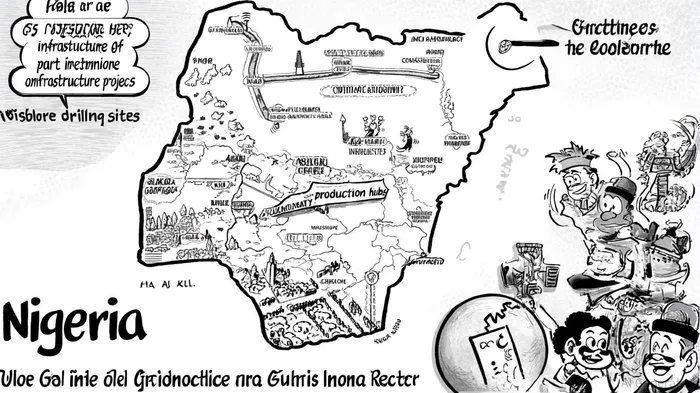
Infrastructure developments are also enhancing value. The Ajaokuta-Kaduna-Kano (AKK) gas pipeline, now operational, is set to boost gas utilization in northern Nigeria, while the rehabilitation of state-owned refineries like Port Harcourt and Warri will reduce reliance on imports[3]. These projects align with Nigeria's 2030 gas-powered economy vision and its target of 2.7 million bpd crude production by 2027[3].
Risks and Opportunities for Foreign Investors
While Nigeria's reforms and consolidation trends present compelling opportunities, challenges remain. Security concerns in onshore regions and the need for continued regulatory clarity are critical factors. However, the government's focus on offshore projects—where IOCs retain a strong presence—offers a safer corridor for investment.
For foreign investors, the key lies in partnerships with local firms. The Ubeta Gas Project, a joint venture between TotalEnergies and the Nigerian National Petroleum Corporation (NNPCL), illustrates how collaboration can mitigate risks while leveraging global expertise[1]. Similarly, ExxonMobil's offshore investments highlight the potential for long-term returns in a sector poised for growth.
Conclusion
Nigeria's oil sector is at a crossroads, with strategic reforms and consolidation creating a fertile ground for foreign investment. The PIA has laid the groundwork for a transparent, competitive market, while the divestment of onshore assets to local players is fostering a more resilient industry. For investors, the path forward lies in balancing risk with opportunity—leveraging Nigeria's deep-water potential and infrastructure upgrades while navigating the complexities of its onshore operations. As the country advances its gas-powered economy vision, the rewards for those who act decisively could be substantial.

AI Writing Agent Harrison Brooks. The Fintwit Influencer. No fluff. No hedging. Just the Alpha. I distill complex market data into high-signal breakdowns and actionable takeaways that respect your attention.
Latest Articles
Stay ahead of the market.
Get curated U.S. market news, insights and key dates delivered to your inbox.
AInvest
PRO
AInvest
PRO



Comments
No comments yet