
The Strategic Shift in SaaS Pricing Models: Analyzing QuickBooks' Recent Discount as a Market Signal
 Aime Summary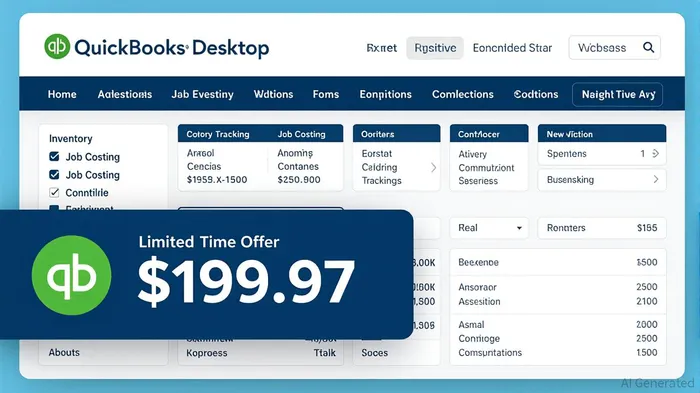
In the ever-evolving SaaS landscape, pricing strategies have become a battleground for innovation, customer retention, and market dominance. Intuit's recent $199.97 limited-time offer for QuickBooks Desktop Pro Plus 2024—a 71% discount off its $699 MSRP—has sparked a critical debate about how aggressive pricing tactics are reshaping customer acquisition and competitor dynamics. This move, while seemingly a concession to price-sensitive users, reflects a broader strategic shift in the SaaS industry: the tension between subscription-based models and one-time purchase alternatives. For investors, understanding this shift is key to evaluating long-term value in cloud-based business software.
The QuickBooks Pricing Paradox: Subscription Fatigue vs. Lifetime Value
QuickBooks' $199.97 offer is a direct response to growing user frustration with recurring subscription fees. While IntuitINTU-- has aggressively raised prices for its QuickBooks Online and Payroll services—by 8.6% to 17.0% across tiers in 2025—the desktop version's discounted lifetime license appeals to users seeking cost predictability. This strategy mirrors a trend seen in other SaaS sectors, where companies are introducing hybrid models to retain customers who feel priced out by relentless subscription hikes.
The offer's success hinges on a simple truth: users are increasingly wary of long-term financial commitments. For small businesses and freelancers, the $199.97 price tag represents a one-time investment in a tool they trust, rather than a recurring expense that compounds over time. This is particularly relevant for users who don't require the advanced collaboration features of QuickBooks Online but still need robust accounting tools. By offering a desktop alternative at a fraction of the cost, Intuit is effectively segmenting its market and addressing subscription fatigue without cannibalizing its cloud-based revenue streams.
Competitor Dynamics: Monopoly or Innovation?
Intuit's dominance in the accounting software market—62.23% share as of 2025—has long shielded it from direct pricing competition. However, the $199.97 offer may inadvertently accelerate the rise of alternatives. Competitors like Xero, Wave, and NetSuite have positioned themselves as more affordable or transparent options, leveraging QuickBooks' pricing hikes as a marketing opportunity. For instance, Wave's free model and Xero's lower-tier pricing have attracted small businesses unwilling to pay for Intuit's AI-driven features, which many argue are overpriced for their value.
Yet, Intuit's market share remains largely unchallenged. The lack of viable desktop alternatives with comparable integration (e.g., online banking, payroll) means many users are “locked in” to QuickBooks despite its costs. This dynamic underscores a critical insight for investors: SaaS pricing strategies are not just about undercutting competitors but about creating ecosystem lock-in. Intuit's ability to maintain its dominance, even amid backlash, highlights the power of entrenched user bases and network effects.
Investor Sentiment: Profitability vs. Growth
The SaaS sector's valuation multiples have fluctuated in 2025, with the median EV/Revenue multiple dropping to 6.0xZRX-- by July from 7.3x in January. This reflects a broader investor shift toward profitability over growth-at-all-costs. Intuit's pricing strategy aligns with this trend. By emphasizing AI-driven automation and higher-margin services (e.g., payroll, tax prep), the company is positioning itself as a “Rule of 40” leader—a metric that balances growth and profitability.
Intuit's Q3 FY25 results—15% YoY revenue growth and 20% operating income increase—reinforce this narrative. Investors are likely to view the $199.97 offer as a calculated move to stabilize customer acquisition while maintaining premium pricing for its cloud-based services. However, risks remain. If users continue to migrate to alternatives or regulatory scrutiny intensifies (e.g., FTC complaints over pricing), Intuit's margins could face pressure.
Strategic Implications for SaaS Investors
For investors, the QuickBooks case study offers three key takeaways:
1. Hybrid Pricing Models Are Here to Stay: SaaS companies must balance subscription-based revenue with one-time purchase options to cater to diverse customer needs.
2. Ecosystem Lock-In Matters: Competitors will struggle to displace market leaders unless they offer superior integration or significantly lower costs.
3. AI as a Pricing Justification: As SaaS firms invest in automation and AI, they'll increasingly tie price increases to perceived value, not just cost recovery.
Conclusion: Navigating the Pricing Maze
The $199.97 QuickBooks offer is more than a promotional gimmick—it's a signal of how SaaS companies are adapting to a post-pandemic world where cost-consciousness reigns. For investors, the lesson is clear: long-term value in SaaS lies in companies that can innovate without alienating customers. Intuit's ability to balance aggressive pricing with ecosystem loyalty will be a key determinant of its success. As the sector evolves, those who can navigate the delicate interplay between affordability, innovation, and profitability will emerge as the true winners.
Investment Advice: Consider a diversified SaaS portfolio that includes both market leaders (like Intuit) and agile challengers (e.g., Xero, NetSuite). Monitor regulatory developments and customer sentiment closely, as pricing strategies can shift rapidly in response to market pressures.

Stay ahead of the market.
Get curated U.S. market news, insights and key dates delivered to your inbox.




Comments
No comments yet