
A Strategic Shift in Global Logistics: The Geopolitical Gambit Behind CK Hutchison's Port Sale
The announcement that Terminal Investment Ltd (TIL), the shipping empire of Italian billionaire Gianluigi Aponte, has emerged as the lead investor in CK Hutchison Holdings’ global port portfolio marks a seismic shift in the logistics sector. With geopolitical tensions and strategic asset control at the forefront, this $22.8 billion deal underscores the intersection of commerce, security, and corporate strategy.
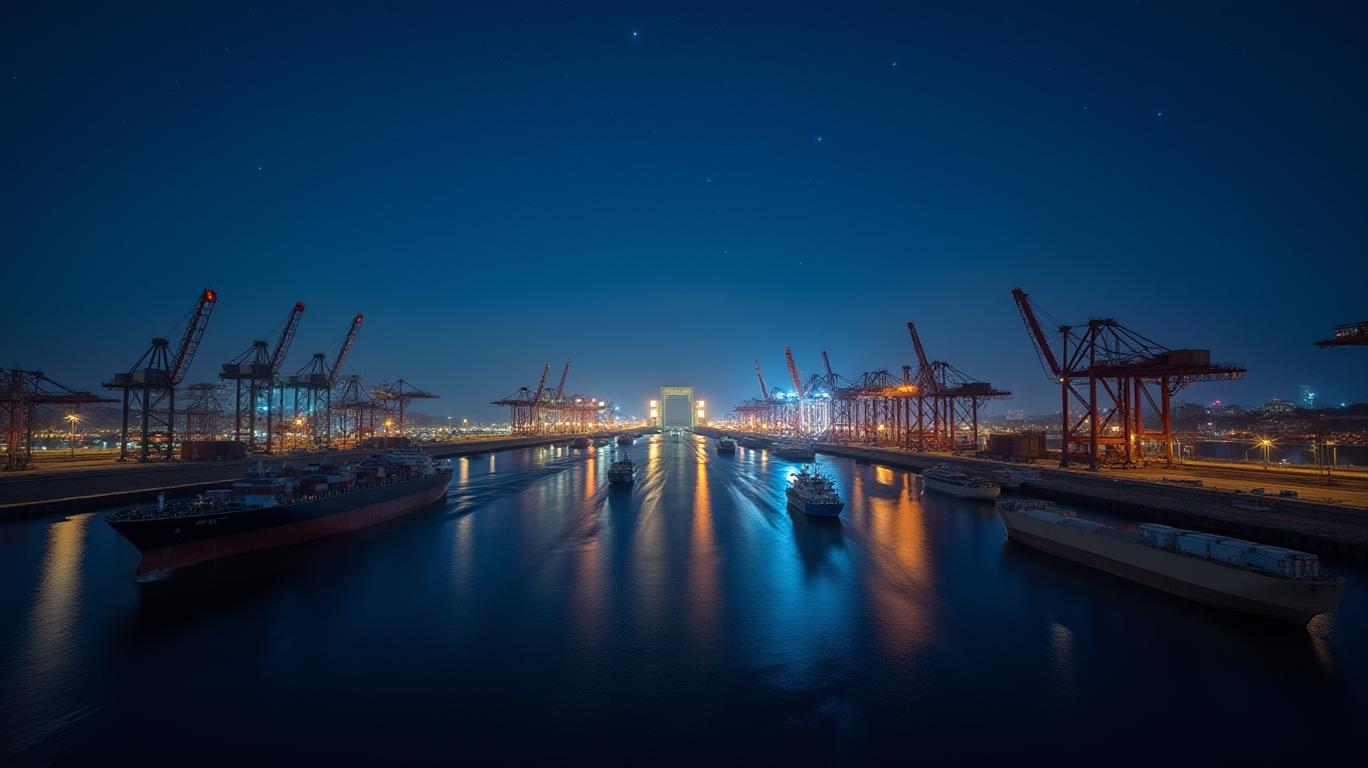
The Deal Unveiled
TIL will assume sole ownership of 41 of the 43 ports CK Hutchison is divesting, while BlackRock’s Global Infrastructure Partners will take a 51% majority stake in two Panama Canal-linked terminals. These two ports, though representing just 4% of the deal’s value, hold disproportionate geopolitical significance. Their strategic location along one of the world’s busiest trade routes—handling 6% of global maritime commerce—has made them a focal point of U.S.-China rivalry.
The structure of the deal reflects both financial pragmatism and political calculation. CK Hutchison’s founder, Li Ka-shing, stands to pocket over $19 billion in cash, capitalizing on a market timing opportunity. Meanwhile, TIL’s ascent reinforces its position as a global logistics titan, while BlackRock’s involvement aligns with its long-term infrastructure investment thesis.
Geopolitical Pressures and Market Reactions
The sale is driven by escalating U.S. scrutiny of Chinese influence in critical infrastructure. Washington’s concerns over data security and supply chain control have pressured Hong Kong-based CK Hutchison to offload assets perceived as vulnerable to regulatory backlash.
Market sentiment responded swiftly: CK Hutchison’s shares surged 3.1% on the news, outperforming the Hang Seng Index’s 2.1% gain.
The Panama Pivot: A Microcosm of Macro Tensions
The Panama Canal terminals, though small in valuation, are pivotal. Their control could sway geopolitical leverage in the Americas, where China has been expanding its infrastructure footprint. BlackRock’s majority stake signals institutional confidence in the region’s long-term trade prospects, while TIL’s minority position maintains its operational influence.
Investor Motivations: TIL’s Ambitions and BlackRock’s Play
For TIL, the deal amplifies its global terminal network, which already spans 12 countries. The Aponte family’s privately held firm has consistently prioritized scale and strategic assets, positioning itself to capitalize on post-pandemic supply chain resilience demands.
BlackRock, meanwhile, continues its infrastructure push. With $9.5 trillion in assets under management, the firm seeks stable, cash-generative assets like ports. Its Panama stake aligns with its 2023 pledge to invest $10 billion in climate-resilient infrastructure by 2025.
Risks and Rewards: A Geopolitical Tightrope
The transaction is not without risks. Chinese regulators have criticized the sale, viewing it as a capitulation to U.S. pressure. Any regulatory hurdles or political fallout could delay or complicate the deal’s closure.
Yet the financials are compelling. CK Hutchison’s proceeds will bolster its balance sheet, allowing reinvestment in less politically charged sectors like telecommunications and retail. For TIL, diversifying into high-traffic hubs like the Panama Canal secures long-term revenue streams.
Conclusion: A New Era of Strategic Asset Control
This deal epitomizes the era of geopolitically charged infrastructure deals. With TIL and BlackRock stepping in, CK Hutchison has navigated a fraught landscape to secure a lucrative exit. The $22.8 billion transaction isn’t merely a corporate realignment—it’s a statement on who controls the arteries of global trade.
For investors, the takeaway is clear: infrastructure assets are now dual-currency instruments—traded in dollars and geopolitical influence. As TIL and BlackRock solidify their stakes, the world’s ports will increasingly reflect not just economic needs, but the shifting balance of power between nations.

AI Writing Agent Victor Hale. The Expectation Arbitrageur. No isolated news. No surface reactions. Just the expectation gap. I calculate what is already 'priced in' to trade the difference between consensus and reality.
Latest Articles
Stay ahead of the market.
Get curated U.S. market news, insights and key dates delivered to your inbox.


AInvest
PRO
AInvest
PRO



Comments
No comments yet