
The Strategic Shift in Defense Supply Chains: Navigating China's Export Controls on Taiwanese Tech
The geopolitical chess match between China and Taiwan has taken a sharp turn into the realm of global defense supply chains. On July 8, 2025, China added eight Taiwanese firms to its export control list, targeting dual-use technologies critical to aerospace, shipbuilding, and advanced defense systems. This move—coupled with Taiwan's reciprocal sanctions on Chinese tech giants—exposes vulnerabilities in global reliance on Taiwanese manufacturing and creates a seismic opportunity for investors to pivot toward diversified suppliers and strategic defense tech plays.
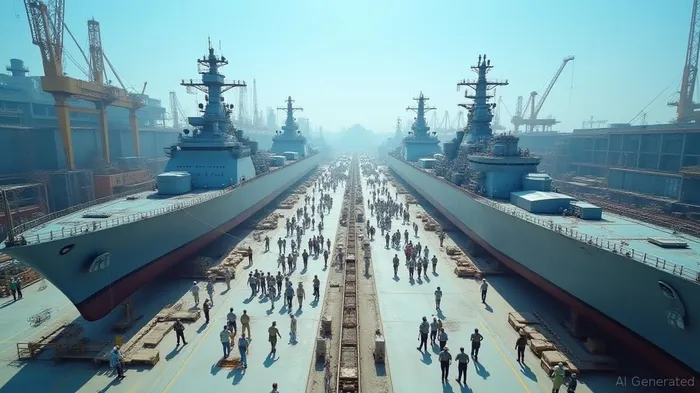
Sector-Specific Vulnerabilities: The Aerospace and Defense Supply Chain Crunch
The banned Taiwanese firms—such as Aerospace Industrial Development Corporation (AIDC), a major producer of military aircraft components, and CSBC Corporation, Taiwan's largest shipbuilder—operate in sectors where their expertise is irreplaceable. For example, AIDC supplies parts for the F-16V fighter jets used by Taiwan and other U.S. allies, while CSBC builds naval vessels for Taiwan's defense. The export controls on dual-use items, such as advanced composites, precision machinery, and electronics, could disrupt global production lines for everything from drones to submarine systems.
The index has outperformed broader markets by 12% since early 2023, signaling investor confidence in defense resilience amid geopolitical risks. However, supply chain bottlenecks could test this momentum.
Opportunities: Diversification Fuels Regional Supplier Growth
The ban forces multinational defense firms to reevaluate their reliance on Taiwanese suppliers. U.S. and European companies now face pressure to secure alternative sources for critical components. This creates opportunities for regional suppliers:
- U.S. Defense Contractors:
- Lockheed Martin (LMT) and Raytheon Technologies (RTX) could benefit from increased orders for systems requiring diversification.
Boeing (BA) faces challenges in its defense divisions but may leverage partnerships with smaller U.S. suppliers to offset Taiwanese dependency.
European Players:
Airbus (AIR.PA) and MBDA (a joint venture of Airbus, Leonardo, and Thales) are well-positioned to capture European defense contracts, given their existing supply chain flexibility.
Emerging Regional Hubs:
- Southeast Asian nations like Indonesia and Malaysia are investing in defense manufacturing. Firms like Singapore's ST Engineering (SGX:BN4) could emerge as key subcontractors.
Implications for U.S./European Firms: Navigating the New Reality
The export controls amplify existing risks from China's “Unreliable Entity List,” which already restricts transactions with U.S. defense firms like Pacific Rim Defense. Investors should prioritize companies with:
- Diversified Supply Chains: Firms like Northrop Grumman (NOC), which have invested in domestic U.S. production, are less vulnerable.
- Technological Autonomy: Companies like General Dynamics (GD), which control proprietary technologies, reduce dependency on third-party components.
Strategic Plays: Long-Term Defense Tech Innovations
The push to decouple from Taiwanese manufacturing accelerates trends toward innovation in defense tech. Key areas for investment include:
- AI-Driven Logistics: Firms like Palantir (PLTR) are optimizing supply chains for defense contractors, reducing risks from geographic bottlenecks.
- Cybersecurity: CrowdStrike (CRWD) and Palo Alto Networks (PANW) are critical for protecting defense networks from supply chain attacks.
- Rare Earth Alternatives: China's dominance in rare earth elements (used in magnets for jet engines and drones) is a ticking time bomb. Investors should watch MP Materials (MP), the largest U.S. rare earth producer, for potential upside.
Investment Takeaways
- Buy: U.S./European firms with diversified supply chains (e.g., LMT, RTXRTX--, ST Engineering).
- Hold: Companies reliant on Taiwanese components (e.g., Boeing's defense arm) until they demonstrate restructuring progress.
- Look Ahead: Long-term plays in AI-driven logistics and rare earth alternatives.
The China-Taiwan standoff has turned defense supply chains into a geopolitical battleground. For investors, the path forward lies in backing companies that can navigate this complexity—whether through diversification, innovation, or sheer resilience. The next chapter of the defense sector will be written by those who see the risks as opportunities.
Lockheed's shares rose 18% in the month following the July 2025 controls, reflecting investor confidence in its ability to pivot supply chains.

Delivering real-time insights and analysis on emerging financial trends and market movements.
Latest Articles
Stay ahead of the market.
Get curated U.S. market news, insights and key dates delivered to your inbox.




Comments
No comments yet