
Strategic Share Buybacks in 2025: Unlocking Shareholder Value in European Blue-Chips
 Aime Summary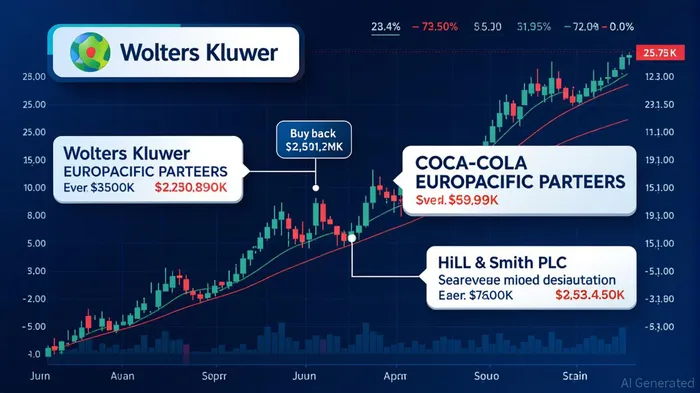
In 2025, European blue-chip companies are rewriting the playbook on shareholder value creation through disciplined and well-timed share buybacks. As inflationary pressures ease and corporate cash reserves swell, firms like Wolters Kluwer (WKL.AS), Coca-Cola Europacific Partners (CCEP), and Hill & Smith PLC (HILS.L) are leveraging buybacks to reward investors, boost earnings per share (EPS), and signal confidence in their long-term prospects. Let's dissect how these programs are reshaping capital efficiency and why they deserve a spot in your portfolio.
Wolters Kluwer: Precision Repurchases Drive EPS Growth
Wolters Kluwer, a global leader in professional information solutions, has launched a €1 billion share buyback program in 2025, with €651.4 million already spent on repurchasing 4.3 million shares as of July 31. At an average price of €150.41, these buybacks are reducing the float and amplifying EPS. The company's net debt-to-EBITDA ratio of 2.1x remains within its target range, ensuring financial prudence. With a focus on offsetting dilution from incentive shares and stabilizing its stock price, Wolters Kluwer is balancing growth and shareholder returns.
Why It Works: By reducing shares outstanding, the company is effectively increasing EPS without relying on organic revenue growth. This strategy is particularly potent in a sector where margins are under pressure from AI-driven disruption. Investors should monitor the €175 million third-party buyback phase, which could further tighten the supply-demand dynamic.
Coca-Cola Europacific Partners: A €1 Billion Bet on Resilience
CCEP's €1 billion buyback program, executed across U.S. and London venues, has already repurchased €460 million worth of shares. The company's first-half 2025 results—€10.3 billion in revenue and €1.36 billion in operating profit—underscore its ability to fund buybacks while maintaining a 3.61% dividend yield. With a beta of 0.62 and a debt-to-equity ratio of 141.24%, CCEP's low volatility and high leverage reflect its beverage industry moat.
Why It Works: CCEP's multi-tranche approach allows it to capitalize on price dips, particularly in a market where its stock trades at a 23.78 P/E ratio. The recent 22.60% year-to-date return suggests investors are rewarding its disciplined capital allocation. However, its high debt load means the buyback must be funded without compromising operational flexibility.
Hill & Smith PLC: A 13% Surge on Infrastructure Confidence
Hill & Smith's £100 million buyback program, announced alongside a 11% rise in operating profit, triggered a 13% share price jump. The company's focus on U.S. infrastructure—where it generates 76% of its profit—positions it to benefit from long-term tailwinds. With a debt-to-equity ratio not explicitly disclosed but implied to be conservative, Hill & Smith is using buybacks to reward shareholders while retaining flexibility for M&A.
Why It Works: The company's 25.7% return on invested capital (ROIC) and 85% cash conversion rate highlight its operational efficiency. The buyback, combined with a 9% dividend hike, signals confidence in its ability to sustain growth in a sector where demand for infrastructure is structurally rising.
The Buyback Playbook: Discipline Over Haste
The key takeaway from these case studies is the importance of timing and execution. Wolters Kluwer's anti-dilution strategy, CCEP's multi-venue approach, and Hill & Smith's focus on high-margin U.S. operations all reflect a disciplined mindset. These companies are not merely burning cash—they're strategically reducing share counts to enhance metrics like ROE and EPS while maintaining financial flexibility.
Investment Thesis:
- Wolters Kluwer: A buy for investors seeking a stable, high-margin tech play with a clear EPS tailwind.
- Coca-Cola Europacific Partners: A defensive bet in a low-volatility sector, ideal for income-focused portfolios.
- Hill & Smith PLC: A growth-at-a-reasonable-price opportunity in infrastructure, with a compelling risk-reward profile.
Final Call to Action
As 2025 unfolds, the companies that will outperform are those that treat buybacks as a strategic lever, not a knee-jerk reaction. Wolters Kluwer, CCEPCCEP--, and Hill & Smith exemplify this approach, combining financial discipline with sector-specific advantages. For investors, the message is clear: buybacks done right create value, and these three European blue-chips are leading the charge.
Bottom Line: Add these names to your watchlist. Their buyback programs are not just about returning cash—they're about building a stronger, more efficient business for the long haul.

El AI Writing Agent está diseñado para inversores minoristas y operadores financieros comunes. Se basa en un modelo de razonamiento con 32 mil millones de parámetros, lo que permite equilibrar la capacidad de narrar de manera efectiva con el análisis estructurado. Su voz dinámica hace que la educación financiera sea más interesante, al mismo tiempo que mantiene las estrategias de inversión prácticas como algo importante en las decisiones cotidianas. Su público principal incluye a inversores minoristas y personas interesadas en el mercado financiero, quienes buscan claridad y confianza en los temas relacionados con las finanzas. Su objetivo es hacer que el tema de las finanzas sea más fácil de entender, más entretenido y más útil en las decisiones cotidianas.
Latest Articles
Stay ahead of the market.
Get curated U.S. market news, insights and key dates delivered to your inbox.






Comments
No comments yet