
Strategic Sector Rotation in a Weak Export Environment: Why Construction and Engineering is the New Hedge
 Aime Summary
The U.S. economy is at a crossroads. , . , . This trend underscores a critical reality: U.S. exports are becoming more expensive, potentially eroding competitiveness in global markets. For investors, this signals a need to recalibrate portfolios, prioritizing sectors insulated from—or even benefiting from—this export-driven slowdown.
The Construction and Engineering sector, often overlooked in favor of more glamorous tech or consumer-facing industries, is emerging as a compelling strategic hedge. Despite facing its own headwinds—tariffs, labor shortages, . As export-driven industries falter, construction and engineering firms are leveraging government stimulus, technological innovation, and long-term demand for energy and data center infrastructure to outperform broader economic trends.
The Export Price Index: A Canary in the Coal Mine
The Export Price Index's trajectory reflects the broader challenges facing U.S. trade. With tariffs on steel and aluminum now at 50%, , the cost of exporting goods has surged. This is compounded by the 's aggressive trade policies, , . The IMF and WTO have both flagged a potential contraction in North American trade, with Mexico and Asian economies bearing the brunt of disrupted value chains.
For investors, the is a canary in the coal mine. A sustained rise in export prices without a corresponding increase in volume signals weakening demand. This is particularly evident in sectors like manufacturing and commercial construction, where U.S. . The data is clear: export-driven growth is no longer the engine it once was.
Construction and Engineering: A Sector in Transition
The Construction and Engineering sector is navigating a dual challenge. On one hand, traditional segments like commercial and manufacturing construction are contracting. On the other, high-demand areas such as data centers and energy infrastructure are surging. This duality makes the sector a unique candidate for strategic overweighting.
Consider the numbers:
- , .
- : Power demand from U.S. , driven by AI and cloud computing. , despite broader sector declines.
- : Firms adopting AI-driven analytics, (BIM), and 3D printing are outperforming peers, mitigating labor shortages and supply chain bottlenecks.
While the sector faces a 3% decline in nonresidential construction spending YoY, the shift toward infrastructure and digital infrastructure is creating a new equilibrium. For example, , , but signaling stabilization. , which reflected deepening pessimism.
Strategic Rotation: Why Construction is the New Hedge
In a weak export environment, investors must seek sectors with structural tailwinds. Construction and Engineering fits this profile for three reasons:
- Defensive Characteristics: Government-funded infrastructure projects are less cyclical than export-dependent industries. , even as private-sector demand wanes.
- : The AI-driven data center boom is creating a new growth engine. , this segment is poised to outperform.
- Margin Resilience: While material costs have spiked, firms with strong balance sheets and digital capabilities are passing these costs to clients. For instance, companies leveraging BIM and prefabrication are reducing waste and improving margins.
The Risks and the Road Ahead
No sector is immune to risk. Labor shortages, , and material price volatility remain challenges. Additionally, the sector's reliance on government contracts introduces political risk. However, these risks are being mitigated by technological adoption and strategic M&A. Firms that invest in automation and talent development are positioning themselves to thrive.
For investors, the key is to focus on sub-sectors with the strongest fundamentals. Energy infrastructure, data centers, and public works projects are the most compelling. Avoid overexposure to commercial and manufacturing construction, which remain vulnerable to economic headwinds.
Conclusion: Building a Resilient Portfolio
The U.S. Export Price Index is a bellwether for a shifting economic landscape. As export-driven growth falters, investors must pivot to sectors with structural resilience. The Construction and Engineering sector, with its blend of defensive characteristics and growth-oriented opportunities, is uniquely positioned to serve as a hedge in this environment. By overweighting this sector, particularly in infrastructure and digital infrastructure, investors can navigate the uncertainties of a weak export environment while capitalizing on long-term trends.
In the end, the lesson is clear: in a world where global trade is increasingly fragmented, the ability to adapt and rebalance is what separates successful investors from the rest. The Construction and Engineering sector is not just a refuge—it's a blueprint for the future.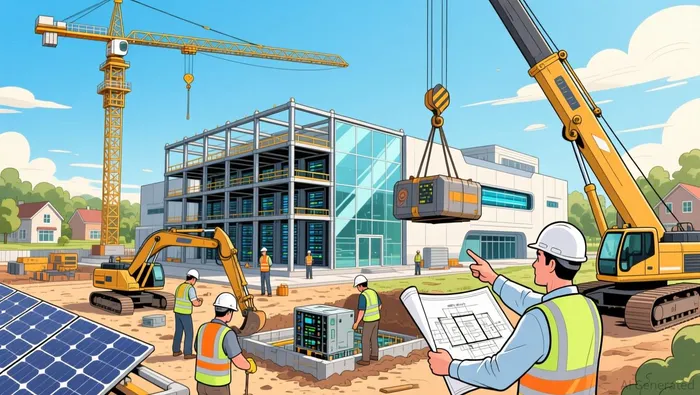

Stay ahead of the market.
Get curated U.S. market news, insights and key dates delivered to your inbox.






Comments
No comments yet