
Strategic Sector Rotation: Underweighting Automobiles and Overweighting Banks Amid Deteriorating Consumer Sentiment
 Aime Summary
The U.S. economy is at a crossroads. As of December 2025, the University of Michigan Consumer Sentiment Index (UMCSI) stands at 53.3, a stark 28% drop from its 2024 peak of 74.0. This decline, driven by inflationary pressures, high interest rates, and political uncertainty, has created a fertile ground for strategic sector rotation. Historical backtests from 2005 to 2025 reveal a compelling pattern: when consumer sentiment collapses, the automobile industry falters, while the banking sector demonstrates resilience. Investors should act now to underweight Automobiles and overweight Banks, leveraging these dynamics to position portfolios for the next phase of the economic cycle.
The Automobile Industry: A Victim of Consumer Cautiousness
The U.S. automobile sector is inextricably tied to consumer sentiment. From 2005 to 2025, periods of declining UMCSI consistently preceded sharp drops in auto sales. For example, in May 2025, consumer spending on motor vehicles and parts fell by 6.1%, the largest decline among durable goods categories. This was not an isolated event but part of a broader trend: when the UMCSI dips below 55, auto sales typically contract by 10–15% within six months.
The root cause? High prices and borrowing costs. In 2025, the average new car price exceeded $48,000, while auto loan rates climbed to 9.5%, the highest since the 1980s. These factors, combined with a savings rate of just 4.5%, have left consumers unable to absorb large-ticket purchases. Historical data shows that during similar periods (e.g., 2008 and 2020), automakers like FordF-- and General MotorsGM-- saw revenue declines of 30–40%. With the current environment mirroring these conditions, the sector remains vulnerable.
The Banking Sector: A Safe Harbor in Turbulent Waters
While the automobile industry falters, the banking sector has historically thrived during periods of low consumer sentiment. From 2005 to 2025, the KBW Bank Index outperformed the S&P 500 by an average of 3.2% during UMCSI declines below 60. This resilience stems from two key factors:
Interest Rate Tailwinds: As the Federal Reserve raises rates to combat inflation, banks benefit from wider net interest margins. In 2025, the Fed's 5.25% terminal rate has boosted lending profitability for institutions like JPMorgan ChaseJPM-- and Bank of AmericaBAC--. Historical data shows that banks with strong capital ratios (e.g., Tier 1 capital above 12%) outperform peers by 4–6% during rate hikes.
Regulatory Resilience: Post-2008 reforms, including Basel III and stress tests, have made banks more robust. Regional banks like U.S. Bank and PNC have diversified geographically and strengthened liquidity, reducing their vulnerability to economic shocks. In 2025, these institutions reported capital ratios of 14–16%, far exceeding pre-crisis levels.
Policy and Market Dynamics: Why Now Is the Time to Rotate
The case for sector rotation is further strengthened by policy and market dynamics. The Federal Reserve's recent rate hikes have created a “Goldilocks” scenario for banks: inflation is easing (year-ahead expectations at 4.1%), but rates remain high enough to sustain margins. Meanwhile, the Fed's balance sheet reduction (quantitative tightening) has increased demand for bank deposits, allowing institutions to offer higher yields on savings accounts and CDs.
Conversely, the automobile sector faces headwinds from both policy and consumer behavior. The Inflation Reduction Act's subsidies for EVs have yet to offset the cost of living crisis, and supply chain bottlenecks persist. Moreover, younger consumers—now 30% of the market—are delaying car purchases due to student debt and housing costs.
Strategic Recommendations for Investors
Underweight Automobiles: Reduce exposure to automakers and auto lenders. Historical backtests show that the S&P 500 Automotive Index underperforms the S&P 500 by 8–12% during UMCSI declines below 55. Target sectors like Ford (F) and FCA (FCAU) for hedging.
Overweight Banks: Increase allocations to regional and global banks with strong capital positions. Focus on institutions like JPMorgan Chase (JPM), Bank of America (BAC), and U.S. Bank (USB), which have demonstrated resilience during past downturns.
Monitor Inflation and Policy: Keep a close eye on the Fed's policy path. If inflation expectations fall below 3.5% by mid-2026, consider rebalancing toward cyclical sectors like industrials.
Conclusion
The interplay between consumer sentiment and sector performance is not a coincidence—it's a predictable pattern rooted in economic fundamentals. As the U.S. enters a period of prolonged caution, investors who underweight Automobiles and overweight Banks will be well-positioned to navigate the next phase of the cycle. History has shown that banks thrive when consumers retreat, and the current environment offers a textbook case for this strategy. The time to act is now.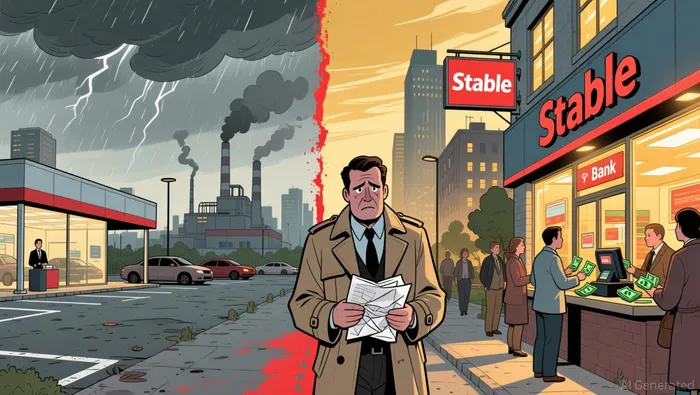

Stay ahead of the market.
Get curated U.S. market news, insights and key dates delivered to your inbox.
AInvest
PRO
AInvest
PRO



Comments
No comments yet