
Strategic Sector Rotation: Navigating Capital Markets and Leisure Products Amid Manufacturing Weakness
 Aime Summary
The Philadelphia Fed Manufacturing Index has plunged to -10.2 in December 2025, marking its third consecutive month of contraction. This sharp decline—down 8.5 points from November—underscores persistent weakness in regional manufacturing, with 28% of firms reporting reduced activity. While the index's future indicators hint at optimism, the immediate implications for sector rotation are clear: investors must weigh defensive positioning in Capital Markets against the cyclical risks in Leisure Products.
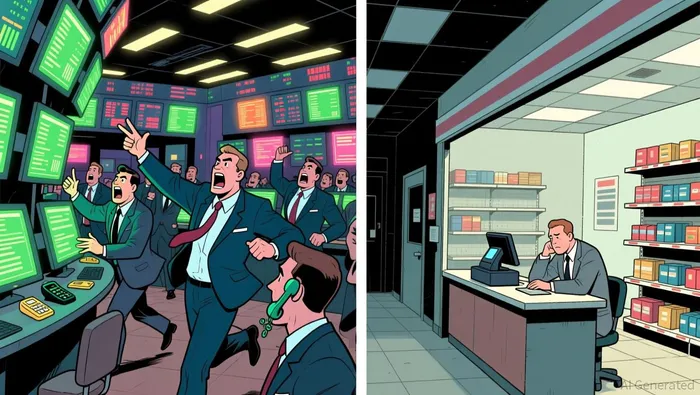
Capital Markets: A Safe Harbor in Turbulent Waters
Historical data reveals that during Philly Fed contractions, Capital Markets sectors often act as a refuge. For instance, during the April 2020 pandemic-induced collapse (-60.50 index reading), capital flowed into bonds and gold as equities plummeted. Even in October 2025, when the index hit -12.8, the future capital expenditures index rose to 25.2, signaling resilience in technology-driven investments. This duality—volatility in the short term and stability in long-term expectations—makes Capital Markets a strategic asset during manufacturing downturns.
The sector's performance is closely tied to liquidity and interest rate dynamics. As central banks respond to weak manufacturing data with accommodative policies, fixed-income assets and defensive equities (e.g., financials, utilities) tend to outperform. For example, during the 2022–2023 inflationary period, high-yield bond spreads narrowed as investors sought yield amid rate hikes, illustrating the sector's adaptability.
Leisure Products: A Double-Edged Sword
The Leisure Products sector, however, presents a more nuanced picture. While discretionary spending drives growth in normal times, it becomes highly sensitive during contractions. In November 2025, 40% of firms reported heightened customer price sensitivity, a direct hit to leisure goods. Elevated prices paid (49.2 in October 2025) and reduced workweeks (12.8 in October) further strained margins.
Historically, Leisure Products has shown mixed resilience. During the 2020 pandemic, demand for home-based leisure (e.g., gaming consoles, outdoor gear) surged, while travel-related items collapsed. Yet, in October 2025, the sector faced dual headwinds: inflationary pressures and labor shortages. The employment index for manufacturing fell to 4.6 in October, complicating hiring for leisure product firms.
Strategic Positioning: Balancing Defense and Opportunity
Given the current environment, a strategic rotation toward Capital Markets is prudent. Defensive assets like bonds and gold remain attractive, while equities in sectors insulated from manufacturing cycles (e.g., fintech, insurance) offer growth potential. The future activity index (49.6 in November 2025) suggests that forward-looking Capital Markets investments could benefit from eventual recovery.
For Leisure Products, selective exposure is key. Sub-sectors with essential or adaptive offerings—such as home entertainment or low-cost leisure items—may outperform. However, investors should avoid overexposure to discretionary categories (e.g., luxury travel, high-end apparel) until manufacturing data stabilizes.
Conclusion: Navigating the Crossroads
The December 2025 Philly Fed reading reinforces the need for agility. While Capital Markets provides a shield against near-term volatility, Leisure Products requires a nuanced approach. Investors should overweight defensive Capital Markets positions while maintaining a watchful eye on Leisure Products for opportunistic, sector-specific plays. As the index's future indicators hint at a potential rebound, the key lies in balancing caution with calculated optimism.


Stay ahead of the market.
Get curated U.S. market news, insights and key dates delivered to your inbox.


AInvest
PRO
AInvest
PRO



Comments
No comments yet