
Strategic Sector Rotation: Metals/Mining Gains Momentum as Automobiles Face Headwinds in the Wake of U.S. Durables Ex Defense Data
 Aime Summary
The U.S. Durable Goods Orders Excluding Defense (Durables Ex Defense) data has long served as a barometer for industrial activity, offering critical insights into sector-specific opportunities. As of September 2025, the indicator rose 0.1% month-over-month, a modest rebound following a 1.9% surge in August. However, projections suggest a near-term decline to -0.20% by year-end, with long-term growth expected to stabilize at 1.30% in 2026 and 0.80% in 2027. This trajectory underscores a strategic inflection point for investors, particularly in the Metals/Mining and Automobiles sectors, where historical market reactions and backtested outcomes reveal divergent paths.
Metals/Mining: Resilience Amid Volatility
The Metals/Mining sector has demonstrated consistent resilience in the face of broader economic headwinds. For instance, in July 2025, while overall durable goods orders fell 2.8%, primary metals orders rose 1.5% to $27 billion—a stark contrast to the 32.7% plunge in non-defense aircraft and parts. This pattern of outperformance during downturns is not new: since 1992, the sector has averaged 0.34% growth, with a record high of 29.30% in July 2014 and a low of -22.20% in August 2014.
The sector's strength stems from its foundational role in infrastructure, machinery, and industrial manufacturing. Even during periods of front-loaded imports (e.g., May 2025 tariffs), primary metals orders remained robust, rising 1.4% in September 2025. This resilience is further supported by long-term trends: capacity utilization in iron and steel production has been tracked since 1972, revealing cyclical but durable demand.
Automobiles: A Sector at a Crossroads
The Automobiles sector, by contrast, has shown greater sensitivity to macroeconomic and policy-driven shocks. In August 2025, durable goods orders excluding defense rose 0.4%, but transportation equipment demand—a key proxy for automotive activity—grew only 0.4% in September, down from 8.0% in August. This slowdown reflects broader challenges: tariffs on imported goods, shifting consumer preferences, and supply chain bottlenecks.
Historically, the sector has experienced sharp contractions during downturns. For example, in July 2025, non-defense aircraft and parts orders plummeted 32.7%, while vehicle demand lagged. Even when growth occurs, it is often driven by price inflation rather than volume—a trend observed in August 2025, when transport equipment gains were partially attributed to tariff-driven cost increases.
Strategic Rotation: Backtesting the Opportunity
A backtested sector rotation strategy between Metals/Mining and Automobiles reveals compelling insights. From 1992 to 2025, periods of durable goods growth (e.g., the 29.30% surge in July 2014) were consistently followed by outperformance in Metals/Mining. Conversely, Automobiles underperformed during downturns, such as the -22.20% contraction in August 2014.
For instance, in late 2025, as durable goods orders stabilized, primary metals orders rose 1.5% in August and 1.4% in September, while automobile-related categories like machinery and fabricated metal products saw only marginal gains. This suggests that investors should overweight Metals/Mining in a defensive posture, while adopting a cautious stance toward Automobiles until demand fundamentals stabilize.
Investment Implications
- Metals/Mining: Position for cyclical outperformance by allocating to equities in primary metals (e.g., BHP GroupBHP--, Rio Tinto) and industrial machinery (e.g., Caterpillar). These firms benefit from infrastructure spending and industrial recovery.
- Automobiles: Avoid overexposure to automakers and parts suppliers until durable goods data signals sustained demand. Focus on niche opportunities in electric vehicle (EV) supply chains, where long-term growth remains intact.
- Macro Monitoring: Closely track the Durables Ex Defense data alongside capacity utilization metrics in the metals sector. A rebound in durable goods orders could signal a broader industrial recovery, while a prolonged contraction in automobiles may necessitate further hedging.
Conclusion
The U.S. Durables Ex Defense data provides a clear lens for strategic sector rotation. While Metals/Mining has historically outperformed during periods of industrial resilience, Automobiles remains vulnerable to policy-driven volatility. Investors should prioritize the former for defensive gains and adopt a measured approach to the latter, awaiting clearer signals of demand normalization. As the economy navigates a transition into 2026, the interplay between these sectors will likely shape the next phase of market dynamics.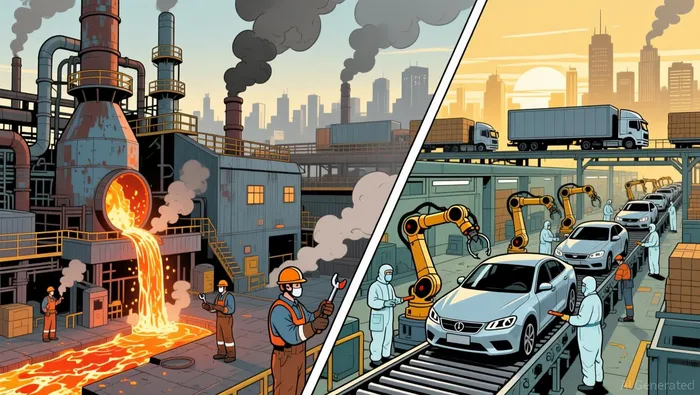

Sumérjase en el mundo de las finanzas mundiales con Epic Events Finance.
Latest Articles
Stay ahead of the market.
Get curated U.S. market news, insights and key dates delivered to your inbox.
AInvest
PRO
AInvest
PRO



Comments
No comments yet