
Strategic Sector Rotation in a Divergent Economic Landscape: Lessons from the August ISM Non-Manufacturing Report
 Aime Summary
The U.S. ISM Non-Manufacturing PMI for August 2025, at 52, underscores a services sector that remains technically in expansion but increasingly fragmented in its performance. While the index's 1.9-percentage-point jump from July signals resilience, the report's subcomponents reveal a tale of two economies: one driven by supply-side adjustments and another grappling with demand-side headwinds. For investors, this divergence offers a roadmap for tactical sector rotation in an environment where macroeconomic forces—tariffs, labor shortages, and global supply chain shifts—are reshaping competitive advantages.
The Services Sector: A Tale of Two Currents
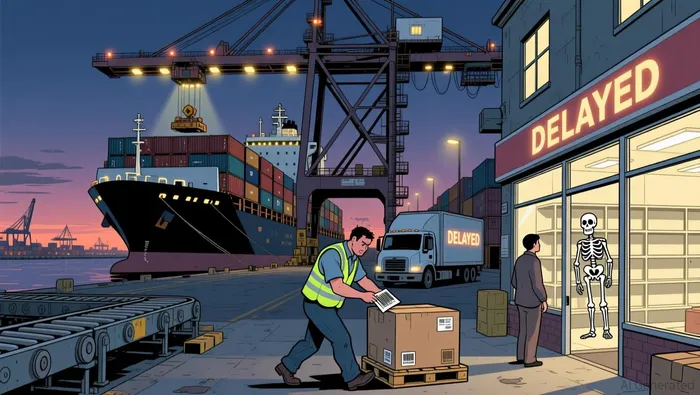
The August report highlights a critical asymmetry. The Business Activity Index (55) and New Orders Index (56) surged, reflecting robust demand in sectors like retail trade and transportation. However, the Employment Index (46.5) and New Export Orders Index (47.3) signaled contraction, pointing to labor market frictions and global demand weakness. This duality is particularly pronounced in two sectors: Consumer Staples Retail and Marine Transportation.
Consumer Staples Retail: A Sector Under Pressure
While the broader Retail Trade industry reported growth in business activity and new orders, the underlying dynamics are troubling. The Employment Index contraction for the services sector as a whole—now in its third consecutive month—suggests that retailers are scaling back hiring despite rising demand. This reflects a classic labor market mismatch: businesses are struggling to find qualified workers, even as they prepare for tariff-driven price hikes and the holiday season.
Moreover, the Prices Index (69.2) remains a drag. For consumer staples, which are price-sensitive, this inflationary pressure could erode margins unless demand remains inelastic. The Backlog of Orders Index (40.4), at its lowest since 2009, hints at either tighter demand or improved inventory management. Either way, it signals a shift in consumer behavior—perhaps toward online shopping or away from discretionary spending—forcing retailers to adapt their strategies.
Marine Transportation: A Sector on the Rise
In contrast, the Transportation & Warehousing sector—encompassing marine logistics—showed clear momentum. The Imports Index (54.6) surged to its highest level since early 2024, driven by businesses stockpiling goods ahead of anticipated tariff increases. This trend is particularly relevant to marine transportation, which facilitates the bulk of global trade.
The Supplier Deliveries Index (50.3), though inverted, indicates slower delivery speeds, a sign that logistics providers are grappling with extended lead times. For investors, this points to a sector where demand is outpacing capacity, creating opportunities for companies that can scale infrastructure or optimize routes. The Inventories Index (53.2) also suggests that businesses are proactively managing supply chains, a trend likely to benefit marine transportation firms.
Strategic Implications for Investors
The August ISM report underscores the importance of sector rotation in a slowing economy. Here's how investors can position portfolios:
- Short-Term Tactical Bets:
- Overweight Transportation & Warehousing: As businesses prepare for tariff-driven disruptions, marine logistics firms with scalable infrastructure or digital supply chain solutions are prime candidates. Look for companies with exposure to container shipping, port operations, or last-mile delivery.
Underweight Consumer Staples Retail: While the sector benefits from essential demand, its labor constraints and pricing pressures make it a riskier play. Consider hedging with defensive ETFs or focusing on sub-sectors with strong e-commerce integration.
Long-Term Macro Positioning:
- Tariff-Resilient Sectors: The report's emphasis on tariff-related cost adjustments suggests a prolonged shift toward nearshoring and regional supply chains. Investors should favor companies with diversified manufacturing footprints or those offering logistics solutions for reshoring.
Labor Market Adjustments: The persistent employment contraction in services highlights a structural shift. Sectors adopting automation or AI-driven workforce management (e.g., retail inventory systems, warehouse robotics) may outperform.
Risk Management:
- Diversify Across Cyclical and Defensive Sectors: While marine transportation and logistics are cyclical, pairing them with defensive plays (e.g., utilities, healthcare) can balance volatility.
- Monitor Inflationary Pressures: The Prices Index remains a red flag. Investors should consider inflation-linked bonds or commodities to hedge against cost-of-living pressures.
Conclusion: Navigating the New Normal
The August ISM Non-Manufacturing report is a microcosm of the broader economic transition: a shift from demand-driven growth to supply-side adaptation. For investors, the key lies in identifying sectors that are not just surviving but thriving in this environment. Consumer Staples Retail, despite its foundational role, faces headwinds from labor shortages and pricing pressures. Meanwhile, Marine Transportation and logistics are beneficiaries of global trade dynamics and tariff strategies.
As the Federal Reserve's policy stance remains uncertain and global supply chains continue to evolve, tactical sector rotation will be critical. The message is clear: position for the long game, but stay agile in the short term. The next phase of economic growth will belong to those who can navigate the intersection of tariffs, technology, and talent.

Stay ahead of the market.
Get curated U.S. market news, insights and key dates delivered to your inbox.


AInvest
PRO
AInvest
PRO



Comments
No comments yet