
Strategic Sector Rotation in a Deteriorating Consumer Climate: Why Financials Outperform Discretionary in 2025
 Aime Summary
The December 2025 University of Michigan Consumer Sentiment Index (CISI) rose to 52.9, a 3.7% increase from November's 51.0. While this marks the first improvement in five months, the reading remains 28.5% below the December 2024 level of 74.0 and is the second-lowest on record. This data point, coupled with diverging sectoral performance, underscores a critical inflection point for investors navigating a slowing U.S. economy.
The Sentiment Divide: Discretionary vs. Financials
The CISI's subcomponents reveal a fractured consumer psyche. The Current Economic Conditions Index (CECI) hit a record low of 50.7, reflecting deteriorating assessments of personal finances and durable goods purchasing power. Meanwhile, the Consumer Expectations Index (CEI) surged to 54.6, a four-month high, driven by a 13% rise in expected personal finances. This dichotomy—pessimism about the present but cautious optimism about the future—has created a unique environment where sectoral rotations are dictated by divergent risk profiles.
The Consumer Discretionary sector (ETF: XLY) is now rated Underperform by the Schwab Center for Financial Research. This downgrade is rooted in structural weaknesses: 63% of consumers still expect unemployment to rise in 2026, and buying conditions for durable goods have declined for five consecutive months. Lower-income households, which drive a significant portion of discretionary spending, are particularly vulnerable to inflationary pressures and job insecurity. The sector's sensitivity to economic cycles is evident in its underperformance relative to the S&P 500 in 2025, with retail and leisure stocks lagging as consumers prioritize essentials over non-essentials.
In contrast, the Financials sector (ETF: XLF) is rated Marketperform, buoyed by elevated interest rates and a resilient lending environment. Banks and insurance companies are benefiting from the Federal Reserve's rate cuts earlier in 2025, which improved credit availability for small businesses and stabilized loan portfolios. While labor market deterioration poses a tail risk, the sector's exposure to higher-for-longer rates provides a buffer against near-term economic weakness.
The Inflation-Driven Rotation
Inflation expectations, though declining, remain a drag on discretionary spending. Year-ahead inflation expectations fell to 4.1% in December 2025, the lowest since January 2025, but are still 25% above pre-pandemic levels. This persistent uncertainty has forced consumers into a “defensive consumption” mode, favoring staples and services over discretionary purchases. The Beige Book corroborates this trend, noting reduced spending on travel, dining, and luxury goods.
For investors, this signals a strategic shift: overweight Financials and underweight Discretionary. Financials benefit from higher interest margins and a stable credit environment, while Discretionary faces headwinds from income compression and shifting consumer priorities. The rotation is already evident in market behavior: in November 2025, Value stocks outperformed Growth by over 400 basis points, with Healthcare and Utilities leading the charge.
Actionable Insights for 2026
- Rebalance Portfolios Toward Defensive Sectors: Allocate 10–15% of equity exposure to Financials and Consumer Staples, which are less sensitive to cyclical downturns.
- Short-Term Hedging in Discretionary: Consider short positions in highly leveraged Discretionary names (e.g., luxury retailers, auto manufacturers) as consumer spending remains constrained.
- Monitor Inflation Uncertainty Metrics: Elevated interquartile ranges in inflation expectations suggest continued volatility. Use Treasury Inflation-Protected Securities (TIPS) to hedge against unexpected price shocks.
Conclusion: Navigating the Sentiment Chasm
The December 2025 CISI reading is a warning bell for discretionary sectors and a green light for Financials. While the index's modest rise offers a glimmer of hope, the broader economic context—high inflation, weak labor demand, and structural wage stagnation—suggests that the recovery will be uneven. Investors who adjust their allocations to reflect this reality will be better positioned to capitalize on the sectoral divergence that defines 2026.
As the Federal Reserve contemplates rate cuts in early 2026, the key will be to balance the risk of a liquidity-driven rally in Discretionary with the defensive resilience of Financials. The market's rotation is not a temporary anomaly but a reflection of deepening consumer caution—a caution that demands a recalibration of strategic asset allocation.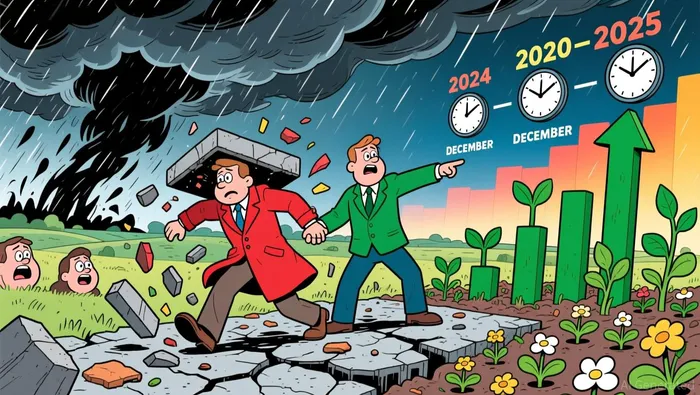

Stay ahead of the market.
Get curated U.S. market news, insights and key dates delivered to your inbox.
AInvest
PRO
AInvest
PRO



Comments
No comments yet