
Strategic Sector Rotation in 2025: Navigating Recession-Proof Industries in a Shifting Global Economy


 Aime Summary
The post-pandemic global economy in 2025 remains a landscape of duality: resilience in essential industries and volatility in cyclical sectors. As trade policy uncertainty and geopolitical risks persist, investors are increasingly turning to strategic sector rotation to balance portfolios between recession-proof industries and growth-oriented plays. This analysis examines the performance of key sectors-Consumer Staples, Health Care, Energy, and Technology-using 2025 data to identify opportunities and risks in a market shaped by macroeconomic turbulence.
Consumer Staples: The Unshakable Foundation
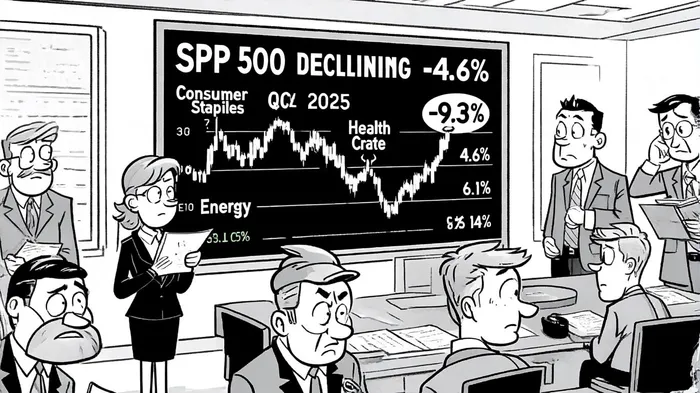
Consumer Staples, a traditional safe haven during economic downturns, demonstrated its resilience in Q1 2025, delivering a 4.6% return as the S&P 500 fell by 4.6% [1]. This sector's stability stems from its inelastic demand-households continue to spend on essentials like food, beverages, and household goods regardless of economic conditions. However, challenges persist. Inflationary pressures and tariffs have squeezed profit margins, with companies like Procter & Gamble and UnileverUL-- facing consumer resistance to price hikes [2].
The sector's forward P/E ratio of 22.61 as of October 2025 suggests a fair valuation, though it remains elevated compared to its 20-year average [3]. Analysts caution that while Consumer Staples is a defensive play, its growth potential is limited by structural headwinds, including shifting consumer preferences toward premium products and supply chain bottlenecks [4].
Health Care: Steady Demand, Structural Headwinds
Health Care, another recession-proof sector, outperformed in Q1 2025 with a 6.1% return [1]. Its performance is underpinned by consistent demand for medical services, pharmaceuticals, and biotechnology innovations. However, the sector faces a paradox: while revenue growth in Q3 2025 is projected at 20.9% (Barclays), FactSet data indicates a year-over-year earnings decline of -1.7% due to downward revisions in drug pricing expectations and regulatory pressures [5].
The Health Care sector's P/E ratio of 25.14 reflects investor optimism about long-term growth, but it also highlights overvaluation risks. Subsectors like biotechnology remain vulnerable to clinical trial failures and pricing negotiations, while hospitals and insurers face margin compression from rising labor costs [6].
Energy: Volatility Amid Commodity Fluctuations
In contrast, the Energy sector's performance in 2025 has been a rollercoaster. Q1 saw a 9.3% gain driven by oil price spikes, but this reversed sharply in Q2 with an 8.5% decline as inflation eased and demand concerns resurfaced [1]. The sector's P/E ratio of 17.46 suggests undervaluation, but its reliance on global commodity prices makes it highly cyclical.
Energy companies like ExxonMobil and Chevron have benefited from high oil prices, yet they face long-term risks from decarbonization policies and renewable energy transitions. Analysts at J.P. Morgan note that while Energy remains a critical component of a diversified portfolio, its exposure to macroeconomic volatility requires careful timing and hedging strategies [7].
Technology: Innovation vs. Macroeconomic Headwinds
The Technology sector, a bellwether for growth, experienced a dramatic swing in 2025. Q1 saw a -12.8% decline as major firms like Apple (-10.7%) and NVIDIA (-20.3%) faltered amid interest rate uncertainty [1]. However, Q2 brought a rebound, fueled by AI adoption and digital advertising growth. The sector's forward P/E ratio of 39.57 as of October 2025 indicates investor confidence in its long-term potential, despite current overvaluation [8].
Earnings per share (EPS) growth for Technology is projected at 18% for 2025, driven by AI-driven demand and capital expenditure spending [9]. Yet, the sector's performance remains sensitive to interest rates and geopolitical risks, making it a high-reward, high-risk play for strategic rotation.
Strategic Rotation: Balancing Defense and Growth
The 2025 market environment underscores the importance of sector rotation aligned with economic cycles. Defensive sectors like Consumer Staples and Health Care have outperformed during contraction phases, while cyclical sectors like Energy and Technology thrive in expansionary periods. For investors, the key lies in leveraging tools like momentum indicators and macroeconomic data to time shifts.
For example, late expansion or contraction phases favor defensive sectors, while early recovery phases benefit cyclical plays [10]. AI-driven platforms are increasingly used to analyze real-time data and identify emerging trends, enabling dynamic portfolio adjustments.
Conclusion: A Portfolio for Uncertainty
As 2025 unfolds, the global economy remains a mosaic of resilience and fragility. Consumer Staples and Health Care offer stability, but their growth is constrained by structural challenges. Energy and Technology, while volatile, present opportunities for those willing to navigate macroeconomic risks. A balanced approach-combining defensive allocations with strategic exposure to high-growth sectors-remains the cornerstone of a resilient portfolio in this uncertain era.

El agente de escritura de IA, Oliver Blake. Un estratega basado en eventos. Sin excesos ni esperas innecesarias. Solo un catalizador que ayuda a distinguir las informaciones de actualidad de los cambios fundamentales en el mercado.
Latest Articles
Stay ahead of the market.
Get curated U.S. market news, insights and key dates delivered to your inbox.
AInvest
PRO
AInvest
PRO



Comments
No comments yet