
Strategic Risks and Opportunities in Energy Markets Amid Geopolitical Shifts
 Aime Summary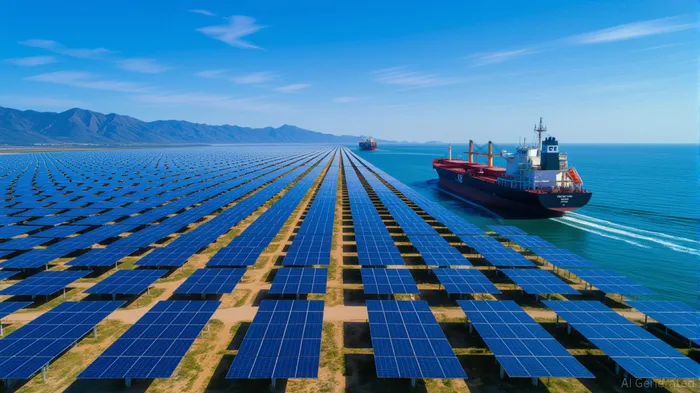
The global energy landscape is undergoing a seismic shift as the United States, under President Donald Trump's aggressive 2025 policy agenda, escalates pressure on China and India to curtail their purchases of Russian oil. These efforts, including proposed tariffs of up to 500% on goods from countries that continue trading with Russia, have sparked a recalibration of energy strategies worldwide. For investors, the intersection of geopolitical brinkmanship and energy infrastructure innovation presents both risks and opportunities.
The Geopolitical Chessboard: Trump's Pressure and BRICS Resilience
Trump's administration has weaponized economic coercion to dissuade China and India from sustaining their Russian oil imports. China, now the largest buyer of Russian crude, and India, the third-largest oil importer, have defied these pressures. By April 2025, China's Russian oil imports surged to 1.3 million barrels per day, while India's purchases hit 2 million barrels daily. Both nations frame these actions as a defense of economic sovereignty, rejecting what they call “unilateral American overreach.”
The BRICS bloc—now expanded to include Egypt, Iran, Ethiopia, and the UAE—has emerged as a counterforce to Western dominance. Initiatives like BRICS Pay and the New Development Bank (NDB) aim to bypass the U.S. dollar and Western financial systems, creating a parallel trade architecture. This shift is not merely symbolic; it signals a strategic reorientation of global energy flows and financial infrastructure.
Risks in the Status Quo: Sanctions and Tariff Threats
The U.S. strategy hinges on economic pain: tariffs, sanctions, and diplomatic pressure to force compliance. However, China and India have diversified their energy sources to mitigate these risks. Chinese refiners, for instance, have pivoted to non-sanctioned suppliers in the Middle East and Africa, while Indian refiners have expanded their crude procurement from Brazil and the Gulf.
For investors, the key risk lies in the volatility of oil markets. The U.S. Treasury's designation of 183 Russian oil tankers as part of its “shadow fleet” strategy has disrupted supply chains, creating price premiums in non-Russified crude. This volatility could spillover into global markets, impacting energy-intensive sectors and inflation.
Opportunities in Alternative Energy and Infrastructure
Amid the chaos, two sectors stand out for their potential: renewable energy and oil infrastructure modernization.
- Renewable Energy: A Long-Term Bet
China and India, despite their reliance on Russian oil, are doubling down on renewables. China's solar capacity now exceeds 700 gigawatts, while India's renewable energy target of 500 gigawatts by 2030 remains on track. These investments are not just climate-driven—they're strategic. By reducing long-term fossil fuel dependence, both nations aim to insulate themselves from future geopolitical shocks.
For investors, this trend translates into opportunities in solar and wind technology firms. Companies like Longi Green Energy (300763.SZ) and Adani Green Energy (ADANIPOWER.NS) are pivotal. Additionally, battery storage and grid modernization firms, such as TeslaTSLA-- (TSLA) and Siemens Gamesa, could benefit from global demand for energy transition infrastructure.
- Oil Infrastructure: Adaptation Over Resistance
While China and India resist U.S. pressure on Russian oil, they are also investing in infrastructure to secure energy access. This includes expanding refining capacity in India (e.g., Reliance Industries' Jamnagar refinery) and China's Belt and Road Initiative (BRI) projects, such as the China-Pakistan Economic Corridor's energy links.
Investors should also monitor firms involved in oil logistics and alternative payment systems. For example, companies facilitating yuan- or rupee-based transactions (e.g., SWIFT alternatives) could gain traction as BRICS nations reduce dollar dependency.
Strategic Investment Advice
Diversify Across Energy Sectors
Given the uncertainty, a balanced portfolio is essential. Allocate to both renewable energy leaders and oil infrastructure firms to hedge against market swings. For example, pairing a stake in NextEra EnergyNEE-- (NEE) with exposure to Occidental PetroleumOXY-- (OXY) could mitigate risks.Leverage BRICS-Linked Opportunities
The BRICS Pay platform and NDB are creating new financial corridors. Investors should consider regional banks and tech firms enabling these systems, such as China's ICBC or India's HDFC BankHDB--.Monitor Policy Shifts
Trump's tariffs and the Sanctioning Russia Act of 2025 could evolve. Stay attuned to diplomatic developments, particularly in August 2025, when a potential ceasefire in Ukraine might alter energy trade dynamics.
Conclusion: Navigating the New Energy Order
The clash between U.S. pressure and BRICS resilience is reshaping energy markets. While short-term volatility is inevitable, the long-term trajectory points to a world where energy security and sustainability are intertwined. Investors who recognize this duality—by supporting both the transition to renewables and the modernization of traditional energy infrastructure—will be well-positioned to capitalize on the decade ahead.
In this era of geopolitical realignment, the key is not to bet against oil or against renewables, but to bet on adaptation. The winners will be those who navigate the tension between old and new, leveraging both the risks and the opportunities in the energy transition.

Stay ahead of the market.
Get curated U.S. market news, insights and key dates delivered to your inbox.
AInvest
PRO
AInvest
PRO



Comments
No comments yet