
The Strategic Rebuilding of Energy Infrastructure: Lessons from PG&E's Moss Landing Delays and Chung Ju-Yung's Hyundai Philosophy


 Aime Summary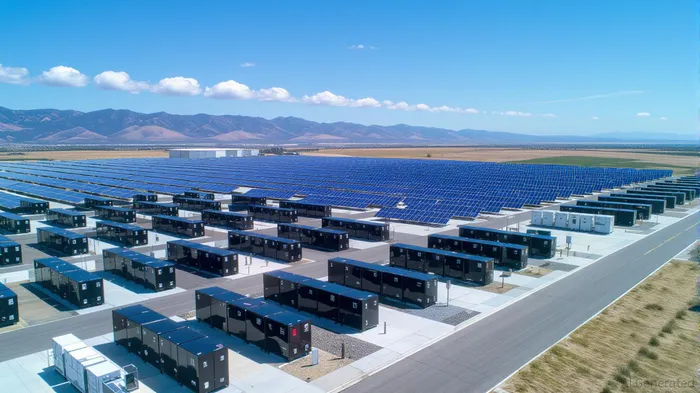
In the race to decarbonize the global energy grid, infrastructure resilience has emerged as a critical battleground. Two seemingly disparate stories—Pacific Gas & Electric's (PG&E) Moss Landing battery project and Chung Ju-Yung's Hyundai Philosophy—reveal a shared truth: long-term value in energy transition hinges on operational grit, strategic foresight, and the courage to rebuild with resilience at its core.
The Moss Landing Lesson: Resilience in the Face of Crisis
PG&E's Moss Landing Energy Storage Facility, a 1,600MW behemoth in Monterey County, has become a case study in the challenges of scaling renewable energy infrastructure. The 182.5MW Elkhorn battery, part of this complex, was temporarily shut down in January 2025 after a fire at a neighboring Vistra-owned site. While the Elkhorn system avoided direct damage due to its containerized design, PG&E's decision to delay its restart until June 2026—due to technical issues like clamp failures and coolant leaks—highlighted the fragility of even advanced systems.
The delays sparked a storm of criticism. Local residents, already wary of battery safety, filed a mass lawsuit alleging health and property impacts. Yet PG&E's response—upgrading fire detection systems, implementing thermal monitoring, and engaging in transparent community dialogue—underscored a critical insight: resilience isn't just about technology; it's about humility, adaptability, and trust-building. By prioritizing safety over speed, PG&E turned a crisis into a blueprint for future projects.
Chung Ju-Yung's GRIT Framework: A Blueprint for Resilience
Chung Ju-Yung, the visionary founder of Hyundai, built his empire on a philosophy encapsulated in the GRIT framework: Growth through innovation, Recognition of human capital, Inspiration via long-term vision, and Trust through ethical execution. His legacy offers a roadmap for today's energy transition.
Growth Through Strategic Innovation
Chung's 1965 investment in 2,000 construction machines—nearly all of South Korea's civilian capacity—catalyzed the country's post-war infrastructure boom. Similarly, PG&E's Moss Landing project, with its modular TeslaRACE-- Megapacks and integration with solar, mirrors this approach. The facility's containerized design, which limits fire propagation, reflects a forward-thinking strategy akin to Chung's emphasis on foundational, scalable infrastructure.Operational Grit: Frugality and Execution Discipline
Chung's mantra—“shortening the time”—prioritized speed and precision. PG&E's methodical restart of Elkhorn, despite pressure to rush, echoes this principle. The utility's $15 billion grid modernization plan, including undergrounding power lines and leveraging Inflation Reduction Act (IRA) tax credits, demonstrates a balance of frugality and innovation.Recognition of Human Capital
Chung's profit-sharing models and employee-centric culture fostered loyalty and innovation. PG&E's engagement with local stakeholders, including groundwater sampling and emergency drills, aligns with this ethos. The Moss Landing project's delays, while costly, were mitigated by transparent communication—a lesson in recognizing community concerns as part of the infrastructure equation.Trust Through Ethical Governance
Chung's rejection of short-term speculation in favor of enduring value resonates in PG&E's alignment with California's fire code updates and its collaboration with the California Energy Storage Alliance. Trust, once eroded by the 2010 San Bruno gas pipeline explosion, is now being rebuilt through accountability.
The GRIT Framework in Modern Energy Transition
The principles of Chung Ju-Yung are not confined to history. They are alive in today's energy leaders:
- Brookfield Infrastructure (BIP, BIPC): With a 30-year dividend growth streak and a focus on decarbonization, BrookfieldBN-- embodies strategic frugality and long-term vision.
- Caterpillar (CAT): Its 86-year unbroken profitability streak reflects operational discipline, much like Chung's emphasis on lean execution.
- Enbridge (ENB): Pivoting to hydrogen and renewables, EnbridgeENB-- mirrors Chung's alignment with global megatrends.
Investment Implications: Where to Apply GRIT
For investors, the Moss Landing saga and Hyundai's legacy highlight three key criteria:
1. Operational Discipline: Prioritize companies with high EBITDA margins (15%+), low leverage (<2x debt-to-EBITDA), and strong R&D investment (5%+ of revenue).
2. ESG Alignment: Firms like Brookfield and CaterpillarCAT--, which balance profitability with sustainability, are better positioned for long-term value.
3. Stakeholder Trust: Look for companies with transparent governance and community engagement, such as PG&E's post-Moss Landing initiatives.
Conclusion: Building a Resilient Future
The energy transition is not just a technological shift—it's a test of resilience. PG&E's Moss Landing delays and Chung Ju-Yung's GRIT framework remind us that true progress requires more than capital; it demands grit, humility, and a commitment to long-term value. As California aims for 52GW of storage by 2045 and global infrastructure spending hits $80 trillion, the winners will be those who build with resilience in mind.
For investors, the message is clear: back the builders, not just the ideas. The next energy revolution will belong to those who, like Chung and PG&E, combine innovation with operational grit—and trust in the people who make it all possible.

Delivering real-time insights and analysis on emerging financial trends and market movements.
Latest Articles
Stay ahead of the market.
Get curated U.S. market news, insights and key dates delivered to your inbox.


AInvest
PRO
AInvest
PRO



Comments
No comments yet