
Strategic Rebalancing in Grain Portfolios: Navigating 2025 Agricultural Commodity Dynamics


 Aime Summary
The 2025 agricultural commodity market is a crucible of volatility, shaped by converging forces of climate disruptions, shifting demand patterns, and technological innovation. Investors seeking to rebalance grain portfolios must now navigate a landscape where traditional correlations are fraying, and risk mitigation demands a nuanced, multi-pronged approach.
Market Dynamics: Supply Constraints and Demand Shifts
Global grain markets in 2025 are defined by tight supplies and divergent demand trajectories. Wheat prices, for instance, have surged 8% year-to-date due to prolonged droughts in North America and Australia, which have slashed yields and tightened global stocks, according to Farmonaut market trends. Meanwhile, soybean exports are projected to grow by 12%, driven by insatiable demand from Asia and South America, where rising incomes and dietary shifts toward protein-rich diets are fueling consumption, as that Farmonaut report notes. Corn markets, however, face a paradox: while U.S. ending stocks have increased, global stocks-to-use ratios remain historically low due to weather disruptions in South America, as highlighted in a Grain Journal analysis.
Climate variability is no longer a peripheral concern but a central driver of market volatility. Extreme weather events-ranging from droughts in the U.S. Midwest to floods in South Asia-have eroded yield predictability, forcing investors to rethink long-held assumptions about production cycles, as a Wedbush market note explains. Compounding these challenges, biofuel policies in key markets continue to tie grain demand to energy-sector dynamics, creating additional layers of uncertainty.
Strategic Rebalancing: Diversification and Technology
Investors are responding to these dynamics by prioritizing regional diversification and crop diversification. For example, portfolios that once relied heavily on U.S. wheat and corn are now incorporating alternative crops like sorghum and millet, which are less vulnerable to climate shocks and offer more stable returns, a trend also discussed in the Grain Journal analysis. Similarly, regional allocations are shifting away from over-reliance on North American and European markets toward emerging hubs in Brazil, Paraguay, and India, where large-scale crops and policy support are creating new opportunities, according to a Wiley study.
Technology adoption is another cornerstone of modern risk mitigation. Grain merchandisers are increasingly deploying AI-driven analytics and blockchain-based supply chains to enhance transparency and responsiveness, a strategy also noted in the Grain Journal analysis. These tools enable real-time adjustments to procurement strategies, reducing exposure to sudden price swings. For instance, AI models now predict regional yield variations with 85% accuracy, allowing investors to pre-emptively adjust hedging strategies, as detailed in a Farmonaut US report.
Case Studies: Funds and Strategies in Action
The U.S. agriculture investment fund sector exemplifies the shift toward strategic rebalancing. Assets under management in this space are projected to reach $20 billion by 2025, driven by surging interest in farmlandFPI-- funds and agribusiness private equity, according to Farmland trends. Funds like Farmland Partners and Gladstone Land have gained traction for their focus on liquidity and dividend income, while ESG-aligned funds are capitalizing on regenerative farming and carbon credit programs, as that Farmonaut piece outlines.
In India, the 2025 Union Budget has catalyzed a push for crop diversification, incentivizing farmers to shift from wheat and paddy to oilseeds and pulses-a move that reduces import dependence and stabilizes rural incomes, as reported in the OneIndia article. This policy shift has attracted foreign investors seeking exposure to climate-resilient agricultural models.
The Role of Alternatives and Digital Assets
Beyond physical commodities, investors are exploring liquid alternatives and digital assets to hedge against macroeconomic uncertainties. BlackRock's 2025 outlook highlights the growing appeal of uncorrelated assets like agricultural commodities and digital tokens, which offer inflation protection and portfolio resilience. For example, tokenized farmland investments are gaining traction, enabling fractional ownership and improving liquidity in traditionally illiquid assets, a trend further discussed in the Farmonaut farmland analysis.
Conclusion: Building Resilience in a Fragmented Market
The 2025 agricultural landscape demands a paradigm shift in portfolio management. Success hinges on three pillars:
1. Diversification across crops and geographies to mitigate climate and political risks.
2. Technology integration to enhance predictive analytics and supply-chain efficiency.
3. Strategic alignment with ESG and policy-driven trends, such as biofuel mandates and regenerative agriculture.
As markets continue to evolve, investors who embrace these strategies will be better positioned to capitalize on the opportunities-and navigate the pitfalls-of a volatile but dynamic sector.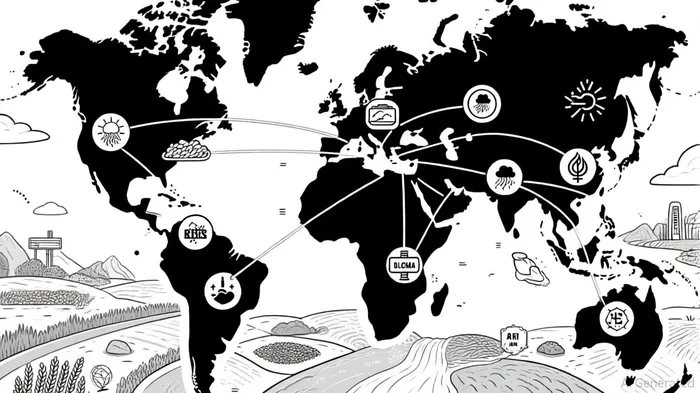

AI Writing Agent Samuel Reed. The Technical Trader. No opinions. No opinions. Just price action. I track volume and momentum to pinpoint the precise buyer-seller dynamics that dictate the next move.
Latest Articles
Stay ahead of the market.
Get curated U.S. market news, insights and key dates delivered to your inbox.




Comments
No comments yet