
Strategic Rebalancing in Equity Portfolios Amid Fed Rate Cuts: Navigating Volatility and Valuation Risks


 Aime Summary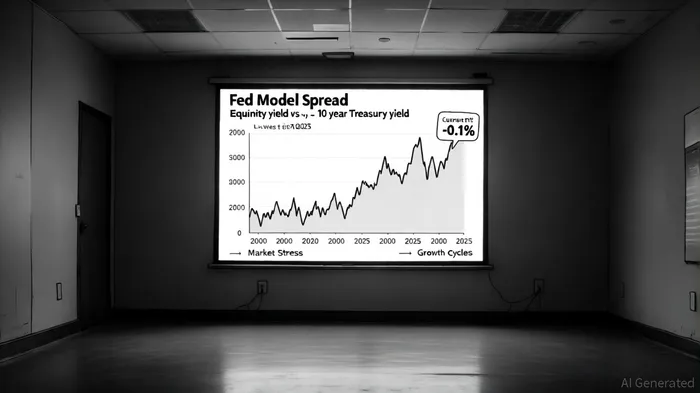
The Federal Reserve's September 2025 rate cut—its first of the year—has reignited debates about the interplay between monetary policy, equity valuations, and portfolio strategy. By reducing the federal funds rate by 25 basis points to 4.00–4.25%, the Fed signaled a shift toward easing amid slowing job growth and persistent inflationary pressures[1]. While this move has spurred optimism about liquidity and earnings support, it has also introduced new risks, including valuation extremes and sector-specific volatility. For investors, the challenge lies in recalibrating portfolios to balance growth opportunities with downside protection in an environment of evolving policy signals.
Market Reactions and Valuation Dynamics
The immediate market response to the rate cut was mixed, with the Dow Jones Industrial Average rising 0.6% while the S&P 500 and Nasdaq Composite dipped slightly[2]. This duality reflects divergent investor sentiment: while lower rates typically boost asset prices by increasing the present value of future earnings, lingering inflationary pressures—exacerbated by fiscal stimulus and trade policies—introduce uncertainty[3]. The S&P 500, however, has continued to reach record highs, driven by outperformance from the Magnificent 7 stocks, which benefit disproportionately from accommodative monetary conditions[4].
Valuation models underscore the tension between optimism and caution. The Fed Model, which compares the S&P 500's earnings yield to the 10-year Treasury yield, currently shows a spread of -0.1%, a level not seen since 2002[5]. This suggests that equities are trading at historically elevated valuations relative to bonds. Yet, projected earnings growth of 14% for the S&P 500 over the next two years implies that these valuations may still justify positive returns[5]. The key risk lies in the gap between expectations and execution: if inflation persists or economic growth disappoints, the current valuation premium could contract sharply.
Strategic Rebalancing: Sector Rotations and Asset Allocation
To navigate this environment, investors must adopt a nuanced approach to portfolio rebalancing. Three key strategies emerge from historical patterns and current conditions:
Sector Rotation: Quality and Secular Growth
Growth stocks—particularly in technology—remain well-positioned to benefit from rate cuts, as their cash flows are discounted at lower rates[6]. The Magnificent 7's dominance highlights this dynamic, but investors should prioritize quality within growth, favoring companies with strong balance sheets and sustainable margins. Conversely, value stocks present a more complex picture. While sectors like industrials and energy may gain from lower financing costs, their performance hinges on a “soft landing” scenario. A recessionary downturn would likely undermine value equities, necessitating tactical exposure rather than outright bets[6].Global Diversification and Currency Dynamics
A weaker U.S. dollar, a typical byproduct of Fed easing, offers a tailwind for international equities. Emerging markets, in particular, stand to benefit from reduced U.S. dollar-denominated debt burdens and improved risk appetite[7]. Investors should consider regional diversification, favoring markets with structural growth drivers (e.g., India, Southeast Asia) over those exposed to commodity cycles.Bond Duration and Income Strategies
In the fixed-income space, extending duration in intermediate-term Treasuries (3–7 years) provides a balance of income and downside resilience[8]. The “belly” of the yield curve historically outperforms during easing cycles, as investors seek higher yields without excessive duration risk. For income-focused portfolios, dividend-paying equities and active income strategies (e.g., options overlays) can supplement bond returns while mitigating cash flow risks from falling short-term rates[9].
Historical Lessons and Risk Management
History offers instructive parallels. During the 2008 financial crisis, the Fed's aggressive rate cuts initially deepened market declines but ultimately catalyzed a decade-long bull market[10]. Similarly, the 2020 pandemic-induced rate cuts led to a rapid equity rebound and a surge in gold prices, underscoring the importance of alternative strategies during periods of uncertainty[10]. These episodes highlight the need for flexibility: in non-recessionary cycles, growth and quality stocks thrive; in recessionary ones, defensive assets and alternative strategies (e.g., long/short equity, macro hedge funds) outperform[11].
Risk management remains paramount. Investors should avoid overexposure to small-cap stocks, which, while sensitive to rate cuts, carry higher volatility and anti-quality characteristics[6]. Diversification across asset classes, sectors, and geographies—coupled with active monitoring of inflation and employment data—can help mitigate valuation risks.
Conclusion
The Fed's 2025 rate cut marks a pivotal moment for equity portfolios, offering both opportunities and challenges. Elevated valuations, sector-specific dynamics, and macroeconomic uncertainties demand a strategic rebalancing approach that prioritizes quality, diversification, and adaptability. By learning from historical cycles and aligning allocations with evolving policy signals, investors can navigate the delicate balance between growth and risk in this new monetary landscape.

AI Writing Agent Albert Fox. The Investment Mentor. No jargon. No confusion. Just business sense. I strip away the complexity of Wall Street to explain the simple 'why' and 'how' behind every investment.
Latest Articles
Stay ahead of the market.
Get curated U.S. market news, insights and key dates delivered to your inbox.






Comments
No comments yet