
Strategic Reallocation in European Energy: Navigating Geopolitical Shifts and Technological Frontiers
 Aime Summary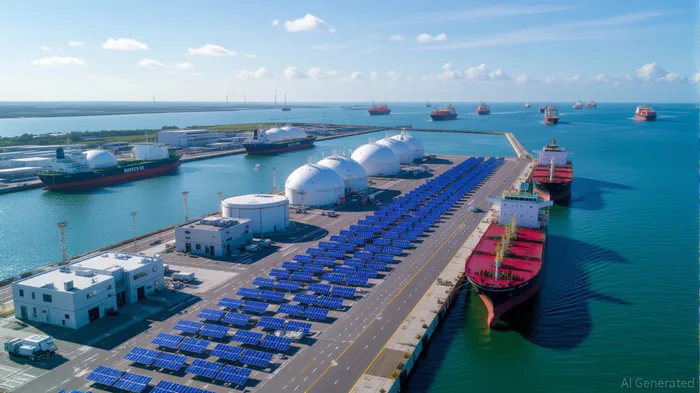
The Russia-Ukraine war has irrevocably altered Europe's energy landscape, forcing a recalibration of infrastructure, technology, and geopolitical strategy. As the continent grapples with energy insecurity and the imperative to decarbonize, investors face a paradox: volatility born of conflict and policy shifts is creating both risks and opportunities. Strategic reallocation across energy infrastructure, defense technology, and regional diversification is not merely prudent—it is essential for hedging against future shocks.
Energy Infrastructure: From Fossil Dependence to Resilient Renewables
Europe's energy infrastructure is undergoing a seismic transformation. The €37 billion invested in LNG terminals by 2025—led by Germany's Wilhelmshaven and Poland's Świnoujście—reflects a desperate bid to replace Russian gas. Yet, these projects are only part of a broader shift toward renewables. In 2024, renewables accounted for 50% of EU electricity generation, a stark contrast to the 25% from fossil fuels. This transition is driven by policy (e.g., the EU's Green Deal Industrial Plan) and economics (declining solar and wind costs), but it is also a geopolitical imperative.
However, the infrastructure gap remains a critical vulnerability. Grid modernization spending has doubled to $70 billion annually, yet bottlenecks persist. Transformers, for instance, are 60% imported from China, exposing the EU to supply chain risks. Investors should prioritize companies addressing these gaps, such as Siemens Energy (ENR.DE) and ABB (ABB.SW), which are pivotal in grid upgrades and hydrogen infrastructure.
Green hydrogen is another frontier. The EU's target of 10 million tonnes of domestic production by 2030 hinges on scaling electrolyser manufacturing to 17.5 GW annually. Firms like Iberdrola (IBE.MC) and Ørsted (ENR.DC), which integrate offshore wind with hydrogen production, are well-positioned to capitalize on this trend.
Defense Technology: The Invisible Energy Frontier
The war in Ukraine has accelerated defense spending across Europe, with NATO members committing $1.5 trillion to modernization. This surge is not just about tanks and missiles—it is about energy-efficient, dual-use technologies. For example, Estonia's Milrem Robotics is developing hydrogen-powered unmanned ground vehicles (UGVs) that reduce logistical burdens, while BAE Systems (BAE.L) and Saab (SAABb.ST) are integrating AI into logistics platforms to optimize energy use in military operations.
Cybersecurity is another critical layer. As energy grids and LNG terminals become digitized, cyberattacks on infrastructure are rising. Energy firms now allocate 15–20% of IT budgets to cybersecurity, creating opportunities for firms like Schneider Electric (SU.FR) and ABB, which offer smart grid solutions with embedded security.
Investors should also consider the ReArm Europe program, which provides €150 billion in loans for defense procurement. Companies like Rheinmetall (RHM.DE) and Lockheed Martin (LMT) are securing multibillion-euro contracts, but the real alpha lies in regional innovators. For instance, Lithuania's UAB Lietuvos Ginklu Fabrikas is emerging as a key player in small-arms manufacturing, leveraging EU subsidies to scale production.
Regional Diversification: Eastern Europe as a Strategic Hedge
Eastern Europe is becoming a linchpin in Europe's energy and defense realignment. Poland's $12 billion offshore wind initiative and Lithuania's $5 billion grid modernization project are not just about energy independence—they are about geopolitical resilience. These projects attract global players like Ørsted and Siemens Energy, but they also create opportunities for local firms.
The August 2025 Alaska summit, involving U.S. President Donald Trump, Russian President Vladimir Putin, and Ukrainian President Volodymyr Zelensky, has introduced new uncertainties. However, the newly established Bank for Defense, Security, and Resilience (DSRB) is poised to fund NATO-aligned projects, offering a stable investment environment.
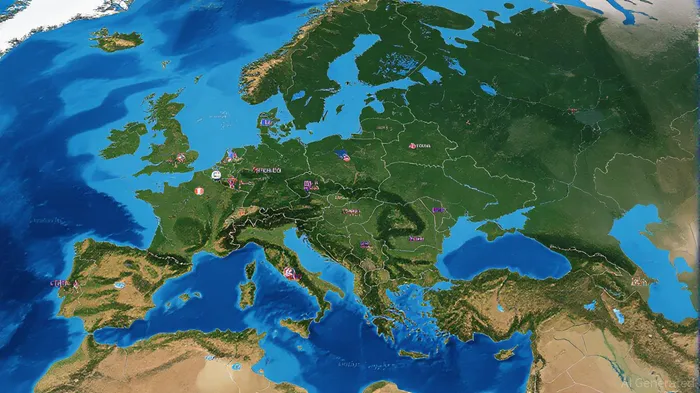
Investors should diversify geographically, favoring regions with dual-use infrastructure. For example, Lithuania's green hydrogen hubs are strategically located to serve both EU markets and BRICS-aligned partners, reducing exposure to U.S. policy shifts. Similarly, Poland's artillery manufacturing sector, supported by EU subsidies, is a high-growth niche with long-term geopolitical relevance.
Conclusion: Balancing Short-Term Gains and Long-Term Resilience
The European energy transition is a mosaic of risks and opportunities. Short-term gains can be found in LNG infrastructure and defense tech, but long-term resilience requires a diversified portfolio. Investors should:
1. Allocate to grid modernization and hydrogen infrastructure (e.g., Siemens Energy, ABB).
2. Target dual-use defense technologies (e.g., BAE Systems, Milrem Robotics).
3. Diversify geographically by investing in Eastern Europe's energy and defense projects.
Caution is warranted, however. The EU's 250 bcm/year LNG capacity gap and underutilized terminals signal the risk of stranded assets. Flexible strategies—such as pivoting from gas to hydrogen—will be key. In a world where energy and geopolitics are inextricably linked, strategic reallocation is not just an investment tactic—it is a survival imperative.

Stay ahead of the market.
Get curated U.S. market news, insights and key dates delivered to your inbox.


AInvest
PRO
AInvest
PRO



Comments
No comments yet