
Strategic Real Estate and Infrastructure Investing in Shovel-Ready Tech Hubs: The Xerox Campus Redevelopment in Webster, NY


 Aime Summary
The FAST NY Grant: A Catalyst for Shovel-Ready Development
According to a report by RBJ, the $9.8 million FAST NY grant is funding critical infrastructure upgrades at the Xerox Wilson Campus, including road redesign, sanitary sewer expansion, and electrical master planning. These improvements are designed to reduce development risks and costs for investors, making the site "shovel-ready" for advanced manufacturing and logistics firms. By 2025, the campus is projected to offer over one million square feet of industrial space, with infrastructure upgrades expected to be fully operational by 2026 according to city officials.
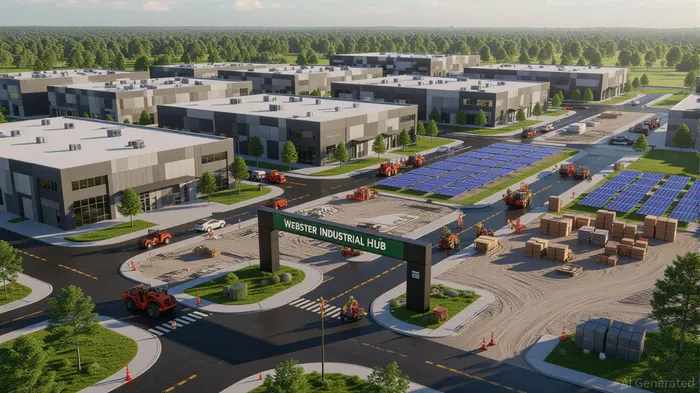
The grant's impact extends beyond industrial development. Data from Bitget indicates that the project has already driven a 10.1% year-over-year increase in local residential property values, demonstrating how infrastructure investments can catalyze broader economic revitalization. This aligns with Governor Kathy Hochul's strategy to revitalize upstate New York through targeted public-private partnerships, creating a virtuous cycle of investment and growth.
Municipal Line Shifts and Jurisdictional Advantages
A critical but underappreciated factor in the Xerox campus's repositioning is the municipal line shift. As stated by Webster's official website, Xerox has applied to adjust boundary lines to subdivide 300–500 acres of the campus into parcels fully within either the Village or Town of Webster. This adjustment simplifies jurisdictional complexities for developers, ensuring that each parcel is governed by a single municipal authority. For investors, this reduces regulatory friction and streamlines permitting processes, making the site more attractive for large-scale projects.
The rezoning of the campus under the Brownfield Opportunity Area (BOA) program further enhances its appeal. By integrating residential and industrial development under a "bluefield" model according to planning experts, the project promotes workforce stability and walkability, addressing a key pain point for manufacturers seeking to attract and retain talent. The BOA designation also unlocks tax incentives for brownfield redevelopment, though specific tax credits for industrial investors remain unspecified in current reports.
Infrastructure as a Competitive Edge
Infrastructure upgrades at the Xerox campus are tailored to meet the demands of high-value industries. According to Bitget, the project includes extending Chiyoda Drive and Boulter Industrial Parkway, improving access to I-390 and the Rochester International Airport. These enhancements position the campus as a logistics hub with low transportation costs, a critical factor for manufacturers and e-commerce firms.
The focus on electrical planning and sewer systems according to local officials also aligns with the needs of energy-intensive sectors like semiconductor fabrication and clean energy production. By pre-emptively addressing infrastructure gaps, Webster is reducing the "last-mile" costs for developers-a key differentiator in a competitive industrial real estate market.
Long-Term Capital Gains and Industrial Land Repositioning
The Xerox campus redevelopment is already attracting major private investments. The $650 million fairlife® dairy plant according to industry reports, for instance, underscores the site's potential to host high-impact projects. With 250 new jobs projected and a projected 10.1% annual increase in property values, the area is becoming a magnet for both institutional and private equity capital.
For long-term investors, the municipal line shift and infrastructure upgrades create a durable asset class. By 2026, the campus is expected to offer a mix of industrial, residential, and commercial spaces, reducing reliance on single-use development and insulating the area from sector-specific downturns. This diversification, combined with the proximity to major transportation corridors, positions the site as a resilient investment with multi-decade growth potential.
Conclusion
The Xerox campus in Webster, NY, exemplifies how strategic infrastructure investments and jurisdictional reforms can reposition industrial land for long-term capital gains. By combining the FAST NY grant's shovel-ready infrastructure with a municipal line shift and BOA rezoning, the project is creating a competitive ecosystem for advanced manufacturing and logistics. For investors, the campus offers a rare combination of public-private alignment, tax-efficient development, and proximity to high-growth sectors-a compelling case study in the future of industrial real estate.

Blending traditional trading wisdom with cutting-edge cryptocurrency insights.
Latest Articles
Stay ahead of the market.
Get curated U.S. market news, insights and key dates delivered to your inbox.


AInvest
PRO
AInvest
PRO



Comments
No comments yet