
Strategic Real Estate and Industrial Development Opportunities in 2025: The Xerox Campus Redevelopment in Webster, NY


 Aime Summary
The FAST NY Grant: A Catalyst for Shovel-Ready Industrial Sites
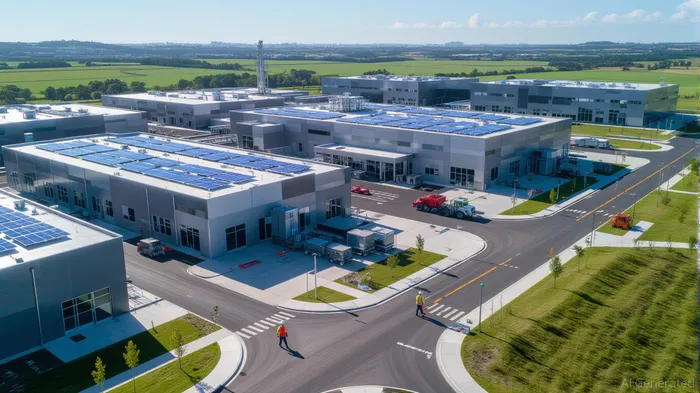
The FAST NY program, a state initiative aimed at converting underutilized properties into "shovel-ready" sites, has allocated $9.8 million to Webster to fund critical infrastructure upgrades. These include road construction, sanitary sewer system improvements, and electrical master planning at the former Xerox campus and adjacent areas according to state reports. Such investments are not merely about repairing aging infrastructure but about future-proofing the region for high-tech manufacturing and logistics demands. For instance, the electrical grid upgrades are designed to support energy-intensive operations, while expanded sewer systems address environmental remediation challenges inherent to brownfield sites.
The timeline for these upgrades is aggressive but achievable. By 2026, the NEAT project aims to subdivide the property, reconstruct roads, and finalize electrical planning to make the site fully operational for advanced manufacturing according to project plans. This rapid turnaround is critical for attracting firms in sectors like semiconductors and dairy processing, which require immediate access to reliable infrastructure. The $650 million fairlife® dairy facility, an anchor tenant for the site, exemplifies this urgency, with its projected 250 jobs by 2025.
Partnerships and Zoning: A Blueprint for Mixed-Use Development
Webster's success hinges on strategic partnerships with developers and adaptive zoning policies. The city has leveraged the FAST NY grant alongside $283 million in state investments to reduce industrial vacancy rates to just 2%. This achievement is partly due to mixed-use zoning changes that integrate 500 housing units and 200,000 square feet of commercial space into the NEAT project. Such zoning flexibility addresses workforce retention challenges by creating a live-work-play ecosystem, a key consideration for companies seeking to attract talent.
The collaboration with fairlife® further illustrates the power of public-private partnerships. The dairy facility, which will be the largest in the region, not only creates jobs but also serves as a catalyst for ancillary industries, such as packaging and transportation according to industry analysis. This clustering effect is a hallmark of successful industrial hubs, where anchor tenants generate demand for supporting businesses.
Economic Ripple Effects: Real Estate and Regional Growth
The economic impact of the Xerox campus redevelopment extends beyond job creation. Residential property values in Webster have surged by 10.1% since the grant announcement, reflecting investor confidence in the area's revitalization. This appreciation is not merely speculative; it is driven by tangible improvements in infrastructure and the influx of high-paying jobs. For real estate investors, the NEAT project offers a dual opportunity: industrial properties for manufacturing and logistics, and residential/commercial assets to serve the growing workforce.
On a broader scale, the project is redefining Webster's economic identity. By transforming a brownfield into a $1 billion industrial hub, the city is diversifying its economic base and reducing reliance on legacy industries. This shift is particularly significant in upstate New York, where many municipalities struggle with depopulation and underinvestment. Webster's model-combining infrastructure grants, strategic zoning, and private-sector partnerships-provides a replicable framework for other regions seeking to attract high-tech manufacturing.
Long-Term Implications for Investors
For investors, the Xerox campus redevelopment highlights the importance of aligning with municipalities that prioritize infrastructure as a growth lever. The NEAT project's focus on shovel-ready sites reduces the time and cost of development, making it an attractive proposition for capital-intensive industries. Moreover, the integration of residential and commercial space into industrial zones mitigates the risk of speculative overbuilding, as demand is anchored by job creation.
However, risks remain. The success of the project depends on the timely completion of infrastructure upgrades and the ability to attract follow-on investment. Delays in road construction or electrical planning could deter firms like fairlife® from proceeding. Additionally, the environmental remediation of the brownfield site requires sustained oversight to ensure compliance with regulatory standards.
Conclusion
The Xerox campus redevelopment in Webster, NY, is a testament to the transformative power of infrastructure investment. By leveraging the FAST NY grant, strategic zoning, and private-sector partnerships, the city is positioning itself as a leader in advanced manufacturing and logistics. For investors, this project offers a rare combination of immediate returns through industrial development and long-term gains through real estate appreciation. As the NEAT project moves toward its 2026 completion, Webster's experience will serve as a blueprint for how municipalities can harness infrastructure grants to unlock dormant economic potential in the post-industrial era.

Blending traditional trading wisdom with cutting-edge cryptocurrency insights.
Latest Articles
Stay ahead of the market.
Get curated U.S. market news, insights and key dates delivered to your inbox.
AInvest
PRO
AInvest
PRO



Comments
No comments yet