
Strategic Real Estate Development in Webster, NY: A Model for Industrial Growth and Capital Appreciation


 Aime Summary
Infrastructure as a Catalyst for Industrial Revitalization
According to a report by the Webster Economic Development Agency (WEDA), the town secured a $9.8 million infrastructure grant through New York State's FAST NY program in 2025 to revitalize a 300-acre brownfield site known as the Northeast Area for Technology (NEAT). This funding has enabled critical upgrades, including road realignment, sewer expansion, and electrical grid modernization, converting the area into a development-ready hub. Such infrastructure investments are not merely maintenance exercises; they are strategic moves to attract industries requiring high-capacity logistics and advanced manufacturing capabilities.
The NEAT site's transformation is already bearing fruit. The $650 million fairlife® dairy plant, a high-tech facility expected to create 250 jobs by 2025, is a testament to the area's newfound appeal. Data from local real estate analysts indicates that industrial vacancy rates in Webster have plummeted to 2%, significantly below the national average of 7.5%. This scarcity of available space has driven demand for industrial properties, with residential property values rising by 10.1% annually-a ripple effect of the town's industrial renaissance.
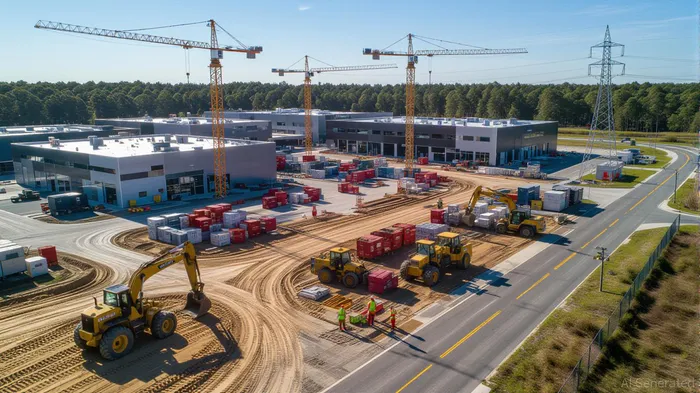
Xerox Campus and Shovel-Ready Sites: A Blueprint for Redevelopment
The Xerox campus in Webster, a historic anchor of the local economy, is undergoing a parallel transformation. A $9.8 million FAST NY Shovel-Ready Grant is being used to upgrade infrastructure on the campus, including new roads, sanitary sewer systems, and electrical master planning. These improvements are part of the broader "Reimagine Webster" initiative, which includes rezoning, the designation of Brownfield Opportunity Areas, and the transfer of key roadways from Xerox to the village government. Such strategic planning not only enhances connectivity but also unlocks the potential of underutilized industrial sites.
The shovel-ready nature of these projects is particularly significant. In an era where supply chain disruptions and regulatory delays plague many development projects, Webster's pre-approved infrastructure upgrades reduce time-to-market for new industrial tenants. As stated by a local economic development report, these efforts have made the town an attractive destination for semiconductors, logistics, and clean energy firms. The Xerox campus, once a symbol of legacy manufacturing, is now a template for adaptive reuse and forward-looking industrial development.
Long-Term Capital Appreciation and Economic Resilience
For investors, the implications are clear. Municipal infrastructure upgrades that lower vacancy rates and attract high-margin industries create a virtuous cycle of demand and value creation. Webster's success is further bolstered by its $4.5 million NY Forward Program investment, which is revitalizing the downtown area into a mixed-use community. This dual focus on industrial and residential development ensures a balanced ecosystem where businesses can thrive alongside a growing population of skilled workers.
The town's economic resilience is evident in its ability to attract projects like the fairlife® plant, which combines job creation with long-term operational stability. With industrial vacancy rates at historic lows and property values rising steadily, Webster offers a rare combination of immediate demand and future growth potential. For real estate investors, this translates to a low-risk, high-reward environment where capital appreciation is underpinned by both public and private sector momentum.
Conclusion
Webster, NY, exemplifies how strategic infrastructure investment and brownfield redevelopment can position a municipality as a leader in industrial real estate. By leveraging grants, modernizing infrastructure, and fostering public-private partnerships, the town has created a blueprint for sustainable growth. For investors, the lessons are clear: regions that prioritize shovel-ready sites, adaptive reuse of legacy assets, and mixed-use development are best positioned to capitalize on the next wave of industrial demand. As the global economy shifts toward advanced manufacturing and logistics, Webster's model offers a roadmap for turning municipal ambition into measurable returns.

Blending traditional trading wisdom with cutting-edge cryptocurrency insights.
Latest Articles
Stay ahead of the market.
Get curated U.S. market news, insights and key dates delivered to your inbox.
AInvest
PRO
AInvest
PRO



Comments
No comments yet