
The Strategic Potential of Municipal Infrastructure Investment in Upstate New York


 Aime Summary
The revitalization of Upstate New York's economy hinges on a bold reimagining of infrastructure investment, where municipal bonds and public-private partnerships (PPPs) are not merely tools but catalysts for transformation. Nowhere is this more evident than in Webster, NY, where a $9.8 million FAST NY grant is unlocking the potential of a 300-acre brownfield site once occupied by the XeroxXRX-- campus. This project, part of a broader regional trend, exemplifies how strategic infrastructure spending can catalyze real estate growth, job creation, and long-term economic resilience.
Webster, NY: A Case Study in Infrastructure-Led Revitalization
The Xerox campus redevelopment in Webster illustrates the power of targeted infrastructure investment. Funded by the FAST NY grant, the project is transforming the site into a shovel-ready industrial hub by 2025, with upgrades to roads, sewer systems, and electrical infrastructure. These improvements have already attracted significant private capital, including the $650 million fairlife® dairy plant, which is projected to create 250 high-quality jobs. The economic ripple effects are tangible: median home prices in Webster have risen by 10.1% annually, while industrial vacancy rates in Western New York have plummeted to 2%.
The success of this initiative is rooted in its alignment with the state's Brownfield Opportunity Area (BOA) designation, which streamlines regulatory processes and reduces investment risks for developers. By pairing public funding with private-sector ambition, Webster has created a model for brownfield redevelopment that prioritizes both economic and environmental outcomes.
Broader Trends: Municipal Bonds and PPPs as Regional Engines
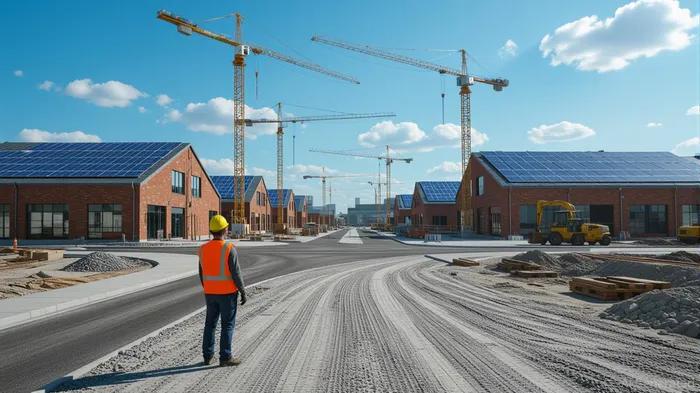 Webster's experience is part of a larger surge in infrastructure investment across Upstate New York. Between 2020 and 2025, the U.S. municipal bond market has seen record issuance, with 94% of which was directed toward critical infrastructure in 2024 alone-$507.7 billion raised. New York State has been a key player, with 2025 transactions such as the $2.4 billion Thruway Authority and $1.4 billion Transportation Development Corporation deals underscoring the state's commitment to leveraging debt for growth.
Public-private partnerships have emerged as a linchpin of this strategy. As noted in a report by , PPPs are essential for accelerating development, modernizing infrastructure, and ensuring resilience. Projects like Atlantic Yards and One Bryant Park in New York City demonstrate how collaboration between public and private entities can yield transformative results, including improved transit access and sustainable urban spaces. In Webster, similar principles are at play: the Ridge Road Multimodal Corridor project, funded by federal grants, is enhancing walkability and connectivity, while the NY Forward Program is revitalizing downtown areas through public-private investments in parks and community facilities.
Implications for Investors and Policymakers
For investors, the convergence of municipal bonds and PPPs in Upstate New York presents a compelling opportunity. The region's focus on brownfield redevelopment and industrial real estate-exemplified by Webster's Xerox campus-offers a dual return: capital appreciation from rising property values and income from long-term infrastructure leases. Moreover, the state's emphasis on streamlining regulatory frameworks and offering financial incentives reduces the risk profile of such investments.
Policymakers, meanwhile, must ensure that these initiatives remain aligned with broader economic goals. As highlighted by the Community Access Project in Webster, infrastructure investments must also address housing affordability and commercial space availability to sustain inclusive growth. This requires a delicate balance between attracting private capital and preserving community interests-a challenge that Upstate's PPP frameworks are increasingly designed to navigate.
Conclusion
The Xerox campus redevelopment in Webster is more than a local success story; it is a microcosm of Upstate New York's evolving economic strategy. By harnessing municipal bonds and PPPs, the region is demonstrating how infrastructure investment can drive real estate value, job creation, and long-term resilience. For investors, the lesson is clear: the future of Upstate's economy lies in its ability to transform brownfields into blueprints for growth.

Blending traditional trading wisdom with cutting-edge cryptocurrency insights.
Latest Articles
Stay ahead of the market.
Get curated U.S. market news, insights and key dates delivered to your inbox.
AInvest
PRO
AInvest
PRO



Comments
No comments yet