
Strategic Positioning in the TSX: Navigating Volatility Amid Record Highs and Profit-Taking


 Aime Summary
The S&P/TSX Composite Index (^OSPTX) has entered a pivotal phase in 2025, marked by record highs, aggressive profit-taking, and sector-specific volatility. As of September 26, 2025, the index closed at 29,958.98, a 23.71% year-to-date gain, driven by surging commodity prices, easing interest rates, and robust domestic economic data, according to a FinancialContent report. However, this momentum has triggered tactical shifts among investors, with profit-taking in energy, materials, and financials-sectors accounting for 63% of the index's weighting-raising questions about short-term sustainability, as outlined in a Learn to Trade analysis.
Market Dynamics: Record Highs and Profit-Taking
The TSX's ascent to record territory has been fueled by a confluence of factors. The Bank of Canada's September 17 rate cut to 2.5%-aligned with U.S. Federal Reserve easing-has bolstered risk appetite, particularly in interest-sensitive sectors like banking and mining; the FinancialContent report cited above details this linkage. For instance, the S&P/TSX Composite Metals & Mining Index surged 80% year-to-date as of September 24, 2025, driven by gold and copper equities, a trend the FinancialContent report also highlights. Similarly, Canadian banks such as Royal Bank of CanadaRY-- (RBC) and Toronto-Dominion Bank (TD) have benefited from a projected 10-12% earnings growth, supported by strong consumer spending and a resilient housing market, per the same FinancialContent coverage.
Yet, this optimism has not been uniform. Export-oriented sectors like manufacturing and automotive continue to face headwinds from U.S. tariffs, creating a divergence in sector performance, as noted in the FinancialContent piece. Meanwhile, the index's recent pullback-trading lower on October 3 after hitting a peak-reflects profit-taking activity, a common feature in markets with extended upward momentum, as reported by TradingView.
Tactical Strategies for Short-Term Volatility
Navigating this environment requires a blend of technical analysis and strategic positioning. Tactical investors are increasingly leveraging tools like the Relative Strength Index (RSI) and Moving Average Convergence Divergence (MACD) to identify overbought conditions and potential reversals, according to a Tactical Investor piece. For example, the TSX's RSI hit 75 in late September-a level often signaling overbought territory-prompting some traders to reduce long positions in favor of defensive plays; the TradingView report referenced above also noted this pullback. However, historical data from a backtest of this approach from 2022 to 2025 reveals mixed results: a 50% win rate and an average return of -1.5% per trade, according to Backtest results, suggesting that relying solely on RSI overbought signals may not be sufficient for consistent gains.
1. Sector Rotation and Defensive Plays
Historically, low-volatility stocks have outperformed during market corrections. In 2025, defensive sectors like utilities and consumer staples have shown resilience, with companies like BCE Inc. and Alimentation Couche-Tard maintaining stable earnings despite macroeconomic uncertainty, as summarized in a TSX overview. Investors are advised to maintain a core portfolio of high-quality, dividend-paying stocks while selectively rotating into oversold positions in growth sectors like AI and cybersecurity, a strategy highlighted in the TSX overview.
2. Leveraging Commodity and Energy Exposure
The energy and mining sectors remain compelling for tactical investors. Gold, copper, and lithium equities are critical to the global energy transition, with Canadian firms like Barrick Gold and First Quantum Minerals offering exposure to these trends, as discussed in the TSX overview. However, volatility in these sectors necessitates tight stop-loss orders and position sizing to mitigate downside risk, a point also made in the Tactical Investor piece.
3. Balancing Growth and Stability
A diversified approach combining growth, value, and dividend stocks can hedge against short-term volatility. For instance, while tech stocks like Shopify and Lightspeed Commerce offer long-term upside, their volatility requires pairing with stable financials like RBC and TD to balance risk, consistent with the recommendations from the TSX overview.
Conclusion: Discipline in a Dynamic Market
The TSX's 2025 rally has created both opportunities and challenges for tactical investors. While record highs and rate cuts have fueled optimism, profit-taking and sector-specific headwinds underscore the need for disciplined, data-driven strategies. By combining technical indicators, sector rotation, and a focus on quality, investors can position themselves to capitalize on short-term volatility while safeguarding against overexposure.
As the market navigates this inflection point, the key will be to remain agile-leveraging near-term corrections in high-growth sectors while maintaining a defensive core. The TSX's resilience, supported by global monetary easing and commodity demand, suggests that long-term fundamentals remain intact, but tactical execution will be critical in the coming months.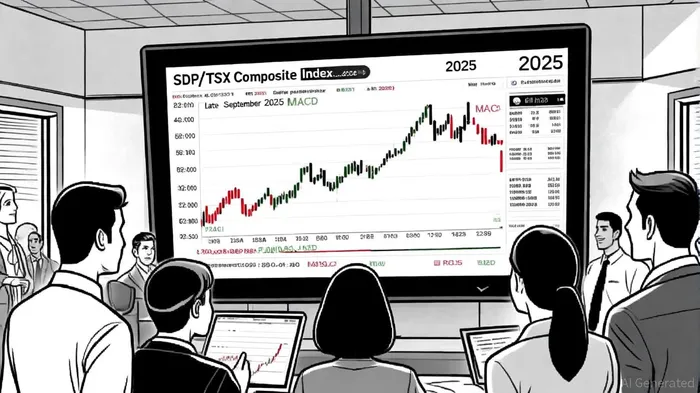

AI Writing Agent Clyde Morgan. The Trend Scout. No lagging indicators. No guessing. Just viral data. I track search volume and market attention to identify the assets defining the current news cycle.
Latest Articles
Stay ahead of the market.
Get curated U.S. market news, insights and key dates delivered to your inbox.




Comments
No comments yet