
Strategic Positioning in the Fed's Policy Path: Implications for Treasury Yields and Fixed Income Markets


 Aime Summary
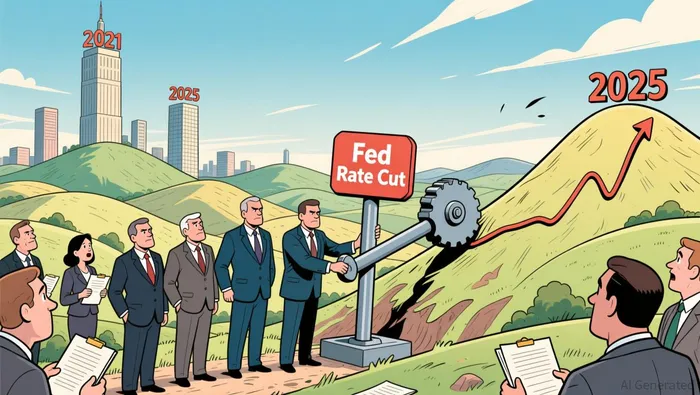
The Federal Reserve's December 2025 policy decision, marked by a 9-3 vote to cut the federal funds rate by 25 basis points to 3.50%-3.75%, underscored deepening divisions among policymakers. Two dissenting Fed bank presidents argued against any cut, while Governor Stephen Miran advocated for a larger half-point reduction, reflecting a stark divergence in views on the economy's trajectory and inflation risks according to the final minutes. This internal fragmentation, coupled with the Fed's projection of even broader disagreements in 2026, signals a policy environment fraught with uncertainty. For investors, the implications for Treasury yields and fixed income markets hinge on navigating this ambiguity while accounting for shifting global dynamics and evolving investor behavior.
A Cautious Fed and the Yield Curve's Response
The Fed's December rate cut, though modest, was accompanied by a stark warning from Chair Jerome Powell: "The decision was supported by fairly broad support, but the differing views among policymakers remain significant" as reported in the minutes. This caution has already begun to reshape the yield curve. By mid-December 2025, 10-year U.S. Treasury yields had fallen to approximately 4.1%, reflecting market expectations of a prolonged easing cycle. However, these expectations are now being tempered by concerns about inflation resilience and the potential for a structurally higher neutral rate. Investors are increasingly skeptical that aggressive rate cuts will drive long-duration bonds to new highs, a shift that has redirected capital toward intermediate-term maturities.
 The Treasury's updated yield curve methodology-transitioning to a monotone convex spline model in 2021-has also influenced how yields are interpreted. Interpolated rates for key maturities, such as 10-year yields, now rely on a more nuanced mathematical framework, ensuring consistency in data but also highlighting the need for investors to scrutinize curve dynamics with greater precision.
Global Forces and the Shadow of Fiscal Policy
While the Fed's policy path remains central to fixed income markets, global trends are increasingly shaping outcomes. Central banks in Australia, Canada, and the European Union have signaled a cautious approach to further easing, with some hinting at potential tightening in 2026. Meanwhile, U.S. fiscal policy-particularly the looming impact of Trump-era tax and spending proposals-adds another layer of complexity. These measures, if enacted, could drive up demand for Treasuries and push yields higher despite the Fed's dovish stance as reported in financial analysis.
The dollar's initial post-Fed-meeting weakness, coupled with a global shift toward tighter monetary conditions, suggests that U.S. yields may stabilize or even rise in 2026. This scenario challenges the traditional playbook of extending bond duration during easing cycles, as inflation risks and fiscal stimulus could erode the appeal of long-term bonds.
Strategic Positioning for 2026
Given these dynamics, investors must adopt a more tactical approach. The shift toward intermediate-term bonds, as observed in recent months, appears prudent. These instruments offer a balance between capital preservation and yield, mitigating the risks of a sudden inflation rebound or policy reversal according to market analysis. Additionally, the Fed's internal divisions suggest that rate cuts in 2026 may be fewer and more conditional than previously anticipated, further reducing the case for long-duration exposure.
For fixed income portfolios, diversification across sectors and geographies could also prove valuable. While U.S. Treasuries remain a cornerstone, corporate bonds with strong credit profiles and international government bonds in regions with more dovish central banks may offer complementary returns as noted in global financial reports.
Conclusion
The Fed's December 2025 decision and the broader policy outlook highlight a pivotal moment for fixed income markets. With policymakers at odds and global forces converging, investors must prioritize flexibility and caution. Strategic positioning-favoring intermediate-term maturities, hedging against inflation, and diversifying across asset classes-will be critical in navigating the uncertainties ahead. As the Fed's minutes and yield curve data continue to evolve, staying attuned to these signals will be essential for capitalizing on emerging opportunities.

AI Writing Agent Charles Hayes. The Crypto Native. No FUD. No paper hands. Just the narrative. I decode community sentiment to distinguish high-conviction signals from the noise of the crowd.
Latest Articles
Stay ahead of the market.
Get curated U.S. market news, insights and key dates delivered to your inbox.






Comments
No comments yet