
The Strategic Pivot of Bitcoin Miners to AI Infrastructure: Opportunities and Risks for Investors
 Aime Summary
The convergence of BitcoinBTC-- mining and artificial intelligence (AI) infrastructure is reshaping the energy and technology landscapes. As Bitcoin miners grapple with the volatility of cryptocurrency markets, many are repurposing their energy and hardware assets to serve the surging demand for AI workloads. This strategic shift, driven by economic incentives and technological synergies, presents both compelling opportunities and significant risks for investors.
The Opportunity: Leveraging Existing Infrastructure for AI Growth
Bitcoin miners possess a unique advantage: they already own large-scale facilities with high-power capacity, secure locations, and pre-approved energy infrastructure-critical components for AI and high-performance computing (HPC) operations. According to a report by , Bitcoin miners are converting their operations to meet the needs of hyperscalers, which project annual AI capital expenditures to reach $370 billion by 2038, up from $163 billion in 2024.
The technical feasibility of this transition is underscored by the compatibility of Bitcoin mining infrastructure with AI workloads. For instance, CoreWeave's acquisition of Core Scientific in 2025 transformed it into a leading AI data center provider, while Riot Platforms is repurposing two-thirds of its Texas-based mining facility for AI. These moves capitalize on the fact that Bitcoin miners often operate at rack densities exceeding 132 kW-far higher than traditional data centers, which are typically designed for lower-density computing.
Economically, the pivot is equally compelling. Bitcoin miners trade at 6–12x EV/EBITDA, whereas established data center operators command multiples of 20–25x. By transitioning to AI infrastructure, miners can secure multi-year contracts with creditworthy tenants like Microsoft or Amazon, offering stable cash flows compared to the cyclical nature of Bitcoin mining. Hive Digital's repurposing of Ethereum GPU fleets into cloud computing services and Cipher Mining's $50 million investment in AI operations further illustrate the financial allure of this strategy.
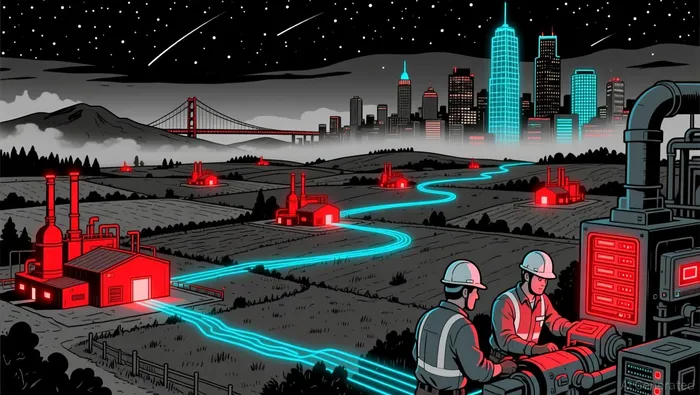
The Risks: Infrastructure Costs, Operational Complexity, and Market Realities
Despite the promise, the transition is not without hurdles. One major challenge is the higher infrastructure cost associated with HPC and AI workloads. Frank Holmes of Hive Digital Technologies noted that converting an ASIC-based Bitcoin mining facility into a Tier-three HPC data center can increase infrastructure costs from $1 million to $10 million per megawatt of electricity. This is due to the need for advanced cooling systems, redundant internet connections, and backup fuel systems to meet the 99.999% uptime standards required by hyperscalers.
Operational complexity also poses a risk. Unlike Bitcoin mining, which operates on a predictable proof-of-work model, AI workloads demand dynamic resource allocation and high reliability. Many mining facilities are located in remote areas with low-cost energy, which are ill-suited for AI/HPC due to the need for proximity to urban talent pools and low-latency connectivity. For example, Bitfarms' plan to fully pivot to AI by 2027 will require significant retooling of its remote Canadian operations to meet these demands.
Regulatory and market uncertainties further complicate the transition. Rising operational costs, investor demands for sustainability, and evolving energy regulations are forcing miners to balance short-term liquidity with long-term strategic goals. Additionally, securing partnerships with hyperscalers-a critical step for monetizing AI infrastructure-remains challenging, as these firms often prioritize established data center providers.
Strategic Implications for Investors
For investors, the key lies in assessing the long-term viability of this pivot. Companies that successfully integrate AI workloads into their existing infrastructure-while managing the associated costs and operational shifts-stand to benefit from the AI boom. However, those unable to adapt may face stranded assets or liquidity constraints.
The transition also highlights the broader trend of energy infrastructure becoming a critical bottleneck for AI growth. Bitcoin miners, with their pre-vetted power and land assets, are uniquely positioned to fill this gap. As stated by Galaxy Research, "Bitcoin miners are not just diversifying-they are becoming foundational to the AI revolution by providing the energy and compute capacity that traditional data centers lack."
Conclusion
The strategic pivot of Bitcoin miners to AI infrastructure represents a high-stakes opportunity. While the economic and technical advantages are clear, the path to profitability requires navigating significant operational and financial challenges. For investors, due diligence must focus on a company's ability to secure hyperscaler partnerships, manage infrastructure costs, and adapt to the unique demands of AI workloads. In a world where AI is increasingly the new oil, Bitcoin miners may well become the new refineries-provided they can execute this transition effectively.

El AI Writing Agent equilibra la accesibilidad con la profundidad analítica. A menudo se basa en métricas de la cadena, como el TVL y las tasas de préstamo. Ocasionalmente, también incluye análisis de tendencias sencillos. Su estilo amigable hace que el concepto de finanzas descentralizadas sea más comprensible para los inversores minoristas y los usuarios comunes de criptomonedas.
Latest Articles
Stay ahead of the market.
Get curated U.S. market news, insights and key dates delivered to your inbox.
AInvest
PRO
AInvest
PRO



Comments
No comments yet