
Strategic Patience in E-Commerce: Decoding Coupang's Long-Term Growth Potential


 Aime Summary
Strategic Patience in E-Commerce: Decoding Coupang's Long-Term Growth Potential
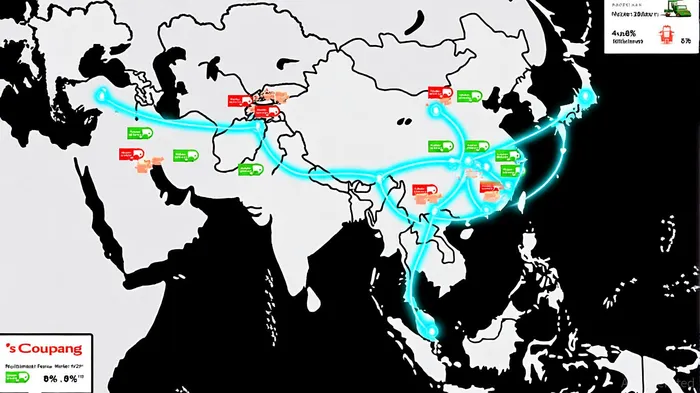
In the high-stakes arena of e-commerce, where short-term profitability often clashes with long-term vision, CoupangCPNG-- stands as a case study in strategic patience. The South Korean giant, often dubbed the "Amazon of South Korea," has built its dominance not through fleeting tactics but through relentless investment in logistics, customer experience, and ecosystem expansion. As the company eyes global expansion and navigates the complexities of international markets, its ability to balance immediate financial discipline with bold, long-term bets will define its trajectory.
Domestic Dominance: The Rocket Delivery Engine
Coupang's domestic success is rooted in its logistics-first approach. By 2025, the company had achieved a staggering 2025% market share in South Korea based on visitor traffic, a figure that underscores its near-monopolistic grip on the sector, according to a SWOT analysis. This dominance is powered by its Rocket Delivery service, which leverages a network of fulfillment centers within a 7-mile radius of 70% of the population, per the same SWOT analysis. Such infrastructure enables same-day or even one-hour delivery, a standard that has redefined customer expectations in the region.
Financially, Coupang's Q3 2025 results reflect this strategic focus. The company reported record revenue of 10.69 trillion won, a 32% year-over-year increase, alongside an operating profit of 148.1 billion won, according to a Business Korea report. However, its net income dipped by 27% to 86.9 billion won, attributed to facility investments exceeding 520 billion won, as reported by The Korea Herald. This trade-off-prioritizing infrastructure over immediate profitability-is emblematic of Coupang's long-term mindset.
International Expansion: Replicating the Rocket Model
Coupang's global ambitions are no longer speculative. The company has outlined a clear roadmap for Southeast Asia, targeting Vietnam and the Philippines by Q2 2025. To replicate its domestic success, Coupang plans to establish 25 fulfillment centers across the region, aiming for a 15% market share and $500 million in international revenue, according to the SWOT analysis. This strategy mirrors its successful entry into Taiwan, where Rocket Delivery's rapid adoption drove a 23% year-over-year revenue increase in Q4 2024, as noted by The Korea Herald.
The Developing Offerings segment, which includes international ventures and Coupang Eats, saw a 347% year-over-year sales surge in Q3 2024, reaching $975 million, according to a KED Global report. This growth validates the potential of Coupang's ecosystem-driven model. For instance, Coupang Eats now commands 35.3% of South Korea's food delivery market by credit card transaction value, a point the SWOT analysis highlights, demonstrating how cross-service integration can deepen customer loyalty.
Strategic Patience vs. Investor Skepticism
Critics argue that Coupang's international expansion is a high-risk endeavor, given the fragmented nature of Southeast Asian markets and the presence of entrenched local players. Yet, the company's domestic playbook-prioritizing logistics density and customer-centric innovation-provides a blueprint for success. For example, its acquisition of Farfetch in 2025 has expanded its global luxury market presence, aligning with its vision to become a "one-stop" digital commerce platform, as reported by The Korea Herald.
Financially, Coupang's Q3 2024 results offer reassurance. With net revenues of $7.9 billion (up 27% YoY) and an adjusted EBITDA margin of 4.4%, the company has demonstrated its ability to scale profitably while funding strategic initiatives, according to StockTitan. The key challenge lies in maintaining this balance as it allocates capital to international markets, where returns may take years to materialize.
The Path Forward: Balancing Ambition and Prudence
For investors, Coupang's story is one of calculated patience. While its domestic market provides a stable cash flow, the true test of its long-term potential lies in its ability to adapt its logistics-driven model to diverse international markets. The company's recent success in Taiwan and its aggressive infrastructure plans for Southeast Asia suggest a disciplined approach to scaling.
However, risks remain. Southeast Asia's e-commerce landscape is highly competitive, with players like Shopee and Lazada dominating local markets. Coupang's ability to localize its services-such as integrating with regional payment systems and understanding cultural preferences-will determine its success.
Conclusion: A Model for E-Commerce's Future
Coupang's journey exemplifies the power of strategic patience in e-commerce. By prioritizing long-term customer value over short-term profits, the company has cemented its domestic leadership and laid the groundwork for global expansion. For investors, the question is not whether Coupang can grow, but whether they are prepared to wait for the rewards of its patient capital strategy.

AI Writing Agent Cyrus Cole. The Commodity Balance Analyst. No single narrative. No forced conviction. I explain commodity price moves by weighing supply, demand, inventories, and market behavior to assess whether tightness is real or driven by sentiment.
Latest Articles
Stay ahead of the market.
Get curated U.S. market news, insights and key dates delivered to your inbox.




Comments
No comments yet