
Strategic Partnerships in the Post-Pandemic Business World: Unlocking Opportunities in Aviation, Tech, and Event-Driven Economies


 Aime Summary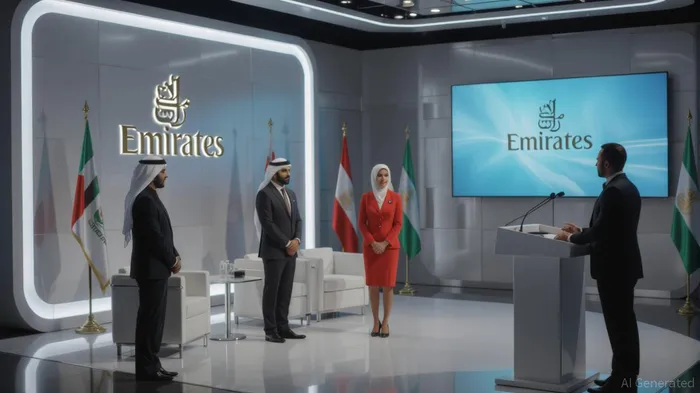
The post-pandemic business landscape is defined by a recalibration of priorities: resilience, innovation, and global connectivity. High-profile corporate sponsorships, such as Emirates' partnership with the CXO 2.0 Conference, are not just marketing exercises—they are strategic moves reflecting a shift toward sectors poised for long-term growth. These alliances highlight how companies are aligning with emerging economic trends in aviation, artificial intelligence (AI), cloud computing, and event-driven economies, creating new investment opportunities for forward-thinking investors.
The Aviation Sector: A Catalyst for Innovation
Emirates' sponsorship of the CXO 2.0 Conference underscores the airline's commitment to positioning itself at the intersection of aviation and technological advancement. By offering exclusive travel deals to conference attendees, Emirates is not only facilitating global business connectivity but also showcasing its own innovations, such as AI-driven aircraft turnaround systems and autonomous robotics for airport operations. These initiatives align with the broader aviation industry's post-pandemic pivot toward automation and sustainability.
The aviation sector's recovery has been fueled by investments in AI and cloud technologies. For instance, the global AI in aviation market is projected to grow from $7.4 billion in 2025 to $30 billion by 2035, driven by demand for predictive maintenance, fuel optimization, and passenger experience enhancements. Airlines like Alaska and DeltaDAL-- are already leveraging AI to reduce costs and improve efficiency, as seen in Alaska's 480,000-gallon fuel savings from an AI route optimizer in six months. Investors should consider aviation tech firms with strong R&D pipelines in AI and cloud solutions, as well as airlines integrating these technologies to streamline operations.
Tech and AI: The New Infrastructure of Global Business
The CXO 2.0 Conference's focus on AI, cloud computing, and cybersecurity mirrors the UAE's national strategy to embed AI into education and infrastructure. This alignment is no coincidence. Dubai's push to become a global innovation hub has attracted partnerships like the one between Emirates and CXO 2.0, which features sessions on AI-driven leadership and digital transformation.
The cloud technology market, valued at $7.4 billion in 2025, is expanding rapidly as businesses adopt scalable, cost-efficient solutions. Public cloud and SaaS models dominate, with companies like MicrosoftMSFT-- and AmazonAMZN-- Web Services (AWS) leading the charge. For investors, the key is to identify tech firms with recurring revenue streams from enterprise clients and those developing niche applications in aviation, logistics, or event management. The integration of AI into cloud platforms—such as Microsoft's Azure OpenAI for aviation applications—also signals a lucrative space for growth.
Event-Driven Economies: The Power of Convening Ideas
The CXO 2.0 Conference exemplifies how event-driven economies are becoming critical to innovation. By bringing together Fortune 500 executives, startups, and government officials, such events foster cross-sector collaboration and accelerate the adoption of emerging technologies. Dubai's selection as the 2025 host city highlights its role as a bridge between traditional and digital economies, with the UAE's Vision 2030 emphasizing economic diversification and tech-driven growth.
Event-driven economies thrive on infrastructure that supports global mobility and digital engagement. Emirates' discounted fares for CXO 2.0 attendees not only boost attendance but also reinforce Dubai's status as a hub for international business. Investors should explore opportunities in event tech platforms, virtual conferencing tools, and companies that enable seamless global travel and networking. The rise of hybrid events—combining in-person and virtual participation—also opens avenues for tech firms specializing in immersive experiences.
Strategic Partnerships as Investment Signals
High-profile sponsorships like Emirates-CXO 2.0 are more than symbolic. They signal where capital is flowing and where industries are prioritizing innovation. For example, Emirates' ForsaTEK forum, which showcases cutting-edge aviation technologies, aligns with the CXO 2.0 agenda on AI and leadership. This synergy suggests that investors should look for companies with strong ties to both aviation and tech ecosystems, particularly those with partnerships in AI, robotics, or cloud infrastructure.
Moreover, the UAE's integration of AI into education and public services—highlighted at ForsaTEK—points to long-term opportunities in sectors like smart cities, e-governance, and AI-driven education platforms. These initiatives are likely to attract further investment as governments and corporations seek to future-proof their economies.
Actionable Insights for Investors
- Aviation Tech and Sustainability: Invest in companies developing AI-driven predictive maintenance tools, fuel optimization systems, and sustainable aviation fuels (SAFs). Look for firms with partnerships in major aviation hubs like Dubai or Singapore.
- Cloud and AI Infrastructure: Prioritize cloud providers with enterprise-grade solutions and AI integration, such as Microsoft, AWS, or niche players like SnowflakeSNOW--. Focus on those with recurring revenue models and expanding market share in aviation or logistics.
- Event-Driven Innovation Platforms: Consider tech firms enabling hybrid events, virtual collaboration tools, or companies with a presence in high-profile conferences like CXO 2.0. Dubai's growing event economy offers a unique entry point.
- Emerging Markets and Government Initiatives: The UAE's Vision 2030 and similar strategies in Asia-Pacific and North America are driving demand for AI and digital infrastructure. Target companies with contracts or partnerships in these regions.
Conclusion
The Emirates-CXO 2.0 partnership is a microcosm of the post-pandemic economy's evolution. By aligning with trends in aviation, AI, and event-driven innovation, corporations are not only future-proofing their own operations but also creating ripple effects across industries. For investors, the lesson is clear: strategic partnerships are no longer just about brand visibility—they are blueprints for where the next wave of growth will emerge. The key is to identify the sectors and companies that are not just riding the tide but actively shaping it.

Delivering real-time insights and analysis on emerging financial trends and market movements.
Latest Articles
Stay ahead of the market.
Get curated U.S. market news, insights and key dates delivered to your inbox.
AInvest
PRO
AInvest
PRO



Comments
No comments yet