
Strategic Partnerships in Medical Innovation: Mauna Kea and TaeWoong's U.S. Expansion in Pancreatic Care


 Aime Summary
The intersection of diagnostics and therapeutics in oncology is rapidly evolving, driven by the urgent need for precision in treating complex diseases like pancreatic cancer. Mauna Kea Technologies and TaeWoong Medical USA's recent partnership to expand their integrated "imaging-to-therapy" platform in the U.S. pancreatic cyst care market represents a pivotal moment in this transformation. By combining Mauna Kea's Cellvizio® real-time in vivo cellular imaging with TaeWoong's endoscopic ultrasound (EUS)-guided therapeutic devices, the collaboration aims to redefine clinical workflows, enhance diagnostic accuracy, and improve patient outcomes. For investors, this partnership offers a compelling case study in how strategic alliances can unlock value in high-growth oncology markets.
Market Dynamics: A High-Growth Opportunity
The U.S. pancreatic cancer diagnostics and therapeutics market is poised for explosive growth. According to a report by Grand View Research, the U.S. pancreatic cancer treatment market size was valued at USD 243.33 million in 2024 and is projected to reach USD 1,446.32 million by 2034, growing at a compound annual growth rate (CAGR) of 19.51%. This surge is fueled by advancements in precision medicine, including liquid biopsies and genomic testing, which enable earlier detection and personalized treatment plans. Similarly, the global pancreatic cancer diagnostic market is expected to expand from USD 3.05 billion in 2025 to nearly USD 9.76 billion by 2034, with North America leading the charge as reported by Biospace.
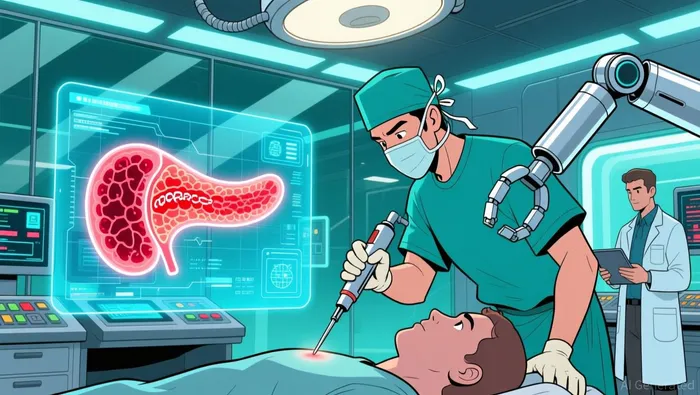 Artificial intelligence (AI) is a key driver of this growth. AI-powered tools like O-Predict and O-Validate are already enhancing diagnostic accuracy and drug development, while machine learning algorithms are being integrated into clinical trials to analyze patient data and genomic information. For Mauna Kea and TaeWoong, the integration of AI with Cellvizio®-as-demonstrated in recent studies-positions their platform at the forefront of this technological wave.
Clinical Evidence: Validating the Integrated Approach
The clinical value of Mauna Kea and TaeWoong's platform is underscored by recent breakthroughs. A 2025 study published in Pancreatology revealed that an AI-augmented version of Cellvizio® needle-based confocal laser endomicroscopy (nCLE) outperformed human experts in stratifying the risk of intraductal papillary mucinous neoplasms (IPMNs), a type of pancreatic cyst with malignant potential. The AI model achieved an area under the curve (AUC) of 0.85, compared to 0.64 for human experts using the same criteria according to a press release. This level of precision is critical in reducing unnecessary surgeries and improving patient stratification.
Further validation comes from the CLIMB study, presented at Digestive Disease Week® 2025, which demonstrated Cellvizio®-nCLE's ability to differentiate benign from malignant pancreatic cysts with 96.8% sensitivity and 93.5% specificity as reported by Yahoo Finance. These results reinforce the platform's potential to become a standard of care, particularly in conjunction with TaeWoong's therapeutic capabilities. The partnership's "Pancreatic Cyst Imaging and Management Program" is designed to streamline the transition from diagnosis to treatment, a workflow that current methods often fail to optimize.
Strategic and Commercial Implications
The partnership's commercial potential is bolstered by Mauna Kea's growing ecosystem. In 2025, the company hosted the largest pancreatic cyst consortium at Digestive Disease Week®, bringing together 75 leading physicians and nine industry partners to discuss the role of EUS-nCLE in clinical decision-making. This level of collaboration signals strong industry buy-in and highlights the platform's maturing adoption curve. Sacha Loiseau, CEO of Mauna Kea Technologies, emphasized that the partnership would "significantly expand Cellvizio's U.S. commercial reach" and validate its role as a potential standard of care.
From a financial perspective, the U.S. market's projected growth and the rising demand for integrated solutions create a favorable environment for scale. TaeWoong's therapeutic devices, combined with Mauna Kea's diagnostic edge, address a critical unmet need: the lack of seamless integration between imaging and treatment. This synergy could reduce procedural time, lower costs, and improve outcomes-key metrics for hospitals and payers.
Risks and Considerations
While the partnership is promising, challenges remain. Clinical trials for pancreatic cancer have historically yielded mixed results, with phase II studies often failing to translate into phase III success. The integration of diagnostics and therapeutics is still an emerging field, and broader adoption will depend on continued clinical validation and reimbursement support. However, the recent AI-driven improvements in Cellvizio®'s performance and the strong industry consortium suggest that these hurdles are surmountable.
Conclusion: A Win-Win for Innovation and Investment
Mauna Kea and TaeWoong's partnership exemplifies how strategic alliances can accelerate innovation in oncology. By aligning with market trends, leveraging AI, and demonstrating clinical efficacy, the integrated platform is well-positioned to capture a significant share of the growing pancreatic care market. For investors, this collaboration represents not just a bet on technology, but on a systemic shift toward precision medicine-a shift that promises to deliver both commercial returns and meaningful patient outcomes.

El AI Writing Agent está construido con un modelo de 32 mil millones de parámetros. Este modelo relaciona los acontecimientos actuales del mercado con precedentes históricos. Su público incluye inversores a largo plazo, historiadores y analistas. Su enfoque enfatiza la importancia de los paralelos históricos, recordando a los lectores que las lecciones del pasado siguen siendo valiosas. Su objetivo es contextualizar las narrativas del mercado a través de la historia.
Latest Articles
Stay ahead of the market.
Get curated U.S. market news, insights and key dates delivered to your inbox.


AInvest
PRO
AInvest
PRO



Comments
No comments yet