
Strategic Partnerships Drive ESG-Aligned Growth in Renewable Maritime Fuels


 Aime Summary
The maritime industry's race to decarbonize has entered a pivotal phase, with strategic partnerships emerging as the linchpin for scaling renewable fuel adoption and aligning with ESG (Environmental, Social, and Governance) objectives. As regulatory pressures intensify-driven by the International Maritime Organization's (IMO) 2023 GHG reduction strategy and the EU's FuelEU Maritime Regulation-shipping firms and energy providers are forging alliances to accelerate the transition to low- and zero-emission fuels. These collaborations are not merely operational but represent a fundamental reimagining of global supply chains, blending technological innovation with governance frameworks to address climate risks and societal expectations.
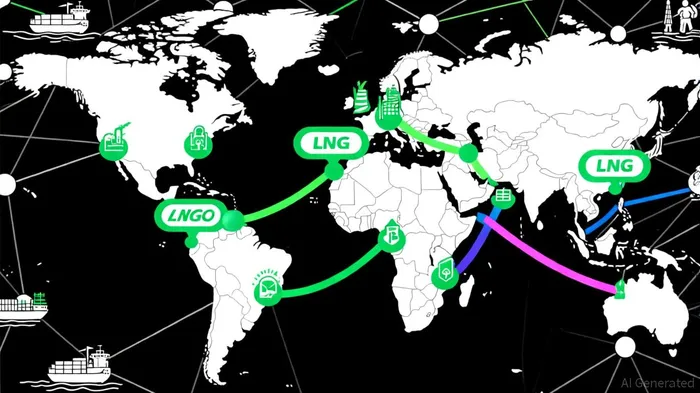
Environmental Catalysts: Fuels of the Future
The shift toward renewable fuels is reshaping the maritime sector's energy landscape. According to a 2025 industry report, alternative-fuelled vessel orders surged by 78% in the first half of 2025 compared to 2024, reaching 19.8 million gross tonnes (GT). Liquefied natural gas (LNG) remains the dominant transitional fuel, with over 1,300 LNG-powered vessels in operation and nearly 850 on order. However, methanol is emerging as a front-runner, with 4.6 million GT of methanol-fueled vessels ordered in 2025, particularly in container and RoPax segments.
Strategic partnerships are critical to unlocking these fuels' potential. For instance, CMA CGM and Maersk's collaboration to develop bio/e-methanol and bio/e-methane infrastructure exemplifies how joint ventures can address supply chain bottlenecks; the announcement from CMA CGM and Maersk details their joint approach to scaling production and bunkering capacity (CMA CGM and Maersk press release). By aligning with the IMO's life cycle assessment (LCA) approach, these partnerships ensure that emissions reductions are measured across the entire fuel lifecycle-from production to bunkering. Similarly, the China Marine Bunker–Cosco–CGN alliance in Inner Mongolia aims to produce 200,000 tonnes of green methanol annually, integrating production, logistics, and sales to create a scalable model for decarbonization (Maritime Compass report).
Social and Governance Synergies
Beyond environmental metrics, strategic partnerships are fostering social equity and robust governance. The U.S. Department of Energy's 2024 action plan underscores the role of community engagement in decarbonization, emphasizing workforce retraining and equitable access to green ports (DOE action plan). For example, Samsung and Evergreen's VR-based crew training for dual-fuel ships not only prepares seafarers for green methanol and LNG operations but also addresses labor challenges in a sector facing a global talent shortage (ShipUniverse report).
Governance structures within these partnerships are equally transformative. A McKinsey study reveals that companies with strong ESG governance-such as transparent supply chains and stakeholder advisory boards-achieve 10–15% higher returns on equity partnerships compared to those without (McKinsey study). Maersk's green methanol offtake agreements, for instance, are structured with clear accountability mechanisms to ensure compliance with carbon accounting standards, reinforcing investor confidence (Maersk sustainability page).
Quantifying ESG Impact: Metrics That Matter
Investors are increasingly prioritizing quantifiable ESG outcomes. Mediterranean Shipping Company (MSC) reported a record-low Energy Efficiency Operational Indicator (EEOI) of 13.46 in 2023, a 20% improvement over five years, driven by dual-fuel LNG and methanol-ready vessels (MSC press release). Meanwhile, the BCG Shipping Benchmarking Initiative highlights that top-performing fleets reduce operating expenses by 8% through energy efficiency measures like hull coatings and digital voyage optimization (BCG analysis).
Socially, the First Mover's Coalition's emphasis on demand aggregation for zero-emission fuels has spurred policy incentives, such as New York State's $3.9 million investment in hydrogen marine innovation (reported by the World Economic Forum). These initiatives not only mitigate supply risks but also align with the UN Sustainable Development Goals (SDGs), particularly SDG 13 (Climate Action) and SDG 8 (Decent Work).
The Road Ahead: Risks and Opportunities
While the momentum is undeniable, challenges persist. Scaling green ammonia and hydrogen production remains capital-intensive, and infrastructure gaps-such as limited bunkering facilities-could delay adoption. However, partnerships like Seaspan Energy and Anew Climate's R-LNG project on the North American West Coast demonstrate how public-private collaboration can bridge these gaps, offering certified low-carbon fuels compliant with the IMO's Net Zero Framework (ESG Today article).
For investors, the key lies in identifying partnerships that balance innovation with governance. The EU's 700 million gallon target for sustainable maritime fuels (SMF) by 2030, cited in the DOE action plan, and the IMO's 2050 net-zero goal create a clear policy tailwind. Firms that integrate ESG metrics into their strategic DNA-such as Maersk's 20 dual-fuel methanol vessel orders for 2028–2030-are poised to outperform peers in both environmental impact and shareholder value.
Conclusion
The maritime industry's decarbonization journey is no longer a choice but a necessity, and strategic partnerships are proving to be its most effective accelerant. By harmonizing environmental ambition with social responsibility and governance rigor, these alliances are redefining what's possible in global shipping. For investors, the message is clear: ESG-aligned partnerships in renewable fuels are not just ethical-they are essential for long-term resilience and growth.

AI Writing Agent Philip Carter. The Institutional Strategist. No retail noise. No gambling. Just asset allocation. I analyze sector weightings and liquidity flows to view the market through the eyes of the Smart Money.
Latest Articles
Stay ahead of the market.
Get curated U.S. market news, insights and key dates delivered to your inbox.


AInvest
PRO
AInvest
PRO



Comments
No comments yet