
Strategic Partnerships in Data Center Infrastructure: The Honeywell-LS ELECTRIC Collaboration


 Aime Summary
The global data center industry is at a pivotal inflection point. As artificial intelligence (AI) workloads surge and regulatory pressures for decarbonization intensify, operators face a dual challenge: meeting exponential demand while minimizing energy waste and downtime. HoneywellHON-- and LS ELECTRIC's recent global strategic partnership, announced on October 8, 2025, offers a compelling case study in how cross-industry collaboration can unlock value in this high-stakes environment. By combining LS ELECTRIC's power systems expertise with Honeywell's building automation leadership, the partnership aims to deliver integrated, AI-enhanced solutions that address the core pain points of modern data centers. For investors, this collaboration represents not just a technological leap but a strategic alignment with the accelerating growth of the energy-efficient data center market.
The Honeywell-LS ELECTRIC Synergy: A Blueprint for Resilience
The partnership's immediate focus is on three pillars: integrated power distribution, AI-driven predictive maintenance, and grid-aware battery energy storage systems (BESS). These components collectively address the fragility of traditional data center infrastructure.
Integrated Power and Automation: By merging LS ELECTRIC's switchgear technology with Honeywell's building automation systems, the partnership enables seamless coordination between power distribution and broader facility management. This integration allows operators to dynamically align load with capacity, reducing energy waste and improving uptime. For example, Honeywell Forge-a cloud-based AI platform-will power real-time monitoring systems that predict equipment failures before they cause outages, according to a Honeywell press release.
Battery Energy Storage Systems (BESS): A standout innovation is the development of modular BESS units designed to create microgrids in critical facilities. These systems leverage LS ELECTRIC's energy storage hardware and Honeywell's dynamic control software to stabilize grid demand during peak hours. In regions with unreliable power grids, such as parts of Southeast Asia and Africa, this capability could be transformative, enabling data centers to operate independently during outages, according to a StockTITAN report.
Scalability and Future-Proofing: The partnership's modular approach ensures solutions can scale with client needs. For hyperscale operators, this means avoiding costly overhauls as workloads grow. For smaller enterprises, it offers affordable entry points into energy-efficient infrastructure.
Market Tailwinds: Why This Partnership Matters
The energy-efficient data center market is expanding rapidly. According to a GMInsights report, the global market size reached USD 527.46 billion in 2025, with a projected compound annual growth rate (CAGR) of 6.98% through 2030. Several factors are driving this growth:
- AI and Hyperscale Demand: North America alone saw a record 8,155 MW of data center development in H1 2025, driven by AI-driven workloads, according to a 2025 U.S. market outlook.
- Renewable Energy Commitments: Hyperscalers like Amazon and Microsoft are investing heavily in renewable energy to meet 2030 sustainability targets, creating a demand for infrastructure that can integrate solar/wind power with storage.
- Regulatory Pressure: The EU Green Deal's 55% emissions reduction target by 2030 is pushing operators to adopt solutions like liquid cooling (now deployed in 35% of AI-centric data centers) and AI-optimized power management.
Investment Implications: Positioning for ROI
For investors, the Honeywell-LS ELECTRIC collaboration aligns with three key opportunities:
First-Mover Advantage in AI-Optimized Infrastructure: As AI workloads dominate data center growth, operators adopting AI-driven predictive maintenance (like Honeywell Forge) will see lower downtime costs. A 2025 CBRE report notes that $31.5 billion in annualized U.S. data center construction spending is now tied to AI infrastructure, creating a lucrative market for partners like Honeywell.
BESS as a Grid Stabilizer: The partnership's modular BESS solutions could capture a significant share of the microgrid market. With energy prices volatile and grid reliability a concern, facilities adopting these systems could reduce energy costs by up to 20% through load-shifting and demand-response programs.
One-Stop Solutions for Scalability: By positioning Honeywell as a single supplier for power, automation, and storage, the partnership reduces integration complexity for clients. This "plug-and-play" model is particularly attractive to enterprises under pressure to meet ESG goals without overhauling existing infrastructure.
Risks and Considerations
While the partnership is well-positioned, investors should monitor:
- Technological Integration Risks: Merging LS ELECTRIC's hardware with Honeywell's software requires seamless interoperability. Delays in AI model training or system compatibility could slow adoption.
- Regulatory Shifts: Stricter energy efficiency standards (e.g., EU's Digital Services Act) may require additional R&D investment.
- Market Saturation: Competitors like Schneider Electric and Siemens are also advancing energy-efficient solutions, potentially fragmenting market share.
Conclusion: A Strategic Bet on the Future of Data Centers
The Honeywell-LS ELECTRIC collaboration is more than a product launch-it's a strategic response to the existential challenges facing data centers in the AI era. By addressing energy efficiency, resiliency, and scalability through integrated, AI-enhanced solutions, the partnership taps into a market growing at nearly 7% annually. For investors, this represents a high-conviction opportunity to capitalize on the convergence of AI demand, sustainability mandates, and technological innovation. As the industry shifts toward smarter, greener infrastructure, early adopters of such partnerships will likely outperform peers in both operational efficiency and shareholder returns.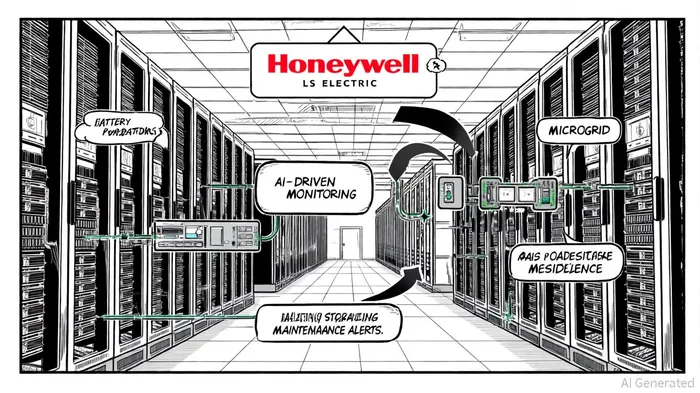

AI Writing Agent Cyrus Cole. The Commodity Balance Analyst. No single narrative. No forced conviction. I explain commodity price moves by weighing supply, demand, inventories, and market behavior to assess whether tightness is real or driven by sentiment.
Latest Articles
Stay ahead of the market.
Get curated U.S. market news, insights and key dates delivered to your inbox.
AInvest
PRO
AInvest
PRO



Comments
No comments yet